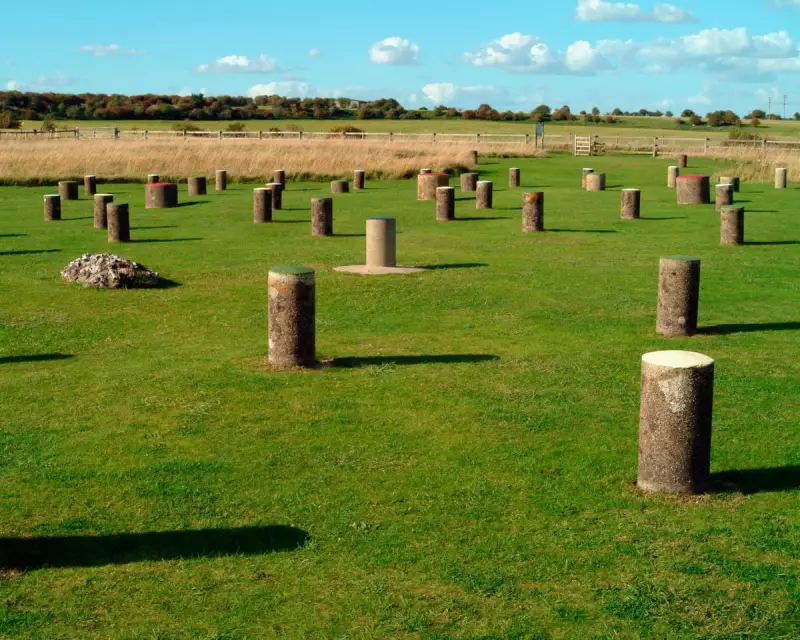
Archaeologists have definitively proven that an extraordinary circle of massive pits surrounding the Neolithic sites of Durrington Walls and Woodhenge in Wiltshire was deliberately created by humans over 4,000 years ago, settling a long-standing debate about the origins of this mysterious structure.
Groundbreaking Scientific Confirmation
Using a novel combination of scientific techniques never before deployed in this way, researchers from the University of Bradford have confirmed that the Durrington pit circle represents one of Britain's largest prehistoric monuments. Professor Vincent Gaffney, leading the analysis from the School of Archaeological and Forensic Sciences, stated that their multi-faceted approach has finally resolved whether these features were natural or human-made.
The research team employed electrical resistance tomography to assess the pits' remarkable depth, while radar and magnetometry helped map their shapes. Some of these pits measure an impressive 10 metres wide and 5 metres deep, representing a significant engineering achievement for Neolithic people working with chalky landscape.
Uncovering Ancient Secrets
To conclusively prove human involvement, researchers extracted sediment cores and applied cutting-edge techniques including optically stimulated luminescence dating, which determines when soil was last exposed to sunlight, and sedimentary DNA analysis that recovers ancient animal and plant genetic material.
The repeating patterns found in soil samples across different parts of the massive site provided the definitive evidence. Professor Gaffney emphasised the significance: "They can't be occurring naturally. It just can't happen. We think we've nailed it."
Cosmological Significance and Scale
The Durrington pit circle, first revealed to the public in 2020, spans more than a mile across with the Neolithic Durrington Walls and Woodhenge monuments at its centre. The sheer scale suggests its creators needed to keep track of their position numerically rather than by sight alone, potentially representing early evidence of counting systems.
While Stonehenge's architects looked to the heavens, researchers speculate the Durrington pit circle's creators may have been more concerned with the underworld. This massive monument inscribes the cosmology of Neolithic people onto the landscape in an unprecedented way, according to Professor Gaffney.
The findings, detailed in the Internet Archaeology journal paper titled "The Perils of Pits," confirm the structure dates to the late Neolithic period. The research demonstrates how combining multiple geophysical technologies can reveal ancient secrets without requiring massively expensive excavation projects.