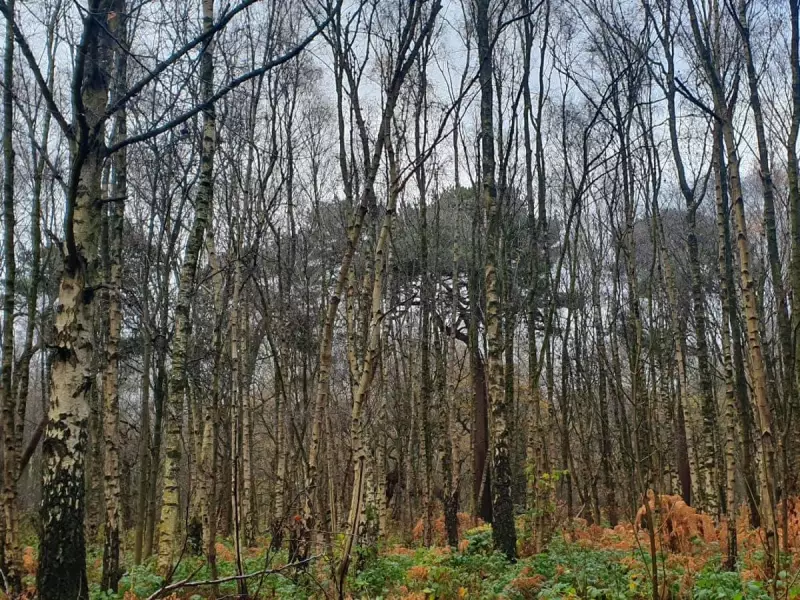
Nestled beside the historic Tudor grandeur of Speke Hall in Merseyside lies a woodland with a past far removed from its peaceful, wintry appearance. Stockton's Wood, a haven for veteran trees and fungi, guards a remarkable secret from its vital role in the Second World War.
A Woodland Sanctuary with a Military Past
Today, the ancient woodland is recognised as an important 'deadwood' site, teeming with ecological life. On a chill day, fallen oaks host slime mould and bracket fungi, while wind-thrown silver birches rest against sycamores. The diversity of mosses and fungi is stunning, with candlesnuff fungus marking where sap once flowed.
Signs of human management are etched into the landscape. Coppiced trees hint at wood provision for Speke Hall, while stands of Scots pine were originally planted for Victorian game shooting on the estate. Their purpose has long faded, and their high canopies now simply pattern the sky.
The Wartime Hideout for Aircraft
The wood's most extraordinary story is tied to its location, sandwiched between the old grounds of Speke Airport and the modern Liverpool John Lennon Airport. During the Second World War, Speke Airport was requisitioned to become RAF Speke.
A nearby shadow factory manufactured military aircraft, and Stockton's Wood provided the perfect natural camouflage. The dense tree cover was used to hide aircraft parts and even entire planes. It is believed that P-51 Mustang fighters and Halifax bombers were among the craft concealed beneath its branches.
The wood's natural invisibility, which makes it easy to miss even now, served it perfectly during the conflict. Decades of regrowth have since returned the land to its sylvan state, burying this dramatic chapter in history. The roar of a modern jet taking off from the neighbouring airport today creates a stark contrast to the silent, secret storage of the past.
A Legacy of Life and Secrecy
As visitors leave the wood, the emergence of snowdrop bulbs from molehills promises the ivory mantle of the new year. Stockton's Wood has seamlessly transitioned from a covert military asset back to a crucial ecological refuge. Its ability to keep its secrets, while nurturing new life, remains its most enduring quality, a silent testament to a period when Britain's forests played an active part in the nation's defence.