A community of dedicated knitters from Shetland is calling for a formal apology from Channel 4, claiming the broadcaster's new show Game of Wool: Britain's Best Knitter is littered with factual inaccuracies about their historic craft.
What Unravelled During the Broadcast?
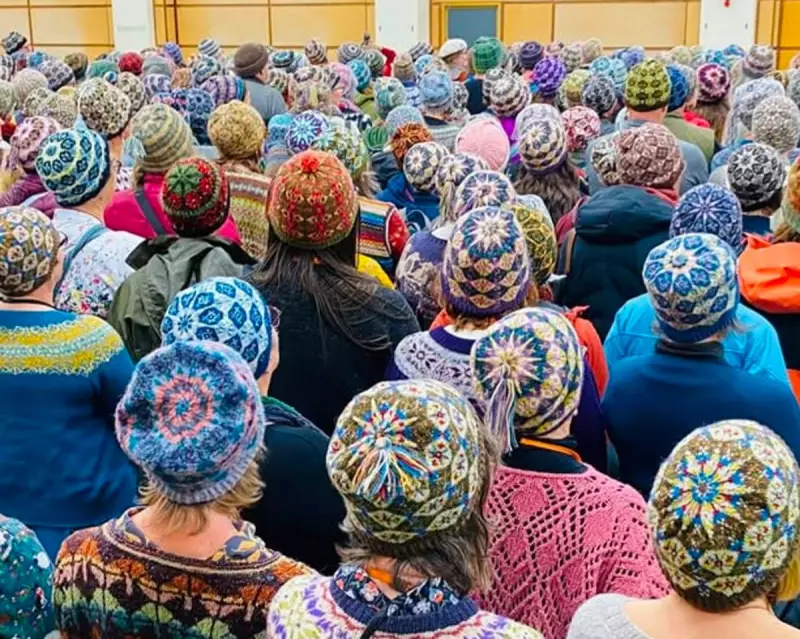
The controversy began when a group of Shetland knitters gathered to watch the premiere of the elimination show, hosted by former Olympian and crafts enthusiast Tom Daley. Their initial excitement quickly turned to dismay as they identified what they describe as fundamental errors in the programme's portrayal of the Fair Isle technique.
The show, which focused on this specific knitting style, prompted accusations of cultural appropriation and a formal demand for a correction from the broadcaster. Practitioners expressed their frustration that a series intended to showcase knitting to a wider audience had gotten so many basic details wrong about their cherished tradition.
The Specific Grievances Outlined by Experts
Shetland's Organisation for Knitters (SOK), a group founded this year to protect the region's knitting heritage, publicly detailed the most egregious errors in a social media post. Their critique highlighted several key issues:
- The use of chunky yarn and 10mm needles, a stark contrast to the traditional 2.5 or 3mm width used in genuine Fair Isle work.
- Incorrect terminology, such as referring to smaller designs as peerie patterns, a term not actually used by local Shetlanders.
- Setting a challenge to knit a complete Fair Isle tank top in just 12 hours, a task described as completely unrealistic by seasoned experts.
Elizabeth Johnston, a SOK trustee who began her Fair Isle apprenticeship as a young child, explained that the anger stems from this being the latest in a long line of misrepresentations. The problem is that a lot of businesses, designers, and pattern publishers use the term Fair Isle and its techniques incorrectly, she stated.
A Feminist and Economic Issue
For the community, this is more than just a matter of pride; it's an economic and feminist issue. Helen Barwick, who runs the Shetland Stitch Club, emphasised that knitting has traditionally been a vital source of income for Shetland women.
This is a huge industry up here, Barwick noted, that has been killed off by fast fashion which labels designs as Fair Isle when they don't stick to the tradition of even using Shetland wool.
In an open letter to Channel 4, Barwick pointed out that the authentic Fair Isle tradition is intrinsically linked to the native Shetland sheep, whose wool has unique properties perfect for this specific colour work. She is also keen to clarify that the community's reaction is not about being unwelcoming. It's such a welcoming community, she said, but it makes me sad that it's so difficult to make a living out of knitting nowadays.
Channel 4 has been approached for comment regarding the knitters' complaints and their demand for an apology.