The Console That Conquered Europe Against All Odds
Four decades ago, while the Nintendo Entertainment System reigned supreme in Japanese and American markets, a technologically advanced rival was making Nintendo's offering appear outdated across Europe. The Sega Master System, celebrating its 40th anniversary, represents one of gaming's greatest underdog stories - a machine that outperformed its famous competitor where it mattered most.
Technical Superiority That Changed the Game
Originally launched in Japan as the Sega Mark III in autumn 1985, the machine that would become the Master System boasted impressive specifications that dwarfed its rival. Built around the legendary Z80 processor - familiar to British computer enthusiasts from machines like the Spectrum and Amstrad - the console featured 8kb of RAM, a 64-colour palette, and could display 32 sprites simultaneously. This technical prowess made the NES, based on the older 6502 processor, seem primitive by comparison.
Sega initially marketed the system as part of their computer-like SG-1000 series, complete with optional keyboards and printers. However, as Nintendo's family-friendly approach captured Japan and America, Sega pivoted strategically. They stripped away computing features and rebranded the machine as the Master System in 1986 - creating what developer Chris White describes as 'an unapologetic games machine' with a sleek, angular design that contrasted sharply with Nintendo's beige Betamax aesthetic.
The Marketing Genius Behind European Dominance
While Sega handled American distribution directly, they adopted a smarter approach for Europe's fragmented markets. Virgin Mastertronic took charge in the UK, France and Spain, bringing youth-focused marketing that perfectly understood European teenagers. Nick Alexander, Virgin Mastertronic's managing director, revolutionised console promotion by taking a double-decker bus around the country, visiting school playgrounds and shopping centres.
'Nintendo always marketed games as family entertainment, but that only worked in Germany,' Alexander explains. 'We pitched to teenagers knowing their younger siblings would follow. That's how we beat Nintendo in Europe.' This strategy proved devastatingly effective, compounded by Nintendo's apparent reluctance to understand European markets - described by industry magazine Computer Trade Weekly as treating Europe 'where the dragons lived'.
Arcade Heritage and Developer Freedom
Sega leveraged their substantial arcade reputation, marketing the Master System as bringing the arcade experience home. While Nintendo had Mario, Sega delivered conversions of legendary coin-op titles including Space Harrier, OutRun, Golden Axe and After Burner. Though not perfect replicas, these versions offered unprecedented speed and colour for home systems, feeling revolutionary to arcade enthusiasts.
For British developers, the Master System represented a programming dream. Andrew Oliver of Codemasters recalls: 'We'd been working on Spectrum and Amstrad, then we saw Sega's stand in Las Vegas - their message was all about speed. The code ran really fast with nice parallax scrolling and sprites. It was very easy.' UK developers found Sega more supportive than Nintendo, with Mike Simpson even travelling to Tokyo for programming lessons from Mark Cerny, later architect of PlayStation 4 and 5.
Lasting Legacy Beyond the Mega Drive
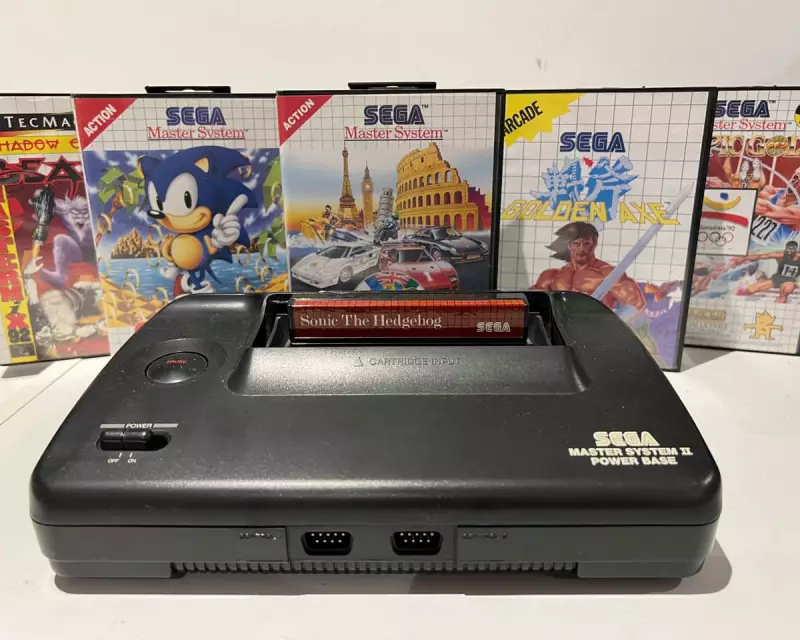
Even as Sega launched the Mega Drive, the Master System's European popularity ensured continued support with simplified versions of Mega Drive hits like Sonic the Hedgehog. The spin-off Sonic Chaos, developed for both Master System and the hardware-compatible Game Gear, remains a series highlight. Sega later released the budget-friendly Master System 2 at just £50, bundled with Sonic.
The console cultivated its own classic library beyond arcade ports and adaptations. Wonder Boy III: The Dragon's Trap, Psycho Fox, Phantasy Star and Alex Kidd in Miracle World stand as genuine masterpieces, often overlooked beside their NES counterparts. For modern collectors, these titles offer accessibility without the inflated prices plaguing classic Nintendo games.
While America made 'Nintendo' synonymous with gaming, the Master System triumphed across Europe and Brazil. History may have been unkind to Sega's pioneering machine, but for those who experienced its revolutionary impact, the Master System represented gaming's future - a promise spectacularly fulfilled by its successor, the Mega Drive.