Ancient Sea Turtle Stampede Revealed in Italian Cliff Formations
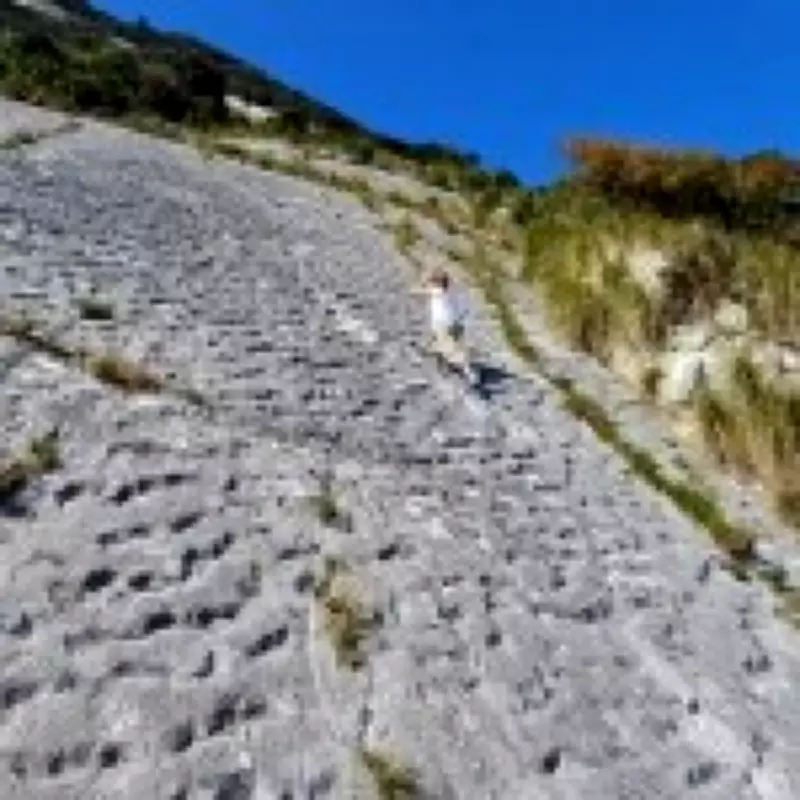
Researchers have potentially solved an intriguing geological mystery surrounding thousands of peculiar moon-shaped marks etched into limestone cliffs near Ancona, Italy. The remarkable formations, discovered by curious rock climbers hiking along Monte Cònero overlooking the Adriatic Sea in 2019, have now been attributed to an extraordinary event from 80 million years ago.
From Ancient Seafloor to Modern Cliffside
A comprehensive study published in the prestigious journal Cretaceous Research reveals that the limestone slab containing these mysterious grooves was originally an ancient seafloor that was dramatically thrust upwards by powerful seismic activity. Researchers from the Coldigioco Geological Observatory meticulously examined the paired imperfections and developed a compelling hypothesis about their origin.
The investigation followed a process of elimination that began with the observation that the marks were likely created by fins. Fish were quickly ruled out as potential culprits, being too lightweight and soft-bodied to leave such distinct impressions in the sediment. This led scientists to consider marine reptiles as the most plausible candidates.
The Reptilian Candidates Narrow Down
Two formidable prehistoric creatures initially came under consideration: the giant mosasaurs and plesiosaurs, both possessing formidable needle-sharp teeth. However, researchers determined these predators were typically solitary hunters, making them unlikely to create such extensive, patterned markings. This elimination process left just one remaining possibility from the Late Cretaceous period's marine inhabitants.
The humble sea turtle emerged as the prime suspect, with researchers proposing a fascinating scenario. The fossilised seafloor, now forming part of Cònero Regional Park's cliffside, was once situated hundreds of meters beneath the ocean's surface. According to the paper's authors, a significant earthquake triggered a mass evacuation of a sea turtle colony, sending them paddling frantically toward the open ocean.
Preservation Through Catastrophe
During this seismic event, an underwater avalanche of mud engulfed the seafloor, remarkably preserving the turtles' frantic fin-steps for millions of years. Such underwater track preservation represents an exceptional find, as ocean currents typically erase such evidence relatively quickly. The research team acknowledges that their findings require further verification by ichnologists – specialists who study fossil tracks and traces.
Scientific Skepticism and Alternative Explanations
Not all experts are convinced by the sea turtle stampede hypothesis. Professor Peter Falkingham, a distinguished palaeobiologist at Liverpool John Moores University who was not involved in the research, expressed reservations about the interpretation. 'I don't see much evidence in the paper that these are actually tracks,' he commented to Metro.
Professor Falkingham noted the uniformity and extensive coverage of the marks across the surface, suggesting they more closely resemble truncated ripple marks created by water movement rather than animal impressions. 'I've never seen flipper impressions like those on the cliffs before,' he added, emphasising the need for stronger evidence to support the dramatic stampede narrative.
The professor proposed an alternative explanation, suggesting the patterns might represent natural sedimentary textures formed by aquatic processes rather than prehistoric animal behaviour. This scientific debate highlights the ongoing nature of palaeontological discovery and interpretation, where new findings often generate discussion within the academic community before reaching consensus.