The Schomburg Center for Research in Black Culture, a New York Public Library research center, is celebrating its 100th anniversary. Founded from the personal collection of Arturo Alfonso Schomburg, an Afro-Puerto Rican historian and intellectual of the Harlem Renaissance, the center now houses over 11 million items documenting the Black experience worldwide.
Schomburg's Vision and Legacy
Arturo Schomburg, born in Puerto Rico in the late 19th century, was told by a teacher that Black people had no significant history. He dedicated his life to disproving that by collecting art, books, and artifacts. In 1926, the New York Public Library purchased his personal library of 4,600 pamphlets, artwork, and books. "Schomburg always sought to collect the global Black experience," said Barrye Brown, curator of manuscripts, archives and rare books at the Schomburg Center. "When you look at what he was collecting, you see his vision of what the African diaspora is like… it is all around the world, it’s multilingual; there’s so many different experiences represented."
Exhibits and Collections
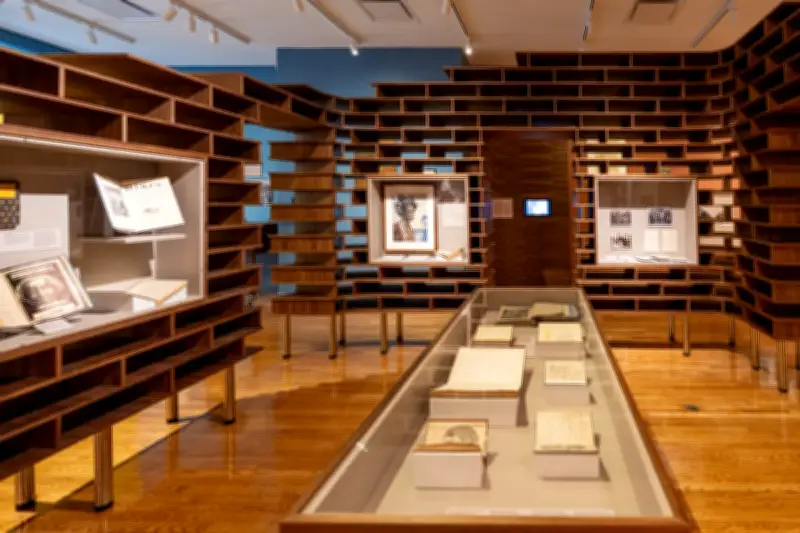
The Schomburg is celebrating its centennial with two exhibits at its own center. 100: A Century of Collections, Community, and Creativity ran from 8 May 2025 to 30 June 2026, featuring a visitor sign-in book that included poet Langston Hughes. To Uncover and Reveal to the World, running until 5 December 2026, includes items from Schomburg's original library, such as a small Qur'an from the Ottoman Empire loaned to New York Mayor Zohran Mamdani for his swearing-in ceremony in January 2025.
Several items from the Schomburg are also part of the Declaring America: 1776 and Beyond exhibit at the New York Public Library's Stephen A Schwarzman Building, on display until 10 January 2027. These include an issue of the student newspaper 40 Acres and a Mule, commemorative prints from the March on Washington for Jobs and Freedom, and a flyer for Decoration Day events in 1870. "You can’t really understand US history fully without understanding Black history," said Joy Bivins, director of the Schomburg Center.
Key Artifacts and Their Significance
The collection includes artwork from Harlem Renaissance sculptor Augusta Savage and Maya Angelou's Smith Corona typewriter. The Schomburg holds over 840 boxes of Angelou's manuscripts and personal items, making it their largest processed collection. An early manuscript of Angelou's I Know Why the Caged Bird Sings, handwritten on yellow paper, was recently handled by assistant curator Kassidi Jones. "She would start by hand, and I think that deep engagement and that serious writing practice is part of the reason that she is the legend that she is today," Jones said.
Another significant item is an early copy of Harriet Jacobs's 1861 autobiography Incidents in the Life of a Slave Girl, which Schomburg acquired decades later. "This is really the first time that you see a glimpse into what enslavement is like for a Black woman," Brown said. "She talks about the sexual harassment, she talks about the abuse, she talks about motherhood, and these are things that you’re not seeing in the narratives of that time."
Staff and Perspectives
Most of the staff at the Schomburg are women of color. Tammi Lawson, art and artifacts curator for nearly 40 years, has worked to increase pieces by Black women artists. "Black women in collections, as well as auctions or museums, are really underrepresented," Lawson said. The center now has the largest collection of Augusta Savage's work in a public institution. Lawson described the Schomburg's collection as "a counter-narrative of history."
Collection manager Serena Torres finds personal meaning in the artifacts. Her favorite piece is textile artist Lynore Routte's jar Crying Eye Portal Vessel for Transmuting Grief. "I’ve got a lot of grief, and I give it to the vessel," Torres said. "These things have so much meaning and we have to think about that as we handle them, as we work with them."
Future of the Schomburg
Lawson hopes the collection will continue to demonstrate the expansiveness of the African diaspora. She recalled unpacking a carved enema from pre-colonial central Africa, noting that "Africans, whatever they do, they’re making it beautiful." The Schomburg also released a playlist of 100 songs curated by staff to encapsulate the past 100 years, including Billie Holiday's Strange Fruit.