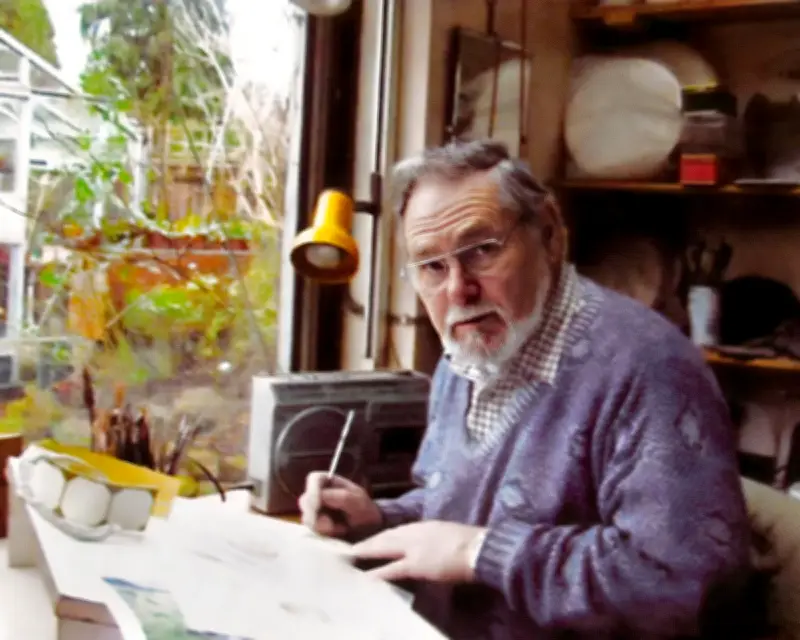
Ron Dutton, a sculptor, medallist and teacher whose enthusiasm and generosity helped revive the art of contemporary medal-making in Britain, has died aged 90.
Co-founding the British Art Medal Society
In 1982, Dutton co-founded the British Art Medal Society with Mark Jones of the British Museum. At the time, medal-making was often regarded as an old-fashioned pursuit. Dutton saw it as a small-scale sculptural form capable of addressing contemporary life with imagination, wit and originality. He encouraged artists to think beyond traditional portraiture and commemoration, viewing the medal's physical limitations as creative opportunities. Under his influence, medals became vehicles for humour, satire, environmental concerns and abstract ideas.
Award-winning medal: The Choice Is Ours
One of Dutton's most celebrated works is his 1990 medal, The Choice Is Ours, which won a Royal Mint competition that year for designs with the theme of conservation. On one side, a fish swims above piles of rubbish discarded on the seabed; on the other, a magnificent tree stands amid non-biodegradable waste. The medal captured both his environmental concern and his quietly mischievous sense of humour. As he once remarked: “Of all the things an artist can leave behind, perhaps a medal or a coin offers a hell of a lot more eternity than anything else you can think of.”
Mentoring a new generation
Through initiatives such as the New Medallist Scheme and the Student Medal Project, Dutton introduced countless artists and students to medal-making. He even personally funded awards to help artists establish medal-making studios.
Early life and education
Born in Nantwich, Cheshire, to Ada (nee Wilkes) and Walter Dutton, Ron attended Nantwich grammar school before completing national service in the Royal Navy, where he trained as a frogman. In 1956, he entered the fine art department at King’s College, Newcastle, then part of Durham University, studying under influential teachers including Victor Pasmore and Richard Hamilton.
Teaching career
After graduating, he taught at Sunderland College of Art, then in 1964 moved to Wolverhampton College of Art, where he became head of sculpture at age 28, remaining until his retirement in 1985. He never retired from making art and continued working from his studio well into his late 80s.
Personal qualities and legacy
Dutton was remembered for his puckish wit, practical common sense and refusal to confuse solemnity with seriousness. Many artists can seem self-important, but Dutton never did. He had a perfectly judged one-liner for almost every situation and a knack for making people feel valued. A keen supporter of Wolverhampton Wanderers, he followed his football team with the same loyalty he showed to friends, students and colleagues.
In 1959, he married Leila Fagelman, who died in 2014. He is survived by their children, Eva and Ben.