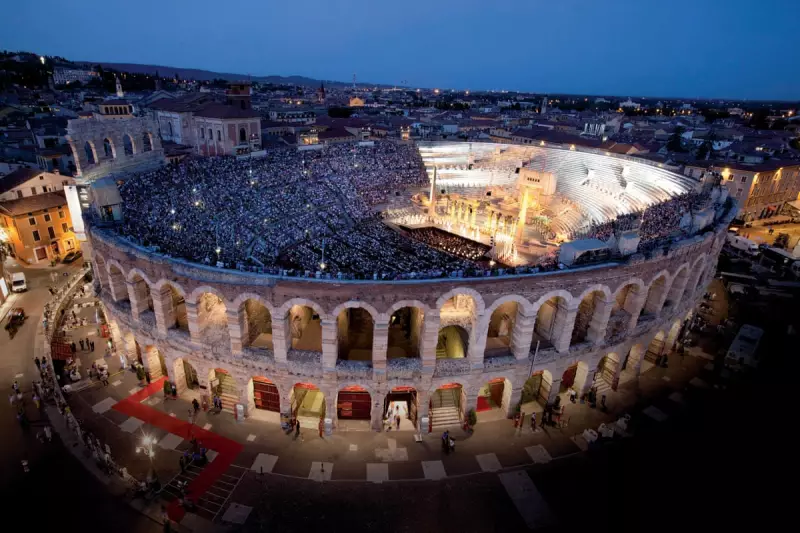
The historic Arena di Verona, a Roman amphitheatre that predates the Colosseum, is undergoing a significant accessibility transformation ahead of hosting the Winter Paralympics opening ceremony in 2026. This 2,000-year-old venue will be equipped with modern facilities including a lift and accessible toilets to welcome athletes and spectators with disabilities.
Balancing Heritage with Modern Accessibility
Andrea Varnier, chief executive of Milano-Cortina 2026, has described the Arena di Verona as "the symbol of our Paralympic Games" while acknowledging that some traditionalists view the changes as architectural "blasphemy". The €20 million (£17.5m) refurbishment represents a careful balancing act between preserving ancient heritage and creating inclusive spaces.
"The decision to stage the opening ceremony in the Arena di Verona is not just an aesthetic one," Varnier explained. "It was also an idea to make the arena accessible and not only the arena itself but the entire route from the railway station to the venue."
Comprehensive Paralympic Legacy Programme
The arena transformation forms just one part of a broader accessibility legacy that organisers are building for the Games. The initiative extends beyond the venue itself to include improved public transport access and funding for winter para-sports education and training programmes.
Varnier emphasised the importance of these developments, particularly given the challenging environment for winter sports. He hopes these infrastructure improvements will help stimulate growth in winter para-sports participation across Italy and beyond.
Environmental Considerations for Winter Games
In another significant commitment, organisers have pledged that artificial snow production for both the Olympic and Paralympic Games will be conducted without chemicals. This addresses growing concerns about environmental impact amid climate change challenges.
"We know that with climate change, snowmaking becomes critical," Varnier acknowledged. "But a new system we have put in place means we can use water without harming the local ecosystem. The new machinery for snowmaking uses only water - no chemicals are added in any of our snowmaking technologies."
The 2026 Winter Paralympics will feature athletes from 50 countries competing across six disciplines: alpine skiing, biathlon, cross-country skiing, ice hockey, snowboard and wheelchair curling. While ticket sales for the Paralympic events are currently trailing behind the Olympic Games, organisers remain confident about attracting spectators as the event approaches.
Varnier considers the Games already successful in terms of the lasting legacy being created. "To grow winter sports is more challenging and we know that," he said. "But we hope that we will give another small brick in making this an even larger and more widespread movement for everyone."