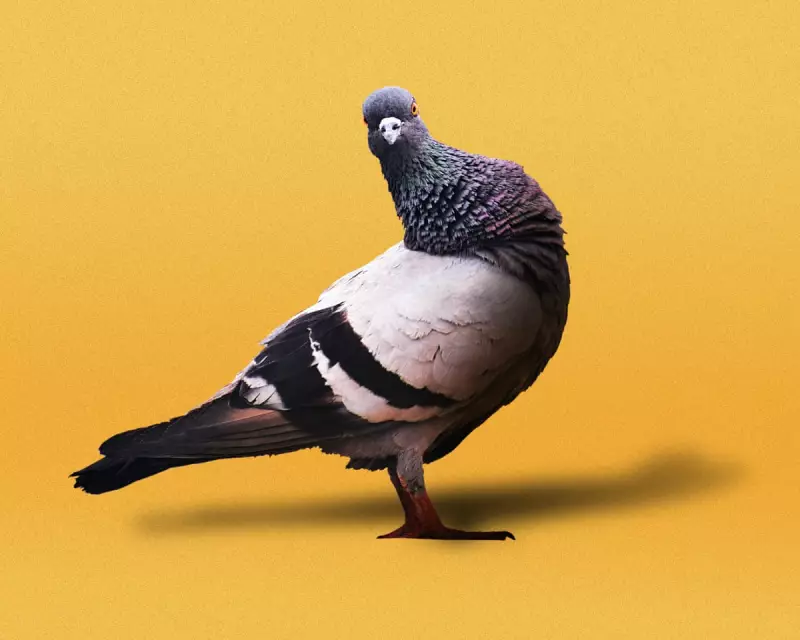
Standing on a hill in south London, comedian Toussaint Douglass knows exactly what he would figuratively die for: giving pigeons the respect they are long overdue. These often-dismissed birds, he argues, are the unsung working-class heroes of the avian world and human history.
More Than Just 'Flying Rats': A Partnership Forged in 4500 BC
The modern disdain for pigeons is a historical irony. Our relationship with them began around 4,500 BC, when early farmers domesticated the rock dove (Columba livia). They built pigeon houses to breed them, providing a reliable source of food—essentially, the original pigeon nuggets for our ancestors.
This close cohabitation led to the discovery of the pigeon's extraordinary homing instinct. Capable of finding their way home from over 1,000 kilometres away, they became the world's first postal service. From the Roman and Greek empires to the Ottomans and Mughals, these birds were the backbone of long-distance communication across vast territories, offering a reliability modern services can only envy.
Feathers in the Fight: Pigeons in the Second World War
The most compelling chapter in pigeon history is their wartime service. During the Second World War, Britain established the National Pigeon Service, which mobilised over 200,000 birds. While Nazi Germany boasted the advanced Luftwaffe, Britain called upon these humble birds that scavenged floor chips.
They were not just mascots; they were heroes. Pigeons carried vital intelligence, often under fire, saving countless human lives. One such hero was Mary of Exeter, an intelligence pigeon who survived a German falcon attack and sustained severe injuries, including a damaged wing and neck shrapnel. Hailing from the pigeon proletariat—she lived above a bootmaker's—Mary embodied the 'keep calm and carry on' spirit, returning to duty after her wounds.
The Modern Snub: Why Do We Hate Our Historic Allies?
Today, this legacy of service is forgotten, replaced by hostility. Urban landscapes are armed with anti-pigeon spikes, netting, and stern warnings. Their crime? An impressive tolerance for humans and a lack of shame in scavenging leftovers—a trait many might recognise in a friend who 'helps' by only carrying their own drink from the bar.
Douglass makes a plea: to truly see them. Not as urban pests, but as fellow commuters in the journey of life. He invites us to spend a moment pigeon-watching, to appreciate the unique bird our ancestors valued so highly. His stand, alongside what he describes as 20 hard-as-nut Lewisham pigeons, is a call for a long-overdue reassessment of these working-class veterans of history.
Toussaint Douglass, a comedian from Lewisham, will explore these ideas in his show 'Accessible Pigeon Material' at London's Soho Theatre from 26-31 January 2026.