Philadelphia Initiates Legal Action Against Federal Government Over Slavery Exhibit Removal
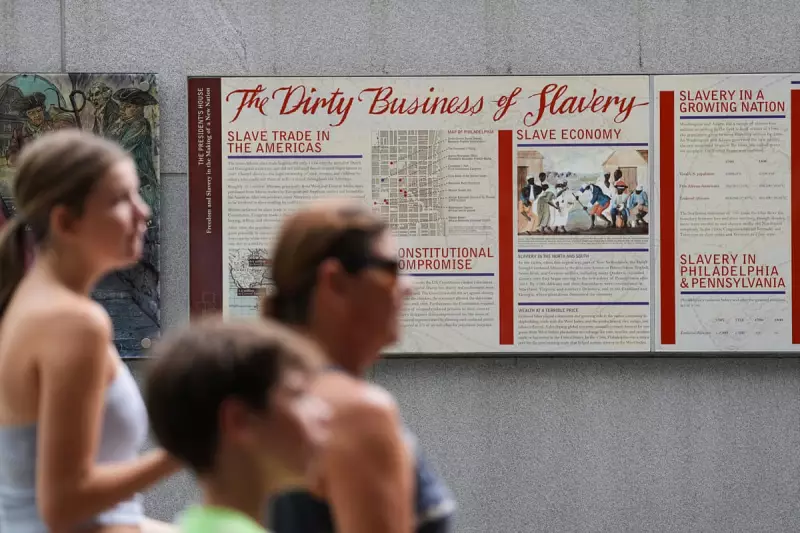
Philadelphia has launched a significant legal challenge against the Trump administration following the decision by the National Park Service to dismantle a long-standing slavery-related exhibit at Independence National Historical Park. The exhibit was located at the President's House site, the former residence of George Washington and John Adams, and included detailed information about the individuals enslaved by Washington, alongside a broader historical timeline of slavery in the United States.
Details of the Federal Lawsuit and Defendants
The city formally filed its lawsuit in federal court on Thursday, naming the US Department of the Interior and its secretary, Doug Burgum, as well as the National Park Service and its acting director, Jessica Bowron, as defendants. The legal action seeks a court order to restore the exhibits while the case is being heard, arguing that their removal constitutes a material alteration to the historical display.
In the legal filing, city lawyers emphasised that the interpretive displays relating to enslaved persons are an integral part of the exhibit. They also noted that officials were not provided with advance notice about the planned changes, which has raised concerns about transparency and due process in the management of public historical sites.
Political and Public Reactions to the Exhibit's Dismantling
The decision to remove the exhibit has sparked strong criticism from local and state leaders. Josh Shapiro, the Democratic governor of Pennsylvania, condemned the move, accusing Trump of attempting to rewrite and whitewash American history. In a message posted on social media, Shapiro asserted that Pennsylvania is committed to learning from its history, even when it is painful, and that the administration had chosen the wrong city and commonwealth for such actions.
Kenyatta Johnson, the president of the Philadelphia City Council, echoed these sentiments in a statement, describing the removal as an effort to whitewash American history. He stressed that history cannot be erased simply because it is uncomfortable, and that altering the landscape of the President's House does not change the historical record.
Historical Context and Broader Implications
The exhibit has its roots in a 2003 congressional encouragement for the National Park Service to formally acknowledge the enslaved people who lived and worked at the President's House. In 2006, the city and the agency agreed to collaborate on creating the exhibit, which opened in 2010 with a memorial and informational panels focused on slavery. This legal dispute is part of a wider pattern under the Trump administration, which has sought to eliminate cultural content that does not align with its policy agenda.
An executive order issued by Trump last March accused the previous Biden administration of promoting divisive or anti-American ideology and instructed the interior secretary to alter materials under the department's control that were deemed to perpetuate a false revision of history. This has led to changes in other institutions, such as the Smithsonian, where displays mentioning Trump, including text about his impeachment and role in the January 6th Capitol attack, have been removed or altered.
The lawsuit highlights ongoing tensions between local governance and federal oversight in the preservation of historical narratives, particularly those involving sensitive topics like slavery. As the case proceeds, it will likely draw significant attention to issues of historical accuracy, cultural memory, and the role of government in shaping public history.