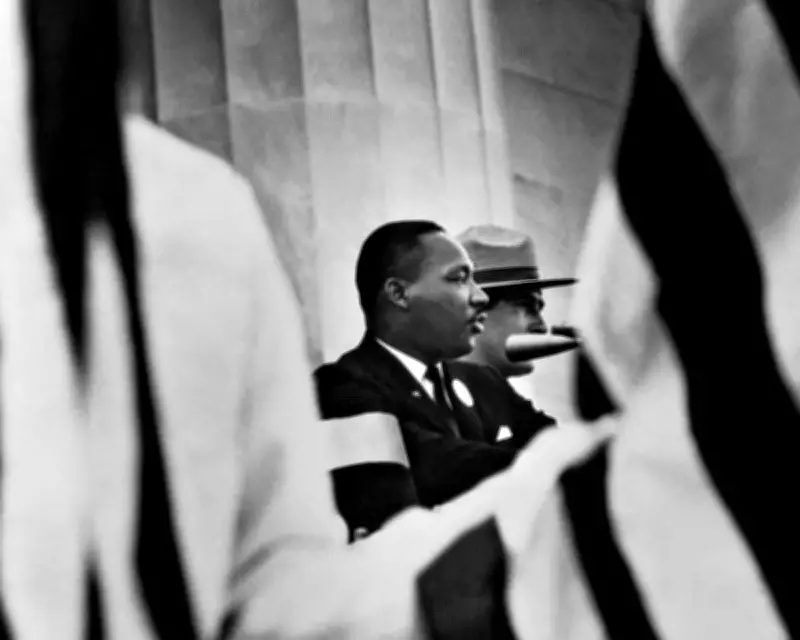
A new book by Lerone Martin, director of the Martin Luther King Jr Research and Education Institute at Stanford University, sheds light on the early life of the civil rights icon. Titled Young King: The Making of Martin Luther King Jr, the work delves into King's childhood in Atlanta, his time at Morehouse College, and his studies at Crozer Theological Seminary.
Discovery of Untapped Resources
Martin stumbled upon previously overlooked materials, including five letters King wrote at age 15 during a summer in Simsbury, Connecticut. These letters, detailing his experience outside the Jim Crow South, inspired Martin to explore King's origin story. He noted that despite extensive scholarship on King, these letters had been largely ignored.
Personal Inspiration
The book also stems from Martin's own life. After marrying in 2022 and becoming a stepfather, he reflected on raising responsible children. Watching his sons engage with superhero movies sparked a question: What about Martin Luther King Jr's backstory? This led to the book and a planned graphic novel, for which Martin sought input from fifth-graders.
King's Early Encounters with Racism
King grew up in Atlanta as the son of a prominent preacher, but like all Black children in the South, he faced Jim Crow. His parents gave him 'the talk' about police encounters. In 1947, at age 18, King was stopped by police in Connecticut after a party. Martin found no official records of the incident but uncovered local newspapers blaming southern migrants for crime, as well as accounts from Jamaican workers who reported police harassment. He also noted that the FBI in 1947 focused on 18-year-olds as crime perpetrators.
Jim Crow Travel
Martin highlights the significance of trains in Black culture, from the Underground Railroad to gospel songs, while noting that trains were also sites of racial humiliation. King's journey north did not shield him from racism.
Parallels with Malcolm X
During King's 1947 summer in Connecticut, Malcolm Little (later Malcolm X) was also in the area selling suits. Though no evidence suggests they met, Martin muses on the tantalizing possibility. Both young men aspired to be lawyers and admired civil rights lawyers like Thurgood Marshall. However, they were moving in opposite ideological directions. King and Malcolm X met only once, in 1964, but Martin notes that King and Coretta Scott's first apartment in Boston was less than two miles from Malcolm's home.
King's Relationships
The book explores King's relationships with women, including his mother, grandmother, and eventual wife Coretta Scott. Martin aims to portray King as a normal teenager and young adult, experiencing love, rejection, and growth. He emphasizes that King was not always a ladies' man; before fame, he often faced disinterest from women who were unimpressed by his plans to become a minister in the Deep South.
Nearly 60 years after his assassination, King remains a monumental figure. Martin's book, however, focuses on the young man behind the legend—unformed, unsure, and learning from his mistakes. As Martin says, 'This was just a young man, as Coretta says, in a hurry to get on with his destiny.'