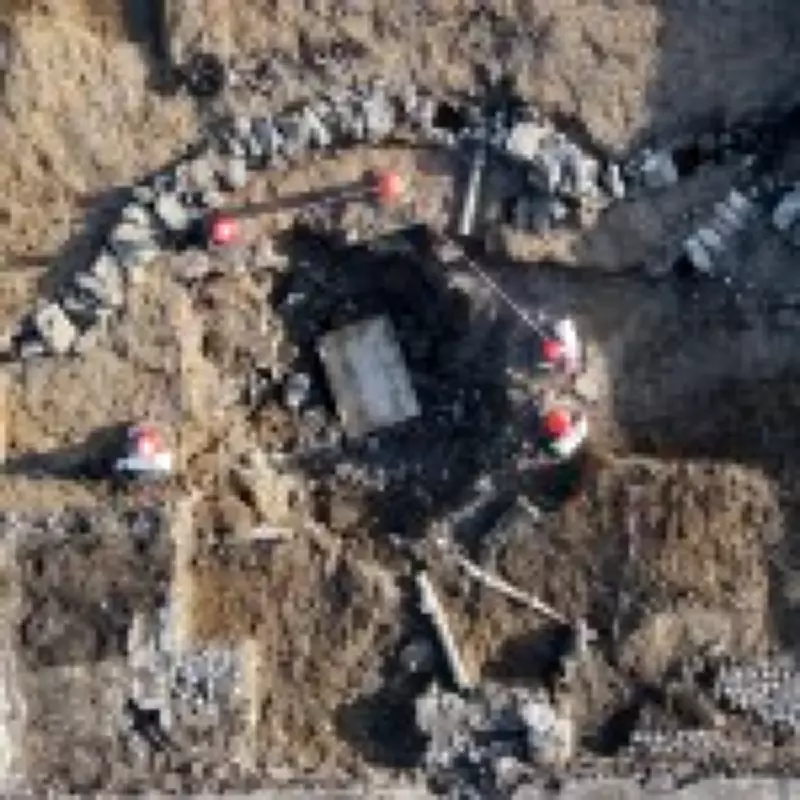
The ongoing investigation into the former St Mary's mother and baby home in Tuam, County Galway, has taken a sombre turn with the discovery of additional infant remains. A further 22 sets of remains have been unearthed at the site, significantly increasing the total number uncovered by authorities.
Escalating Discovery at Tuam Site
According to the Office of the Director of Authorised Intervention Tuam (ODAIT), the latest findings bring the total number of remains recovered since excavation work commenced in July to 33. The painstaking operation is focused on identifying the remains of infants who tragically died at the institution between 1925 and 1961.
Historical Context and Previous Research
This grim discovery builds upon earlier research led by local historian Catherine Corless in 2014, which indicated that 796 babies and young children were buried in a sewage system at the Co Galway institution during that period. The current excavation is a direct response to these findings, aiming to provide closure and identification for the lost children.
ODAIT has confirmed through radiocarbon dating that all remains discovered thus far belong to infants who were buried in coffins during the operational years of the mother and baby home, specifically between 1925 and 1961. These remains were located in an area historically documented as a 'burial ground' by the Mother and Baby Homes Commission of Investigation (MBHCOI).
Additional Remains from Earlier Period
In a separate but related development, ODAIT believes that a further seven sets of human remains found adjacent to the boundary wall date from the Workhouse era of the site, which spanned from 1841 to 1918. This suggests a longer and more complex history of burial at the location than previously understood.
Innovative Forensic Approaches
Faced with what it describes as a 'unique combination of forensic and engineering challenges', the investigative team is employing innovative methods to advance their work. The excavation of comingled infant remains from subsurface concrete chambers in the Memorial Garden, initially identified during 2016/2017 excavations, presents particular difficulties.
To address these challenges and ensure adherence to international standards and best practice, ODAIT is constructing an above-ground replica of a section of the historic sewage tank. This artificial replica will be used to test different methodologies in a controlled environment, aiming to refine techniques for handling the sensitive remains.
DNA Sampling Progress
Significant progress is being made in the collection of DNA samples, which are crucial for identifying the remains. Since the last update, eight additional family reference DNA samples have been taken and delivered to Forensic Science Ireland, bringing the total number of samples to 28.
The team is actively engaging with a further 175 individuals who have contacted ODAIT to inquire about providing DNA samples. Currently, over 65 cases are being processed for determination of eligibility, with arrangements being made to collect samples in the coming weeks.
This meticulous process represents a critical step toward providing answers and closure for families affected by the tragic history of the Tuam mother and baby home, as authorities continue their solemn work at the site.