Mohenjo-daro Discoveries Reveal City Is Older Than the Pyramids
Groundbreaking new research from excavations at Mohenjo-daro, an ancient urban center in present-day Pakistan, suggests the city's origins are significantly older than previously established, potentially rewriting the history of early civilization development. Fresh findings indicate that Mohenjo-daro, one of the largest cities of the Bronze Age, was occupied centuries earlier than thought, dating back to around 3300–2600 BC during the Early Harappan phase.
Radiocarbon Dating Challenges Historical Timeline
Recent radiocarbon dating from excavations conducted between 2025 and 2026 reveals that Mohenjo-daro was already active in the Early Harappan period, making it older than the Egyptian pyramids. This discovery challenges the long-held belief that urban life in the Indus Valley emerged rapidly around 2600 BC, pointing instead to a more gradual and multi-phase process of development.
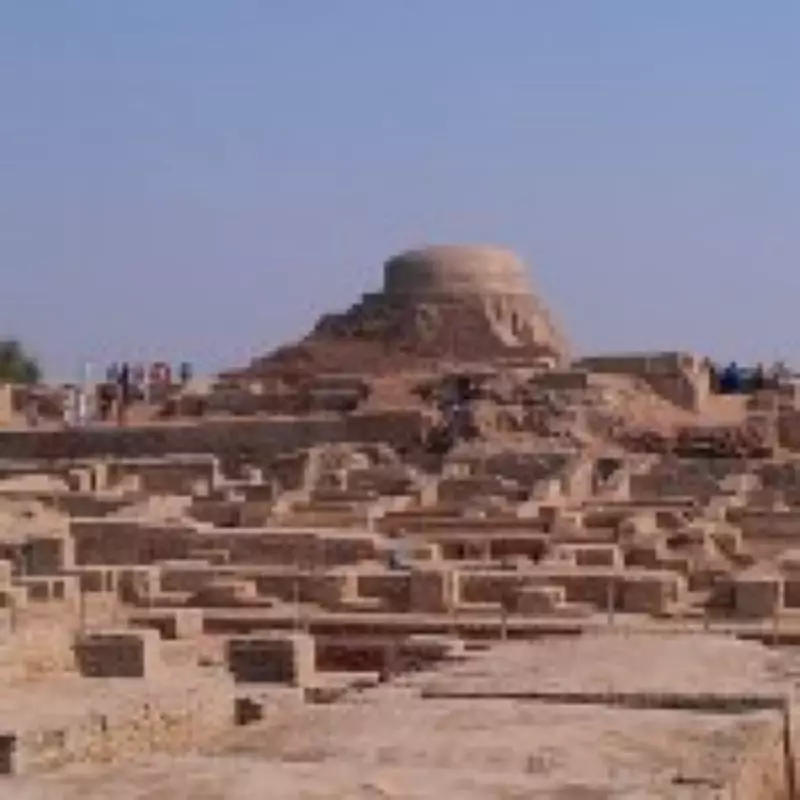
Led by Dr Asma Ibrahim and Ali Lashari from Pakistan, along with Dr Jonathan Mark Kenoyer from the University of Wisconsin, the research focused on an area west of the site's Stupa Mound. Archaeologists re-examined a large mudbrick structure first uncovered in 1950 by Mortimer Wheeler, who initially interpreted it as a flood-control embankment.
New Analysis of Ancient Structures
Using stratigraphic study and advanced radiocarbon dating, researchers have concluded that the structure is actually a multi-phase mudbrick city wall, built and expanded over several centuries rather than serving a purely defensive or hydraulic function. Samples from its lowest levels date the earliest construction to approximately 2700–2600 BC, towards the end of the Early Harappan period.
Evidence beneath the wall revealed even earlier settlement activity, including pottery typical of the Kot Diji phase, indicating that Mohenjo-daro evolved from an existing community rather than being constructed from scratch during the later Mature Harappan period. Upper levels of the wall show continued construction after 2600 BC, when the city reached its peak, with maintenance lasting until at least 2200 BC, suggesting long-term planning and resource management.
Implications for Understanding Urban Civilization
Mohenjo-daro, covering over 620 acres and thought to have supported up to 40,000 people at its height, is renowned for its advanced urban planning, including grid-like streets, standardized baked bricks, sophisticated drainage systems, and monumental structures like the Great Bath. However, one of its greatest mysteries remains the undeciphered Indus script found on seals and tablets.
Without written records, archaeologists rely on physical evidence and scientific techniques to reconstruct the city's past. These new findings mark a significant shift in understanding the rise of urban life in the Indus Valley, suggesting a gradual development process rather than a sudden emergence, with early communities laying the foundations for one of the world's earliest civilizations.