The Amphibian Banknote Mexicans Can't Bear to Spend
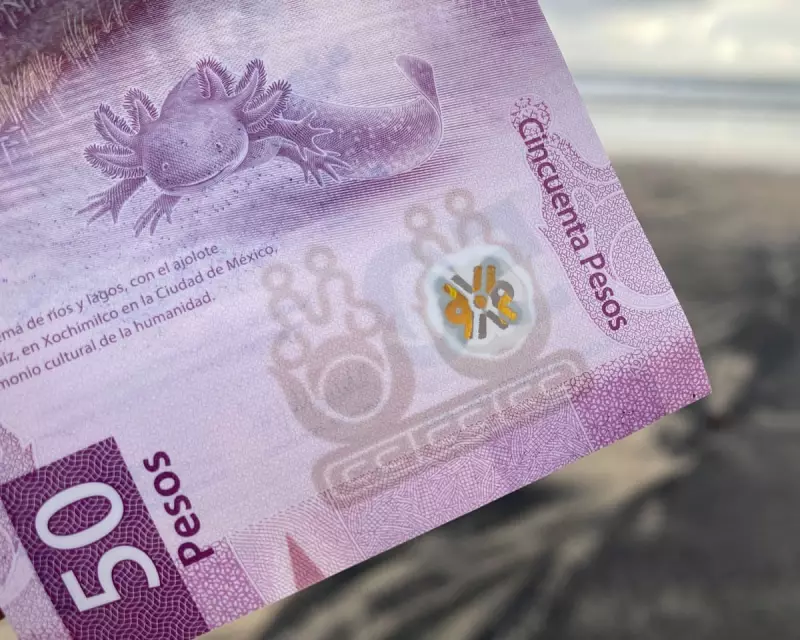
In an unusual phenomenon sweeping Mexico, nearly 13 million people are hoarding a special edition banknote featuring the country's most adorable amphibian - the axolotl. The stylish 50 peso note, which entered circulation in 2021, has become so popular that millions of Mexicans are treating it as a collector's item rather than regular currency.
The Bank of Mexico recently revealed that 12.9 million citizens are holding onto this distinctive banknote, with many keeping multiple copies. While only a minority stated they would never spend the notes, the survey found approximately $150 million worth had been temporarily removed from circulation at the time of the study.
From Museum Resident to Banknote Star
The banknote's celebrity axolotl, named Gorda, spent most of her life in a Mexico City museum before achieving national fame. She served as the model for the depiction of Mexico's iconic salamander species that graces the currency. The design proved so impressive that the International Bank Notes Society declared it the Note of the Year shortly after its release.
Gorda, now considered elderly, rarely makes public appearances at Axolotitlán, the museum dedicated to these unique creatures. However, museum founder Pamela Valencia told El País that featuring Gorda in the banknote design was worthwhile because it helped raise public awareness about this endangered species.
Some of the earliest printed axolotl banknotes are now being traded for up to 100 times their face value, demonstrating their extraordinary appeal to collectors. What makes this trend particularly remarkable is that it's specific to the axolotl design - only 12% of those collecting it said they did the same for other banknotes.
Ancient Symbol of Mexican Heritage
The axolotl's appeal stems from its deep cultural significance in Mexico. These fascinating creatures, often called "forever tadpoles" because they never lose their gills to become land dwellers like other salamanders, predate even the Aztec civilization. They originally inhabited Lake Texcoco, situated beneath the perpetually smoking Popocatépetl volcano.
When the Aztecs arrived around AD 1300, they built their imperial capital Tenochtitlan on an island in the middle of the lake - a scene beautifully reproduced on the reverse side of the banknote based on Diego Rivera's mural of the ancient city. The Aztecs not only consumed axolotls as food but also named them after their god of fire and lightning, Xolotl.
Following the Spanish conquest of Tenochtitlan, the new rulers drained the lake, confining the remaining axolotl population to Xochimilco on the southern edge of what is now Mexico City. This area represents the last remnant of the original waterways where these creatures once thrived.
Today, wild axolotl populations have dramatically declined, with their numbers in Xochimilco collapsing to just 36 per square kilometre by 2014. This makes conservation efforts and public awareness campaigns increasingly crucial for the species' survival.
Cultural Renaissance for an Endangered Species
Valencia expressed enthusiasm about the axolotl's growing cultural prominence, noting that "We used to see souvenirs of jaguars and hummingbirds. Today we can see how the axolotl is becoming part of our culture, our everyday lives." She emphasised the fundamental connection between awareness and conservation, stating simply that "We cannot save something if we don't know it exists."
The banknote's unexpected success demonstrates how currency design can transcend mere financial function to become a vehicle for cultural expression and environmental education. For millions of Mexicans, the 50 peso note has evolved from simple legal tender to a meaningful symbol of national heritage and ecological consciousness.
As these colourful banknotes continue to be treasured rather than spent, they serve as daily reminders of Mexico's unique biological heritage and the ongoing struggle to preserve endangered species in an increasingly urbanised world.