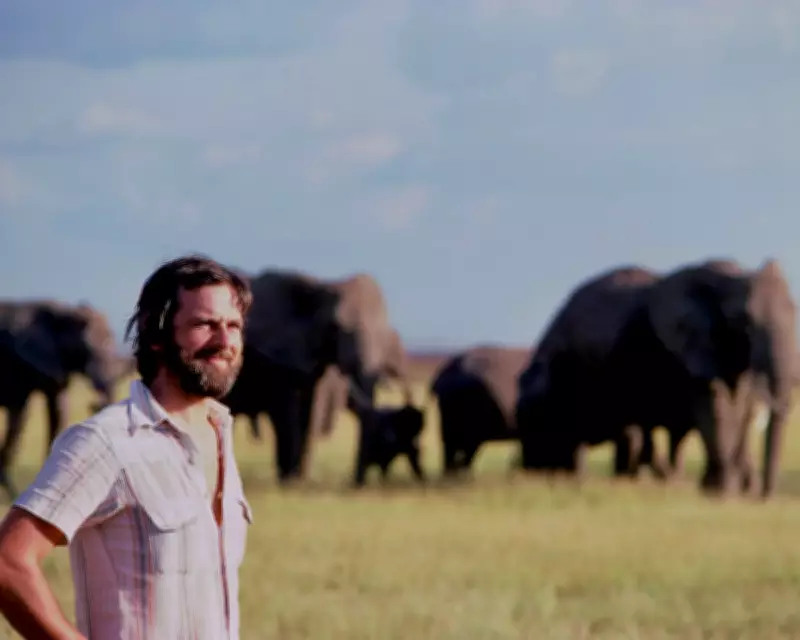
Mike Salisbury, a pioneering wildlife television producer who worked on the BBC's landmark 'Life' series with Sir David Attenborough and edited the acclaimed program 'The Natural World', has died aged 84 after a brief illness.
Career Highlights
In a film-making career spanning more than four decades, Salisbury served as series producer for some of the BBC Natural History Unit's most groundbreaking and popular programs. These included 'Kingdom of the Ice Bear' (1985), 'The Private Life of Plants' (1995), 'The Life of Birds' (1998), 'The Life of Mammals' (2002), and 'Life in the Undergrowth' (2005) – all part of the 'Life' series authored and presented by his childhood hero, Sir David Attenborough. During the 1990s, he was series editor of 'The Natural World', steering the long-running series toward hard-hitting conservation issues.
Recognition and Awards
A self-effacing man, Salisbury listened with keen interest at the Wildscreen Panda awards in 2006 as Attenborough listed the accomplishments of the winner of the award for outstanding achievement. Only when his own name was announced did he realize that Sir David had been talking about him. This award, followed by his appointment as OBE in 2007, recognized Salisbury's reputation for innovation and creativity.
Unconventional Path to Wildlife Filmmaking
Salisbury did not follow the traditional route to becoming a wildlife filmmaker. Unlike his peers, most of whom had studied biology at university, he spent his 20s volunteering overseas and then did a range of odd jobs while directing and acting in plays for a local amateur dramatics society. Even when he finally became a TV researcher, he initially worked in science and light entertainment before arriving at the BBC Natural History Unit in the early 1970s.
Early Life and Inspiration
Born in Derry, Northern Ireland, Salisbury was the youngest of three children of Molly (nee Heywood) and Freddy Salisbury, who ran a lawnmower business. Brought up in Harpenden, Hertfordshire, he developed a passion for wildlife at an early age, with his mother teaching him the names of birds, plants, and insects that they saw while walking their dog.
After leaving St George's school with A-levels in English, zoology, and botany, Salisbury decided not to go to university. Instead, he became a volunteer with VSO, traveling by steamship to Swaziland, where he taught Nelson Mandela's children and also worked as a mechanic. Africa's exotic wildlife provided scope for stills photography.
On returning home, he joined his father's business. But having always loved Attenborough's 'Zoo Quest' programs, broadcast for a decade from 1954, Salisbury aspired to a more exciting life: 'There was this man looking at wildlife all round the world. I thought, God, I'd like to do that.'
Breaking into Television
Initially, he pestered Peter Goodchild, the editor of the BBC's science flagship 'Horizon', for work experience. Time and again he was rebuffed and told that there were no vacancies. Finally, he engineered a face-to-face meeting with Goodchild and was offered a couple of weeks as a holiday stand-in researcher. When this ended, Salisbury was told that if he wanted to work in TV he needed to come up with program ideas. So during breaks while driving lorries, he telephoned scientists around the world, posing as a BBC employee. His persistence finally paid off when he was rewarded with a contract.
He also worked in light entertainment, booking guests – including Muhammad Ali, John Lennon, and Yoko Ono – for the initial series in 1971 of Michael Parkinson's chat show, before successfully applying to the Bristol-based Natural History Unit as studio director on the children's program 'Animal Magic'. On his very first episode, he suffered the perils of live TV when a hornbill – which during rehearsal had been perfectly cooperative – decided to fly up into the studio lights just as the opening titles were running. Fortunately, the presenter Johnny Morris ad-libbed about these curious birds, although as Salisbury recalled, 'the damned thing never came back down!'
Landmark Productions
His big break came as an assistant producer on what was to become Attenborough's landmark series 'Life on Earth', filmed over three years and broadcast in 1979. On an early filming trip to the Ngorongoro crater in Tanzania, he and cameraman Maurice Tibbles planned to shoot lions hunting. However, the weather was unusually cold, wet, and miserable – 'like filming on the Yorkshire Moors' – while the lions were only active after dark. After weeks of trying, they went home without any footage. Later that year Salisbury returned and shot one of the series' most memorable sequences, featured in the episode 'The Hunters and Hunted'.
While filming polar bears for 'Kingdom of the Ice Bear', he and cameraman Hugh Miles persuaded the Norwegian army to donate anti-personnel explosives to scare the animals off if they ventured too close. However, one morning they awoke to discover that during the night, a female polar bear had broken into their storage igloo and eaten all the explosives – apparently without suffering any ill effects. The shoot was a great success, with footage of three young cubs emerging from their underground den.
The Private Life of Plants and Jane Fonda
One of Salisbury's greatest achievements was 'The Private Life of Plants'. For this, in the days before video, the team pushed film technology to its limits with trailblazing time-lapse sequences. Yet the series went ahead at all only thanks to Hollywood star Jane Fonda. During a tense meeting with broadcasting mogul Ted Turner, Fonda's husband, it transpired that the co-production money required by the BBC was far too high for the Americans. As Salisbury recalled, Jane suddenly intervened: 'Oh Ted, I love flowers, I think you've got to do it.' Ted smiled and responded, 'OK, you've got your $4 million, now get on with it.'
Personal Life and Legacy
Having inspired so many of his colleagues with his enthusiasm, kindness, and generosity, Salisbury left the BBC in 2006. In 1969, he married Vyv Foot, who became professor of applied microbiology at the University of the West of England. She survives him, along with their children Ben, Clare, and Elly; grandchildren Molly, Tom, Bella, Vic, Cormac, and Peggy; and his siblings Angela and Pete. John Michael Salisbury, television producer, born 29 March 1942; died 13 May 2026.