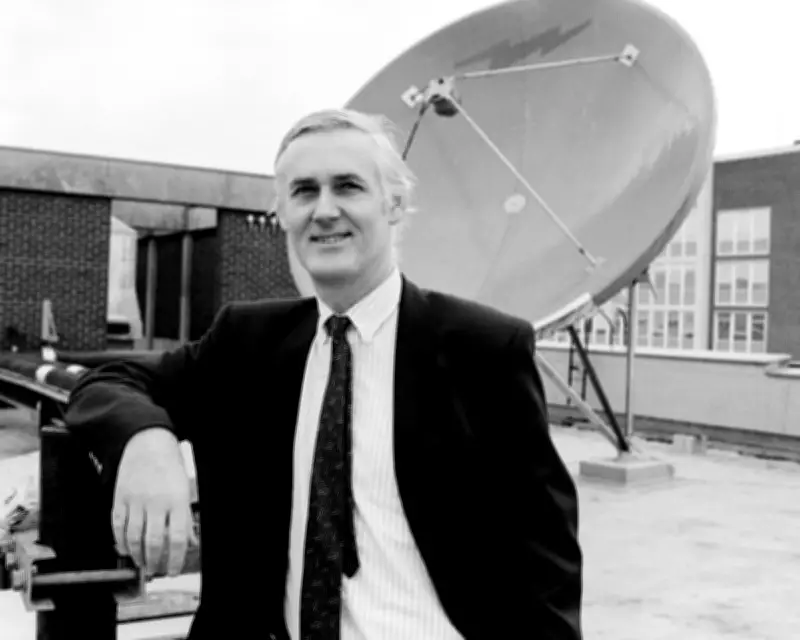
Julian Hunt, a pioneering meteorologist and former director general of the Met Office, has died at the age of 84. His groundbreaking work on turbulence transformed the design of tall structures and deepened understanding of atmospheric and oceanic dynamics.
Early Life and Education
Born on 5 September 1941 in Ootacamund, India, Julian Charles Roland Hunt was the son of Pauline and Roland Hunt, a district officer in the Indian civil service. He spent his early years surrounded by mango trees, cows, and snake charmers. After Indian independence in 1947, the family returned to the UK, where Hunt attended the Dragon School in Oxford and Westminster School in London. His education was interrupted in 1954 when he was hospitalised with a spinal tumour; sharing a ward with war veterans sparked his interest in left-wing politics.
He studied mechanical sciences at Trinity College, Cambridge, and began postgraduate research on the interaction between magnetic fields and flowing metals, particularly mercury. This laid the foundation for his lifelong fascination with fluid behaviour and turbulence.
Career and Contributions
In 1965, Hunt married Marylla Shephard, a textile designer and future landscape architect. He then spent two years at Cornell University on a Fulbright scholarship, where exposure to anti-Vietnam and civil rights protests cemented his socialist beliefs. Returning to the UK in 1968, he worked at the Central Electricity Research Laboratories before becoming a lecturer in applied mathematics and engineering at Cambridge in 1970.
His pivotal moment came in 1965 when three cooling towers at Ferrybridge power station collapsed during a gale. The Central Electricity Generating Board asked Hunt to investigate. He discovered that the towers' design had not adequately accounted for wind force distribution, leading him to develop theories about turbulence that are now essential in constructing tall buildings, skyscrapers, and any large obstruction that alters wind patterns. His ideas became cornerstones of modern turbulence research, applied to everything from oil well leaks to volcanic ash dispersion.
Hunt became director general of the Met Office in 1992, a post he held until 1997. In 1999, he was appointed professor of climate modelling at University College London. He was created a life peer in 2000 and served on numerous House of Lords committees, providing a strong scientific voice on climate change and other issues.
Legal Impact
Hunt's expertise also extended to the courtroom. In 2005, he provided evidence for Sion Jenkins' appeal against his conviction for murdering his foster daughter. Hunt's knowledge of fluid dynamics supported the defence's claim that blood spatters on Jenkins' clothing came from exhaled air when he moved the body, helping secure Jenkins' acquittal.
Personal Life and Legacy
Hunt retired from UCL in 2008 and from the House of Lords in 2021. He is survived by Marylla and their three children, Tristram, Jemima, and Matilda. His son recalled that Hunt was happiest floating in rock pools under the Languedoc sun. Colleagues remember him as a pioneer who linked science with societal needs, leaving an indelible mark on meteorology and engineering.