Deep beneath the bustling streets of London, a secret railway once operated, far removed from the familiar image of red post vans and mail carriers. This was the Mail Rail, a miniature underground network dedicated solely to transporting the city's post.
The Vision for an Underground Postal Network
The ambitious idea was first proposed in 1855 by Rowland Hill, then Secretary to the Post Office. He dreamed of an efficient underground rail system linking London's main Post Offices to the central headquarters. However, the high costs prevented the project from starting until 1863.
In the early 1860s, an experimental pneumatic railway, powered by air pressure, was built nine feet below ground, running between Euston Station and Eversholt Street. This was the Post Office's first foray into subterranean mail transport.
Solving London's Congestion with Electric Trains
By the early 20th Century, London's foggy weather and severely congested streets were causing major delays to mail delivery. Facing a crisis, the Post Office formed a committee in 1909 to investigate solutions.
By 1911, approval was given to construct an electric railway with driverless trains. This innovative system eventually covered six and a half miles of tunnels, averaging 70 feet below the surface. It connected the West and East ends of London with eight stations:
- Paddington District Office
- Western Parcels Office
- Western District Office
- Western Central District Office
- Mount Pleasant
- King Edward Building
- Liverpool Street railway station
- Eastern District Office
The tunnelling was finished in 1917, but the First World War and inflated prices delayed its equipment installation. Interestingly, during the war, the tunnels were used as a safe haven for precious art from the National Portrait Gallery and the Tate Gallery.
Operation, Decline, and Legacy
After these setbacks, the railway finally opened on December 5, 1927. Parcels initially ran between Mount Pleasant and Paddington, with all routes becoming fully operational by March 1928.
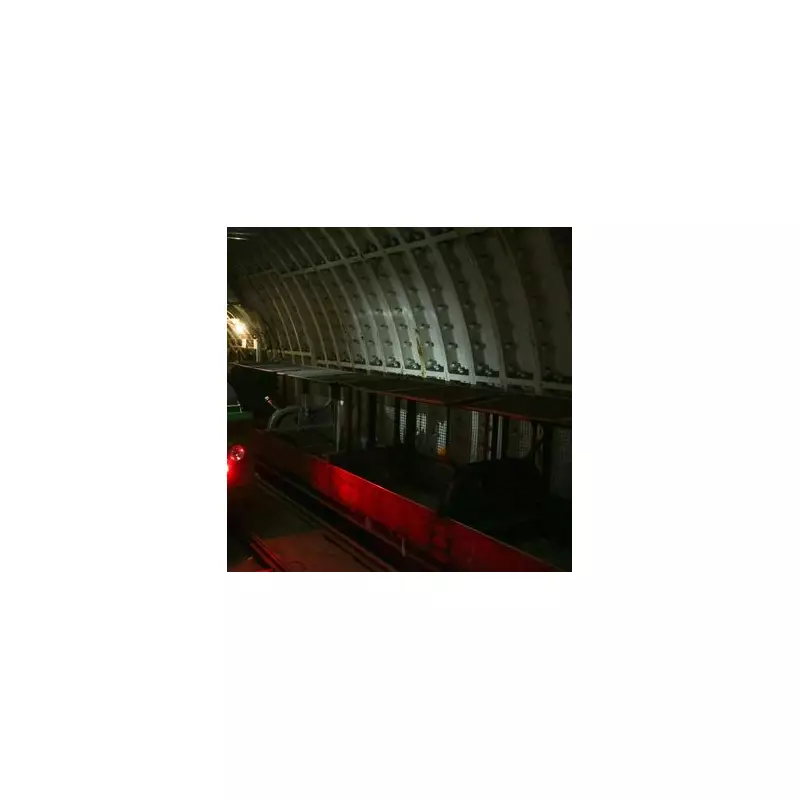
The trains navigated a single tunnel with a diameter of just 9ft. By 1930, the original trains were replaced with smaller, 27ft single-car trains designed to carry four mail bag containers.
In 1987, the system was rebranded as 'Mail Rail' to mark its 60th anniversary. However, its decline began in 1993 when a centralised computer system changed mail handling. By the late 1990s, it only served a handful of offices.
Despite this, the service remained significant, moving over six million bags of mail annually, equating to around four million letters every day. The network was finally put on hold in 2003 and remains non-operational today, a fascinating relic of London's industrial and postal heritage.