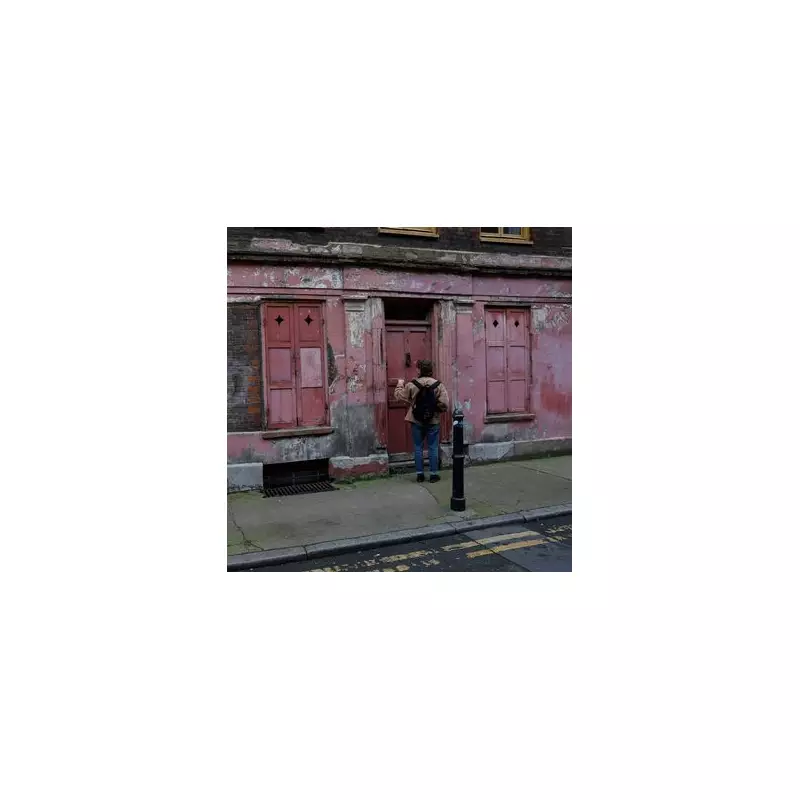
Nestled within a quiet Spitalfields side street stands a remarkable piece of living history. A striking red-brick house with a weathered, pinkish stucco exterior and charming timber shutters appears frozen in time, having resisted modern changes for over three centuries.
A Portal to the Past
Constructed in 1719, the property at 4 Princelet Street is now 306 years old. This historic London house has served many purposes throughout its long life, beginning as a residence for a Huguenot silk trader before later providing accommodation for Jewish refugees. Today, its primary role is as a highly sought-after location for film and television productions.
The house's secret lies in its authentic preservation. Despite a slightly worn facade, the interior is reputed to be one of the finest-preserved examples of an 18th-century London residence. This impeccable period authenticity makes it irresistible for directors and photographers seeking genuine historical ambience.
Lights, Camera, Action on Princelet Street
The property's cinematic credentials are impressive, having featured in major productions starring some of Britain's biggest actors. Its rooms have provided the backdrop for Eddie Redmayne's 'The Danish Girl' and Ralph Fiennes' 'The Invisible Woman'. It has also appeared in the acclaimed television series 'Luther', starring Idris Elba.
Beyond blockbuster films, the house is regularly used for high-end fashion photography shoots. Local residents have become accustomed to the constant activity. Tony, who works on the street, confirmed its popularity, stating, "There are literally always somebody having a photo shoot there... virtually a couple of times a week."
Life Next to a Local Landmark
For those living nearby, the house is both a source of fascination and a part of daily life. Hannah, a resident opposite, shared her insights with MyLondon. "It used to be owned by Robert Shackleton, who used it for photoshoots and film shoots and things," she said, noting that while the new owners are less active, the property is still occasionally used for events, including by the prestigious Gagosian art gallery.
While Hannah isn't bothered by the film crews, she expressed frustration with another type of visitor. "It's not as bad as the Jack the Ripper tours. Hordes of them take over the place." This is particularly resonant as Jack the Ripper's victim, Annie Chapman, was murdered on the neighbouring Hanbury Street in September 1888.
Despite its occasionally busy surroundings and ageing exterior, the house is clearly well-maintained. Tony added, "Somebody is clearly taking care of it. It looks derelict, but it's definitely not." Newcomers to the street quickly notice the attention it commands. Maria Suzanne, who moved in next door just a month ago, observed, "There are always people taking photos outside... Every day, people come with a guide who explains about the house."
This unique Spitalfields property continues to stand as a silent witness to London's evolving history, its doors mostly closed to the public but its iconic facade remaining an active and cherished player in the city's cultural and cinematic landscape.