The Unassuming Soho Spot That Changed Global History
Nestled within London's vibrant Soho district lies an establishment that most passersby would overlook. Yet, this very location stands as a monumental site in one of the most significant technological breakthroughs of modern culture.
From Television Laboratory to Late-Night Venue
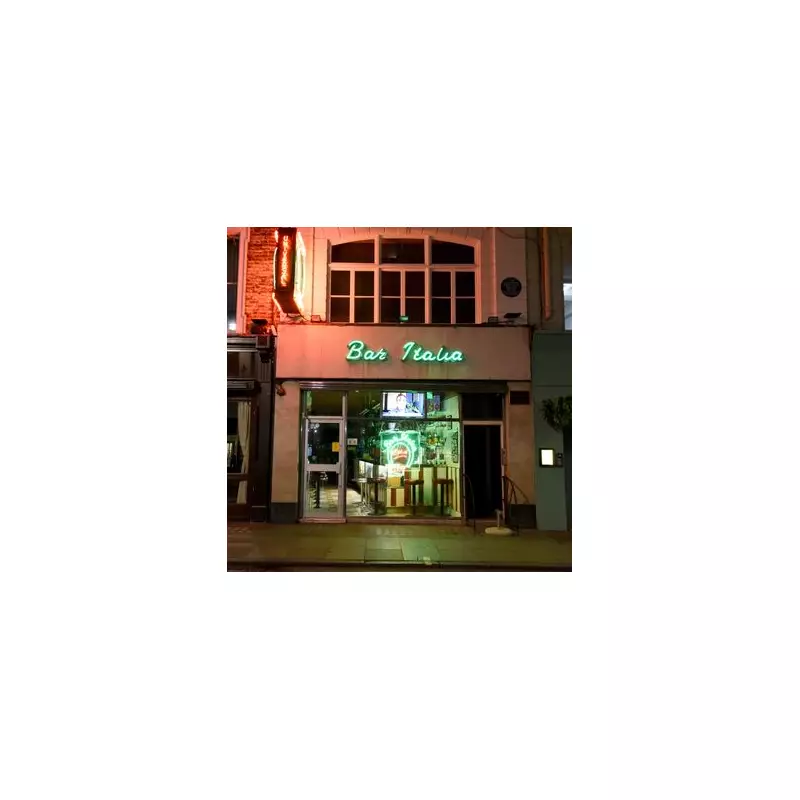
Today appearing as Bar Italia, a thriving late-night destination in the city's buzzing nightlife scene, the building at 22 Frith Street once housed great thinkers and revolutionary inventors. A shiny blue plaque now marks this address, commemorating a moment that would ultimately transform global communication and entertainment.
On 2 October 1925, this unassuming Soho location made history as the site of the first successful television demonstration. The pioneering engineer behind this world-changing invention was John Logie Baird, a Scottish inventor who had rented the attic space as his laboratory.
Baird's Revolutionary Experiments in Soho
Beginning his work in 1924, Baird spent countless hours obsessively experimenting in his makeshift Frith Street laboratory. His complex mechanical television apparatus was notoriously temperamental, with parts frequently breaking or flying across the room during testing sessions.
After achieving initial success by transmitting images of a ventriloquist's dummy named Stooky Bill, Baird needed to prove his invention could work with human subjects. This is where William Taynton, an office boy working downstairs, entered history as the first person ever televised.
The successful human transmission marked the true dawn of television technology, though it wasn't until 26 January 1926 that Baird gave his first formal public demonstration of the invention from the same Frith Street location.
From Laboratory to Living Rooms
The following year witnessed another milestone when the world's first television sets went on sale at Selfridges in London. These pioneering devices carried a substantial price tag of approximately £60, equivalent to around £4,000 in today's money, making them luxury items for early adopters.
Baird's invention soon crossed the Atlantic, beginning television's journey toward becoming a household staple across the globe. The technology that began in a Soho attic would eventually transform how humanity receives information, entertainment, and connects with world events.
Bar Italia's Cultural Legacy
The building's contemporary incarnation as Bar Italia opened its doors in 1949 under the ownership of the Polledri family, who continue to operate the establishment today. Over seven decades, it has developed its own rich cultural history within Soho's artistic community.
The venue gained musical immortality through Pulp's 1995 song 'Bar Italia' from their acclaimed album Different Class. The lyrics describe the bar as a place where "all the broken people go... round the corner in Soho," capturing its enduring appeal as a refuge within London's bustling West End.
Recent visitors continue to praise Bar Italia as an "authentic experience" in London, describing it as "an oasis of calm to escape the madness of the West End." The establishment has welcomed diverse patrons for over seventy years, with walls adorned by photographs and memorabilia celebrating both famous and everyday visitors who have enjoyed its unique atmosphere.
This remarkable Soho location thus represents a fascinating convergence of technological history and cultural heritage, where world-changing innovation meets enduring community spirit in the heart of London.