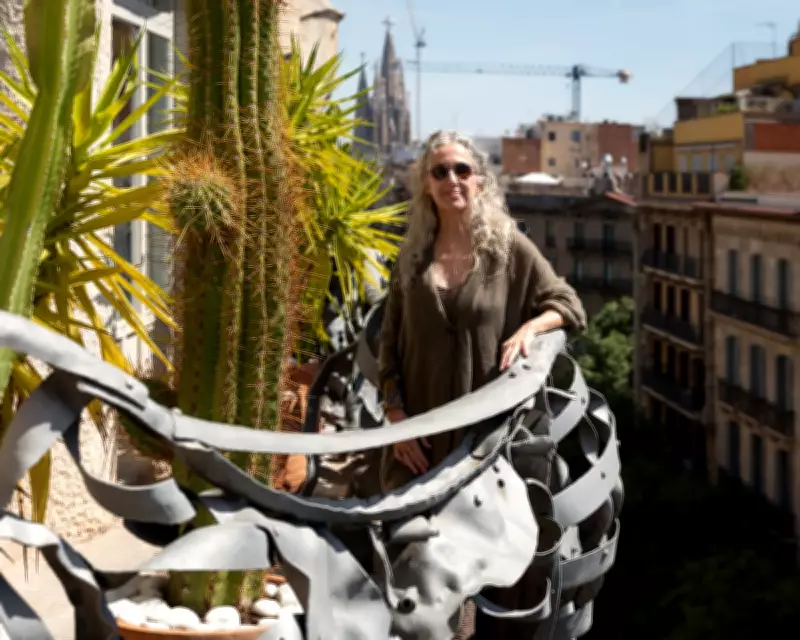
Ana Viladomiu, the last tenant of Antoni Gaudí's Casa Milà in Barcelona, has lived in the iconic building for nearly 40 years. The 70-year-old writer and former resident of the apartment building, which is a UNESCO World Heritage site, says she cannot take out the rubbish in her pyjamas because tourists take photos. Viladomiu is the sole remaining tenant in any of Gaudí's buildings, aside from the peregrine falcons nesting in the Sagrada Família.
Life as the Last Tenant
Viladomiu moved into the luminous apartment on Passeig de Gràcia in 1988 with her then-husband, Fernando Amat, owner of the now-closed designer store Vinçon. She raised her two daughters, both now architects, in the apartment. Despite the constant flow of visitors—about a million a year—she says she is used to it. 'Obviously, I can't take the rubbish out in my pyjamas because people take photos or ask me if I'm the woman who lives upstairs, like I'm a character. That's part of my life. But I know it's a privilege to live here,' she explains.
Rent and Legal Status
Viladomiu holds a renta antigua, a fixed-rent contract that allows her to live in the apartment until she and Amat (from whom she is separated) die. After that, the not-for-profit foundation managing the building since 2013 will assume ownership. Such contracts were discontinued in 1985, but about 100,000 still exist across Spain. Viladomiu declines to disclose her rent but notes that the building's former owner, Caixa Catalunya, bought out other tenants with generous offers. 'We joke that they wanted us to stay here as some sort of attraction, like Snowflake, Barcelona zoo's famous albino gorilla,' she says.
History of Casa Milà
Casa Milà, popularly known as La Pedrera (the quarry), was completed in 1910 for Pedro Milà and Rosario Segimon. Initially derided for its rockface-like appearance, it became a UNESCO World Heritage site in 1984. Over the years, it has housed a bingo hall, estate agents, consulates, and an Egyptian prince. During the Spanish Civil War, local Trotskyist and socialist parties occupied the lower floors. After Gaudí's death in 1926, Segimon scandalized architects by covering much of the original interior in Louis XVI style.
Viladomiu's Apartment
Viladomiu's apartment features Gaudí's signature light-filled spaces, sculpted curvilinear walls, and ironwork balconies evoking animal and marine forms. Surprisingly, there are no restrictions on modifications, but she would never change anything, not even the ancient brass light switches. 'Everything still works,' she says.
The Last Tenant: A Book
Viladomiu's historical auto-fiction, The Last Tenant (published in English), began as interviews with former tenants. A journalist friend advised her to tell the story in the first person, weaving in her family's narrative. The book recounts visits from famous figures like architect Zaha Hadid, former Barcelona mayor Pasqual Maragall, and fashion designer Jean Paul Gaultier. 'I met Gaultier downstairs by the lift. I had my arms full of bags of oranges, and he was looking at everything with great enthusiasm. He asked if I lived here, and I invited him up. 'You've made my day,' he said. Later he sent me a bunch of roses,' she recalls.
As 2026 marks the centenary of Gaudí's death, and the pope prepares to bless the Sagrada Família's completed Jesus Christ tower, Viladomiu remains a living reminder that Gaudí's works were designed for living, not just for tourists.