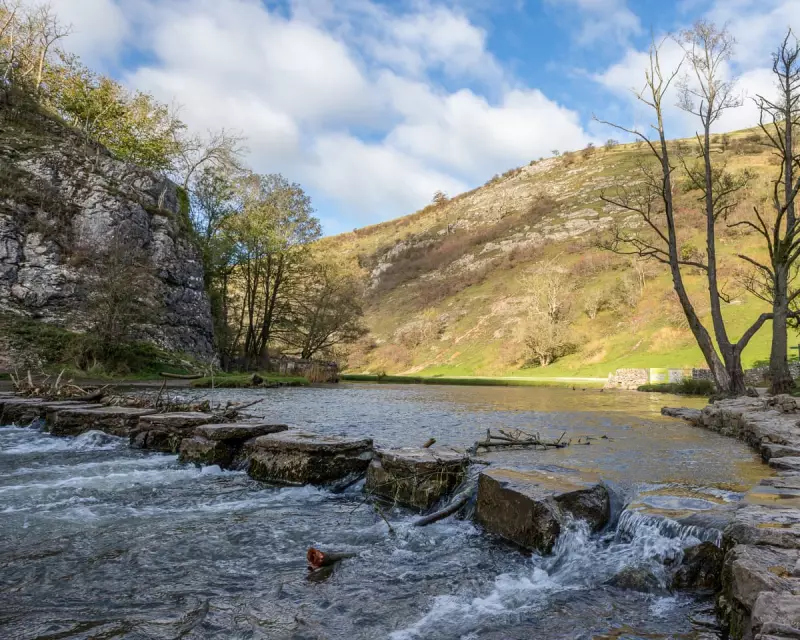
A crisp November morning in Dovedale reveals the very essence of the landscape that captivated 18th-century artist Joseph Wright of Derby. The River Dove rushes around the famous stepping stones, a limestone valley alive with the russet and gold of autumn. This serene spot, straddling the Derbyshire and Staffordshire border, is now the subject of a major new exhibition at the National Gallery in London, prompting a fresh look at the places that shaped the visionary painter.
The Landscape That Inspired a Master
Tony Butler, executive director of Derby Museums Trust, explains that Wright painted scenes like Dovedale at a pivotal time. "People started travelling to places that in those days were hard to get to – places like the Peak District," he says. These landscapes were perceived as wild, yet a growing appreciation for nature's sublime beauty was taking hold across the country.
At the Derby Museum and Art Gallery, which holds the world's largest collection of Wright's work, the artist's prolific and varied output is on full display. With some pieces currently on loan to the National Gallery, their spaces are filled by other artists, such as Nottingham's Joseph Norris, whose work responds to Wright's masterful use of light and shadow, known as chiaroscuro.
Documenting the Derby Enlightenment
Wright was far more than a landscape painter; he was a chronicler of the Enlightenment. Derby was a hub of industrial growth and intellectual fervour, and Wright moved in circles with members of the Lunar Society, a group of pioneering Midlands-based thinkers. "The Enlightenment was a way of life in Derby, and he was a documenter of that," Butler states. "He's really reflecting the spirit of the age."
This is vividly captured in one of his most celebrated works, A Philosopher Giving That Lecture on the Orrery, which depicts a scientific lecture in Derby's town hall. His portraiture also cemented the legacy of local industrialists, such as Sir Richard Arkwright, who built his revolutionary cotton mill in Cromford and was one of Wright's patrons.
The industrial heritage that Wright documented is still palpable in modern Derby. Lunch at The Engine Room, a restaurant adorned with railway art, nods to the city's history as a centre for railway manufacturing. A stroll along the River Derwent with Alex Rock of Derby Museums leads to the Museum of Making, located on the site of the Derby Silk Mill, often considered the world's first modern factory and near where Wright himself grew up.
From Enlightenment to Modern Making
The Museum of Making charts 300 years of Derby's manufacturing history, from Wright's era to the present day. A Toyota car suspended in the atrium signals the region's ongoing industrial prowess. The museum's innovative Assemblage room, where artefacts are curated by their primary material, displays everything from train parts to Denby pottery. It also features a workshop where visitors can learn traditional skills, connecting past and present.
A visit to Derby Cathedral reveals a nave rebuilt in 1725, its large windows symbolically flooding the space with light – a fitting metaphor for the Enlightenment. The exploration continues through the independent shops of Sadler Gate and a restorative pint at the historic Old Bell Hotel.
Following the River Derwent north leads to Cromford, the site of Arkwright's Cromford Mills. Built in 1771, this was the world's first successful water-powered cotton spinning mill, a cornerstone of the Industrial Revolution that Wright painted in both day and night scenes. A tour of the vast factory buildings offers a tangible link to this transformative period.
The journey concludes at Oakhill, a boutique hotel and restaurant in a mid-19th century building constructed by the Arkwright family, offering stunning views over the Derbyshire countryside.
This exploration of Derby and its surroundings leaves a powerful impression of the people and places that inspired Joseph Wright. From the natural beauty of Dovedale to the furnaces of industry, his work captures a region in flux. As Alex Rock aptly puts it, "If you really want to experience the culture that Wright came from, you need to come to Derby."
Wright of Derby: From the Shadow is at the National Gallery, London, until 10 May. Tickets start from £12.