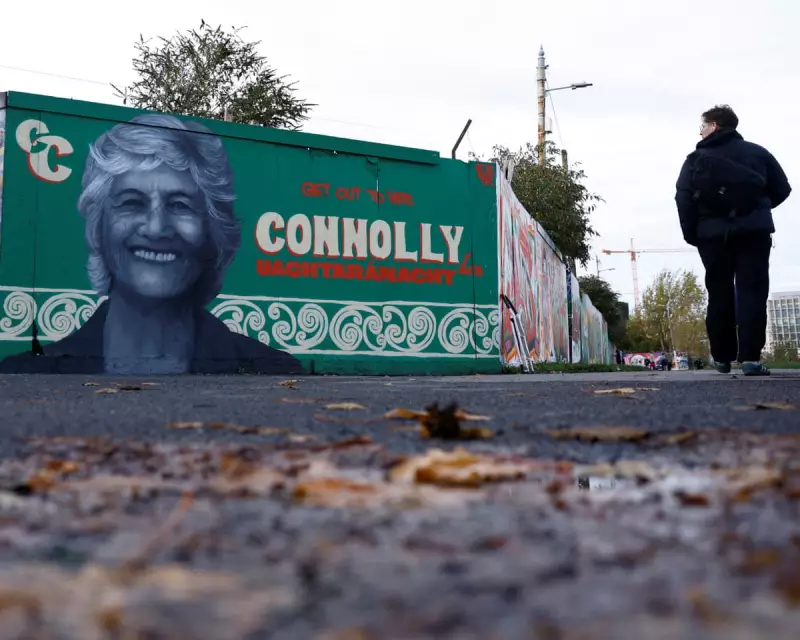
The inauguration of Catherine Connolly as Ireland's tenth president marks a potential watershed moment for the Irish language, with the independent left-wing politician pledging to bring Gaelic from the margins to the centre of public life.
A New Era for the Irish Language
When Catherine Connolly was sworn into office on Tuesday, she carried with her the aspirations of language advocates hoping for a transformational Gaelic revival. The 68-year-old former barrister from Galway delivered a stunning upset to Ireland's centre-right political establishment last month, securing a landslide victory with 64% of the vote to succeed Michael D Higgins.
Connolly's campaign made the Irish language a central pillar, and she has explicitly stated her intention to establish Gaelic as the working language of the presidency. "I will do my best to bring Irish in from the margins and use it," Connolly told Irish language station Raidió na Gaeltachta during her campaign.
Cultural Momentum Builds
The political breakthrough comes amid significant cultural achievements for the Irish language. The film The Quiet Girl (An Cailín Ciúin) broke box office records in Ireland and the UK in 2022, while controversial rap trio Kneecap has given the language contemporary relevance and punk appeal.
Conchúr Ó Muadaigh, spokesperson for advocacy group Conradh na Gaeilge, believes Connolly's presidency represents a genuine opportunity for change. "She has brought the language to the centre of national debate," he said. "She doesn't treat it as a cultural afterthought or decoration. It's something she genuinely believes in."
The contrast between Connolly's fluency and her centrist rival Heather Humphreys' inability to speak Irish became a significant factor in the election campaign, bolstering Connolly's appeal among voters seeking authentic representation.
Historical Context and Contemporary Challenges
Irish, once the majority native tongue of Ireland, experienced severe decline during British rule in the 19th century. The language continued to struggle after independence, despite the constitution proclaiming it as the first official language.
Current census figures reveal that less than 2% of the population converses in Irish daily, although approximately 40% claim some speaking ability. The education system faces challenges, with exemptions from compulsory Irish study at record levels and government plans criticised for lacking ambition.
However, positive developments are emerging. The number of schools teaching exclusively through Irish has multiplied from fewer than 20 in the 1970s to more than 200 today. Digital platforms show remarkable growth, with TikTok reporting 54,600 posts in Irish, representing a 71% increase within a single year.
The language's reach is extending beyond traditional Gaeltacht areas into towns and cities, with Irish-language and bilingual podcasts like Motherfoclóir and How To Gael proliferating alongside Gaeilgeoir content creators.
Even diplomatic circles are taking notice. Kara Owen, the new British ambassador to Ireland, recently introduced herself to the Irish people with a bilingual video that received widespread praise, noting that Irish had helped her understand Irish culture and Hiberno-English.
In Northern Ireland, the language has become part of political negotiations between nationalists and unionists, with Stormont recently appointing the region's first Irish language commissioner under landmark 2022 legislation.
As Connolly begins her seven-year term in Áras an Uachtaráin, language activists remain hopeful. "Despite the limitations of the post there is genuine reason to think her presidency could be a transformative moment for Irish language in public life," said Ó Muadaigh, who also represents Northern Ireland-based campaign group An Dream Dearg. "She has the ability to show that the state can function at its highest level through Irish."