Strongman's Legacy Sparks Limited Outrage Among Younger Generation
Indonesia's decision to declare former authoritarian leader Suharto a national hero has provoked complex reactions across the nation, with many young people responding with surprising indifference or even nostalgia for his regime. The controversial move, announced in November 2025, has highlighted deepening generational divides in the world's third-largest democracy.
President Prabowo Subianto, Suharto's former son-in-law and a controversial military general who secured power with substantial Gen Z backing in October 2024, bestowed the honour upon the late leader. The designation recognises Suharto as "a hero of the struggle for independence", according to government statements that continue to deny his involvement in mass killings and other atrocities.
Protests Meet Pragmatism in Jakarta Streets
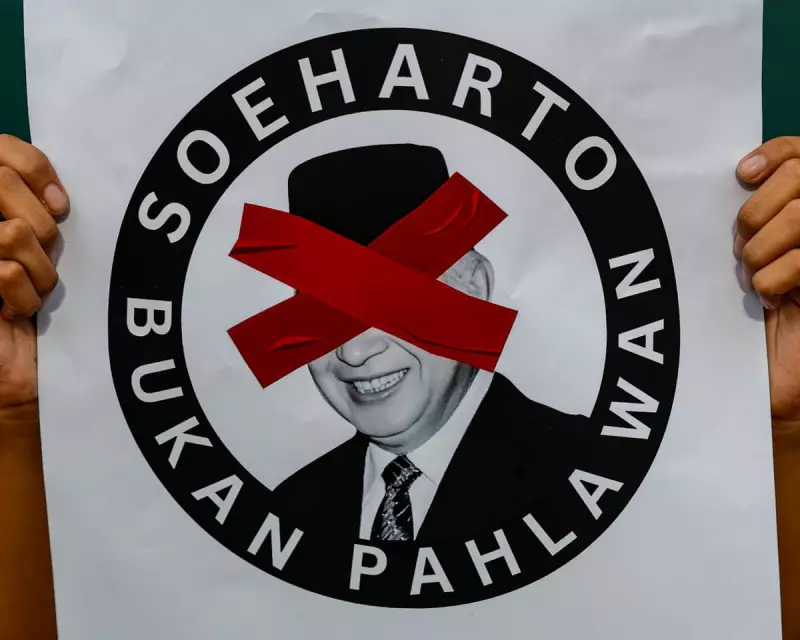
While activists and survivors of Suharto's regime expressed outrage, the streets of Jakarta witnessed only small, relatively muted demonstrations. On 10 November 2025, protesters held placards reading "Suharto is not a hero" outside the ministry of culture building, but the limited turnout revealed a broader trend of acceptance or apathy among younger Indonesians.
Muhammad Abid Fiisabilillah, a 19-year-old university student in Surabaya, captured the ambivalence felt by many: "I understand that Suharto has a bad track record related to human rights violations, but every president must have strengths and weaknesses – including heroes." His comments reflect polling data from 2024 showing Gen Z respondents perceived Suharto more positively than negatively, though their optimism remained lower than some older demographics.
Economic Pressures Overshadow Historical Reckoning
Analysts suggest that contemporary economic challenges are shaping young people's perspectives more than historical grievances. Indonesia currently faces a cost of living crisis characterised by rising inflation, precarious employment, and high costs for essentials.
Subhan Nur Sobah, a 32-year-old education worker from Bandung, explained: "People tend to romanticise the Suharto era because they hear stories about how stable and prosperous it was back then. It's nostalgia for a time that seems simpler and more certain." He added that many young Indonesians are "just trying to survive" rather than engaging with historical controversies.
This pragmatic approach was echoed by Jakarta content creator Alma al Farisi, who acknowledged opposing the award but recognised daily survival takes precedence: "We have to be realistic."
Historical Amnesia and Curriculum Concerns
Most Generation Z Indonesians – born after 1997 – never experienced Suharto's authoritarian rule firsthand. The former military leader governed for 32 years before being forced from power in 1998, and died in 2008 aged 86. His regime was accused of numerous human rights abuses during the 1965-6 'communist purge' where an estimated half a million suspected communists were massacred, along with subsequent disappearances.
Yansen, a 22-year-old Chinese-Indonesian student from Jakarta, noted that many young people "don't know what kind of sins Suharto did" because schools don't teach the regime's violent history. He reported receiving pro-Suharto and anti-Chinese comments after posting critical videos online, highlighting how historical trauma continues to affect minority communities.
Dr Nathanael Gratias Sumaktoyo, assistant professor of political science at the National University of Singapore, warned that "historical amnesia could now be compounding", particularly with government plans to rewrite the history curriculum to emphasise national pride. "The more difficult it is to talk about it, the weaker the memory of future generations will be," he cautioned.
Regional Parallels and Democratic Complacency
The situation in Indonesia shows parallels with other Southeast Asian nations, such as the Marcos family's return to power in the Philippines decades after martial law was overthrown. Kennedy Muslim, an analyst at Indikator Politik Indonesia, identified an "intriguing trend of complacency toward democracy by Indonesian Gen Zs", with research indicating higher satisfaction levels among younger people despite deteriorating democratic quality.
Social scientist Dr Yanuar Nugroho observed that while young people exist at both poles of the debate – some seeing the hero designation as "blatant whitewashing" while others view Suharto as "a symbol of order and stability" – the largest group lies somewhere in between. These individuals see the controversy as "yet another elite dispute, distant from the realities of their daily struggles".
As Indonesia moves forward with Suharto officially enshrined as a national hero, the muted response from its youngest citizens suggests that for many, economic survival and daily practicalities outweigh historical reckoning with the nation's complicated past.