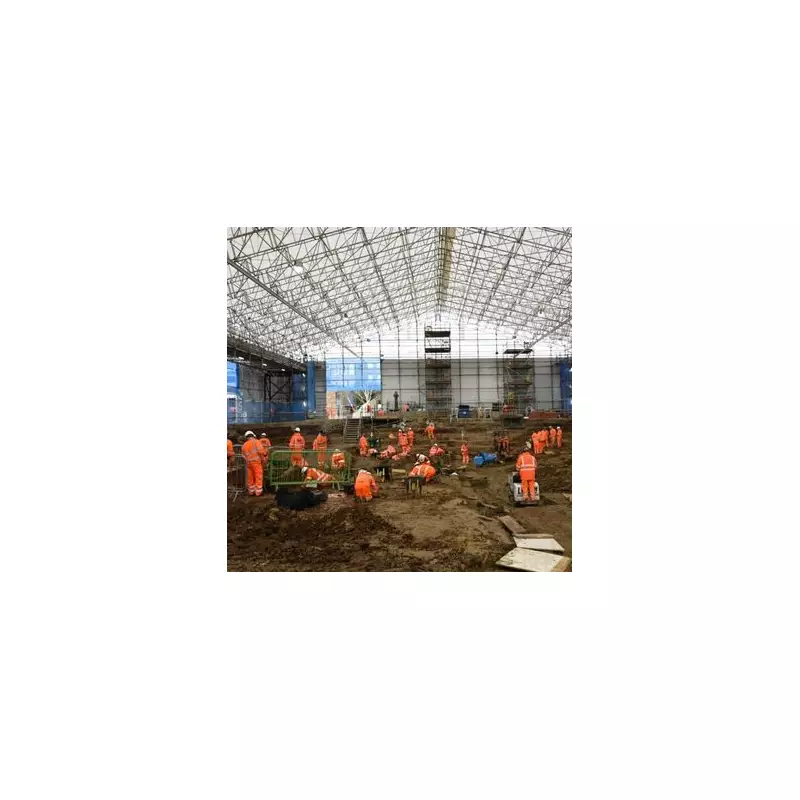
The HS2 high-speed railway project, one of Britain's most ambitious and contentious infrastructure endeavours, has embarked on one of its most sensitive tasks: the large-scale relocation of human remains. At the heart of this operation is St James's Gardens, a disused cemetery to the west of Euston Station, the planned terminus for the new line.
The Scale of the Exhumation
This is not a small undertaking. The project involves the exhumation and subsequent reburial of approximately 60,000 individuals who were laid to rest in the 18th and 19th centuries. The site is a cross-section of historical London, containing a wide array of people from different walks of life.
Among the most notable figures is Captain Matthew Flinders, the renowned explorer credited with naming Australia during his voyages as commander of H.M.S. Investigator. His remains are set for a special reburial at the Church of St Mary and the Holy Rood in Donington, near Spalding, his birthplace.
Controversy and Commemoration
The plan has, unsurprisingly, been met with significant opposition. Local residents held memorials and protests in an attempt to save St James's Gardens from disturbance. Despite this public outcry, the project proceeded after HS2 pledged to carry out the work with "dignity, respect and care."
According to recent reports from the Camden New Journal, the reburial work has now restarted. A significant milestone was already reached in June 2023, when a team completed the reburial of over 14,000 remains. These were reinterred at Brookwood Cemetery in Surrey under an agreement with the Archbishops' Council of the Church of England.
A Legacy of Knowledge
Beyond the physical relocation, HS2 positions this difficult process as an unprecedented archaeological opportunity. The project asserts that studying these remains will help historians gain a deeper understanding of the life and death of Londoners centuries ago.
Helen Wass, HS2’s Head of Historic Environment, stated: "Our works at St. James’s Gardens burial ground has sought to honour those buried there, treating them with dignity, care and respect. As part of our unprecedented archaeological programme, HS2 is committed to telling stories of Britain’s past, leaving a lasting legacy of knowledge for generations to come."
This archaeological angle was highlighted in 2017 when two Victorian time capsules were unearthed during the initial excavations, offering tangible links to the past that the railway project aims to preserve, even as it reshapes the landscape for the future.