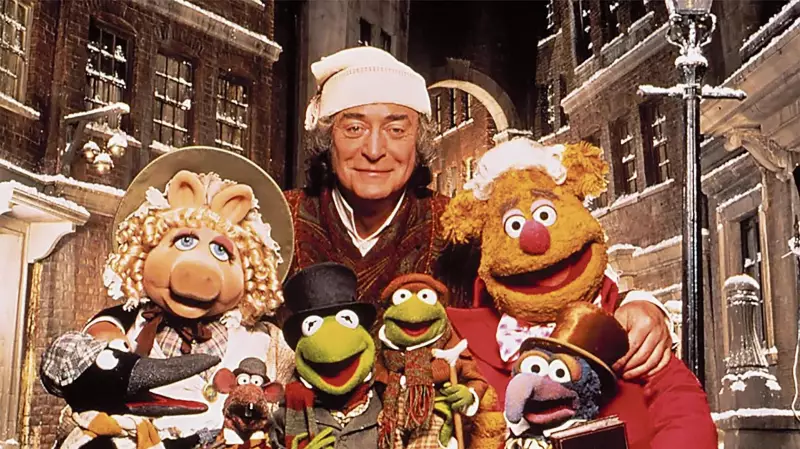
As the festive season approaches, the economic system of capitalism often finds itself in the line of fire. In a thought-provoking piece, writer James Price contends that the true spirit of Christmas, as illustrated by classics from Charles Dickens to The Muppets, aligns perfectly with the most productive form of capitalist endeavour.
From Scrooge to Smith: The Evolution of an Economic Idea
The archetype of the villainous capitalist is, of course, Ebeneezer Scrooge. His journey is masterfully retold in what many consider the greatest Christmas film: The Muppets Christmas Carol. James Price highlights Michael Caine's iconic performance, where the actor played Scrooge with Shakespearean gravity, utterly refusing to 'do anything Muppety'.
This portrayal gives us the definitive miser, whose early philosophy is summed up in lines like "Christmas is a very busy time for us... Harvest time for the moneylenders." His ideology, as a chorus sings, is flawed because "He loves money because he thinks it gives him power." He hoards wealth like Smaug the Dragon or Scrooge McDuck, a path that leads only to bitterness and isolation.
The Ghostly Lesson in Wealth Generation
The transformation comes through supernatural intervention, not just from the Ghosts of Christmas but from Scrooge's former partner, Jacob Marley. Marley's warning—"It is required of every man that the spirit within him should walk abroad among his fellow men"—echoes a fundamental economic principle.
Price connects this to Adam Smith's key insight from The Wealth of Nations: hoarding money is useless. True prosperity stems from using resources efficiently through production, hard work, and trade. Scrooge's enlightenment mirrors this understanding. He learns that the function of a capitalist system is to generate wealth, not stash it away.
Elated, the new Scrooge shares a turkey with his nephew Fred, gives gifts and energy to his clerk Bob Cratchit, and makes charitable donations. By creating a surplus, he enriches his community, family, and colleagues, finding happiness and purpose where there was only misery.
A Modern Christmas Miracle: Exchange and Abundance
This system of consensual exchange is what allows us to enjoy a modern Christmas. The joy of giving, Price notes, is a form of true wealth. As Margaret Thatcher once observed, good intentions alone are not enough; the Good Samaritan also needed money to help.
Free markets enable this generosity on an unprecedented scale. A hard-working parent can now provide gifts that would have been unimaginable to kings of old. Price references a striking tweet that captures this modern alchemy: "A Tesla Model 3 costs less than Camembert. We pull sand, oil, and ore from the earth and transmute them into machines cheaper than aged milk."
The conclusion is both simple and profound. Thanks to this understanding of capitalism—and the enlightenment of Scrooges everywhere—we can have technological marvels and, as the film's little mouse hoped, enough cheeses for the meeces. The real meaning of Christmas, therefore, is found not in rejecting capitalism, but in embracing its true, generative, and community-spirited form.