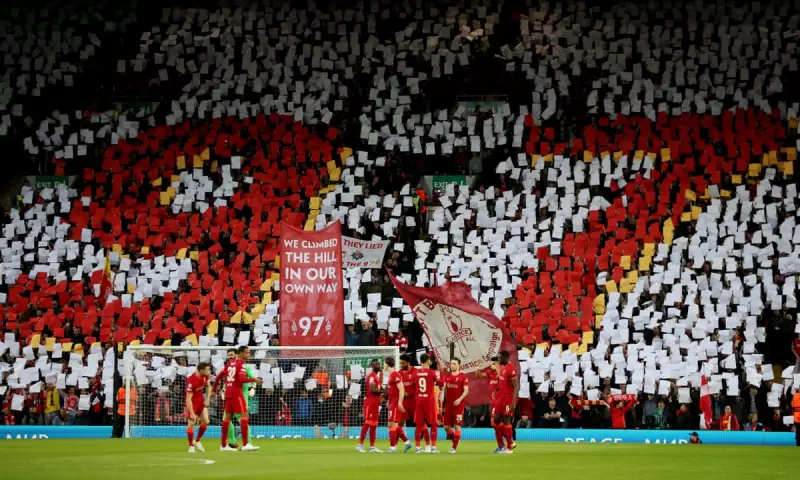
Liverpool supporters have once again held aloft poignant tributes to the 97 victims of the Hillsborough disaster, a tragedy whose shadow stretches across decades. The fight for truth and accountability following the 1989 FA Cup semi-final has been one of the longest and most painful in British legal history, marked by institutional failure, a relentless police cover-up, and the unwavering determination of bereaved families.
A Disaster Unfolds and the Immediate Aftermath
On 15 April 1989, just 19 days after his appointment, Chief Superintendent David Duckenfield was in command as 54,000 fans attended the match at Sheffield Wednesday's Hillsborough stadium. A lethal crush in the Leppings Lane end led to the deaths of 97 men, women and children. The initial official response, led by Lord Justice Taylor's report in August 1989, placed blame squarely on police mismanagement.
However, South Yorkshire police quickly mounted a campaign to deflect blame onto Liverpool supporters, alleging drunkenness and late arrival. This narrative was presented at the first inquest, which concluded in March 1991 with a controversial majority verdict of accidental death. The Crown Prosecution Service decided there was insufficient evidence for criminal proceedings.
The Long Unravelling of a Cover-Up
For years, the families campaigned against what they knew was a gross injustice. A pivotal moment came in 1996 with Jimmy McGovern's ITV drama-documentary, which brought allegations of a cover-up to a national audience. A 1997 scrutiny revealed that South Yorkshire police had altered 164 officers' statements before submitting them to the Taylor inquiry.
The breakthrough finally arrived in 2012 with the publication of the Hillsborough Independent Panel's report, authored by Professor Phil Scraton. It dismantled the police's false narrative and exposed the extent of the failings. Prime Minister David Cameron issued a formal apology, and the original inquest verdicts were quashed.
New inquests began in 2014, culminating in a landmark verdict on 26 April 2016. After two years of evidence, the jury concluded the 96 victims (a 97th was added in 2021) were unlawfully killed due to gross negligence manslaughter by David Duckenfield. The jury found that police errors and ambulance service failures contributed, and crucially, that no behaviour by Liverpool supporters caused the disaster.
The Pursuit of Accountability and Lasting Change
Despite the inquest verdict, securing criminal convictions proved elusive. Duckenfield was charged with manslaughter but was found not guilty after a retrial in November 2019. Graham Mackrell, Sheffield Wednesday's safety officer, was convicted of a safety offence and fined. In 2021, charges against three other officials for perverting the course of justice were dropped.
Bishop James Jones's 2017 report recommended a 'duty of candour' for public authorities. While the government adopted a charter in 2023, it rejected calls for a full 'Hillsborough Law'. However, in September 2025, Keir Starmer's Labour government introduced legislation to parliament to establish a statutory duty of candour for police and officials.
The legacy of Hillsborough is profound. It stands as a stark testament to the failings of authority and the power of persistent campaigning. While full legal accountability remains incomplete, the families' fight finally forced the truth into the light, exonerating the fans and changing the conversation around transparency and justice in Britain.