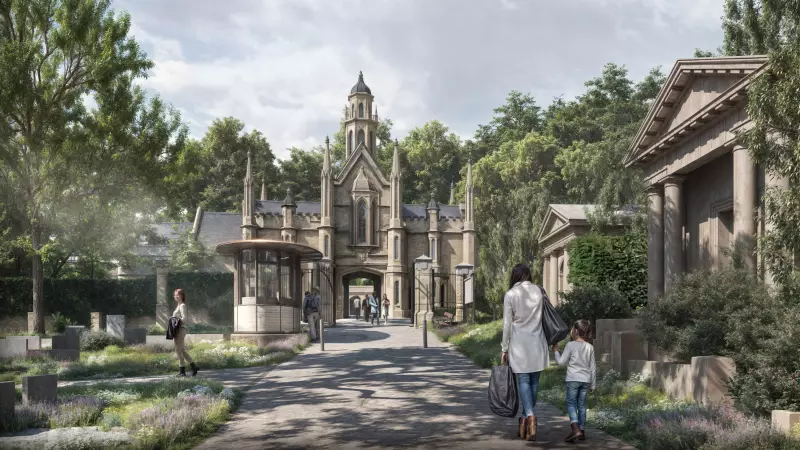
One of London's most iconic Victorian cemeteries is set to undergo a transformative £18 million restoration project after receiving official approval from Camden Council.
A 25-Year Conservation Plan
The extensive regeneration of Highgate Cemetery will span a quarter-century, focusing on preserving the historic site from the accelerating effects of climate change and natural decomposition. The plans, which were initially unveiled approximately one year ago, have now been formally approved, allowing work to commence on safeguarding this cherished London landmark.
Located in North London, Highgate Cemetery first opened its gates in 1839, making it 185 years old this year. It serves as the final resting place for numerous notable figures, including philosopher Karl Marx, artist Lucian Freud, author George Eliot, and singer George Michael.
Enhancing the Visitor Experience
The comprehensive works will address both structural preservation and visitor amenities. Key improvements include resurfacing walkways, installing better drainage systems to prevent muddy conditions, restoring weathered monuments, and implementing sensitive new planting schemes designed to boost local biodiversity.
The cemetery's iconic main entrance will be carefully restored, while six new buildings will be constructed across the site. These additions will include a café and an education centre, though plans for a gardeners' building and new toilets were recently removed from the masterplan following objections from grave owners.
Preserving Historic Structures
Particular attention will be paid to conserving the cemetery's most significant architectural features. The Egyptian Avenue and Terrace Catacombs, both Grade I-listed structures, will undergo specialised preservation work as part of the broader restoration effort.
Leading architecture firm Hopkins Architects has been appointed to oversee the complex project. The Friends of Highgate Cemetery Trust, which is partially funding the regeneration, recently made the decision to scrap the proposed staff facilities and toilets after grave owners expressed concerns about the designs and the proximity of restrooms to burial plots.
Ian Dungavell, Chief Executive of the Friends of Highgate Cemetery Trust, commented: 'We have set out our plans for the next 25 years. We will conserve the fragile historic structures and improve biodiversity while retaining the tranquillity of this special place. We will make it accessible to more people, and tell a wider variety of stories.'
The ambitious project represents one of the most significant conservation efforts ever undertaken at a UK cemetery, ensuring that this important piece of London's heritage remains protected for future generations to appreciate and enjoy.