In the 1960s and 1970s, Black students demanded a voice on radio. A new project ensures that history isn't lost. The HBCU Radio Preservation Project celebrates stations that were an outgrowth of the civil rights movement, helping people understand their importance.
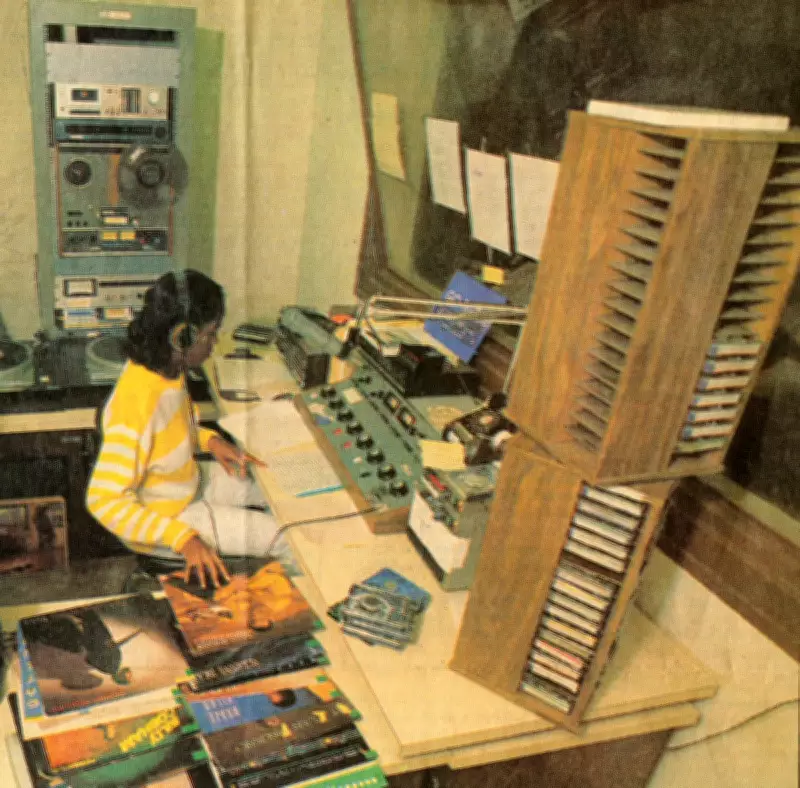
After Shaw University's WSHA radio station went on air in 1968, several other historically Black colleges and universities (HBCUs) followed the North Carolina school's lead, launching a wave of their own. For decades, students used these channels to inform listeners about campus events, play music, and offer cultural programming. Radio stations at HBCUs became pivotal resources for both campuses and surrounding communities.
But the landscape of university-based media is changing. Today, of more than 100 HBCUs nationwide, about 30 have radio stations. Some schools and students pivot to podcasts or short-form video, while stations have shuttered, including WSHA in 2018. What happens to decades of archival material as stations move on?
How the Project Works
The HBCU Radio Preservation Project works to ensure irreplaceable archives are saved and accessible. As a result, WSHA's archives are available through the American Archives of Public Broadcasting. Several universities, including Fisk University in Nashville, Tennessee, have had their radio archives preserved.
Jocelyn Robinson, a member of the African American and civil rights radio caucus at the Library of Congress, created the project after wondering what collections at HBCU radio stations might include. She surveyed stations, developing profiles of each. "I've developed profiles of all of the radio stations, so I knew when they were founded and what their format was, what their broadcast footprint was," Robinson said. She founded the HBCU Radio Preservation Project, which provides training in audio-visual preservation.
The project hosts an archival fellowship for recent graduates, offering early-career training while supporting stations and archives. The team reformats materials, helps inventory, pack, and digitize, and partners with the American Archives of Public Broadcasting to make materials accessible. So far, the project has digitized more than 1,125 hours of archival audio, visited nearly two dozen HBCU campuses, and recorded more than 140 hours of oral histories from over 90 people.
Remembering the History
The oral history component is where storytelling becomes most important, Robinson said. One early capture was with David Linton, a program director at WCOK at Clark Atlanta University, whose career started at WSHA. "David went from there as a student, learned his craft, and was instrumental in getting WRVS, the radio station at Elizabeth City State University, on the air in the mid-1980s," Robinson said. "You're looking at a decades-long legacy."
Will Tchakirides, assistant director of public programming and history for the project, said, "It's really fascinating to hear narrators speak to the emergence of these stations in the 60s and 70s [and to] hear how Black radio on HBCU campuses is an outgrowth of civil rights and Black power movements. That was Black college students themselves actively demanding a voice on radio." The project has completed more than 90 oral histories, accessible through the Margaret Walker Center at Jackson State University.
Returning the History
After digitizing archives, the project returns materials to institutions in a stylized black box resembling a historic radio, including the station's call letters and frequency. The institution receives a plaque acknowledging their investment in preservation. Shaw's return included 46 digitized episodes of Traces of Faces and Places, a weekly talk show.
Phyllis Jeffers-Coly, assistant director for administration and outreach, said, "Not only are we preserving this radio sound, this institutional history, this cultural history, we're also, in some ways, providing families with the sound of someone's voice that may or may not be with us anymore." The late Margaret Rose Murray, host of Traces of Faces and Places, was integral to social justice work in Raleigh, North Carolina. "This woman's family has 46 hours to listen to of their mom being the voice and being a conduit for social justice, social change and community engagement," Jeffers-Coly said.
When radio stations were in their heyday, they hosted discussions about civil rights, youth activism, and protests. The history students made and preserved is now invaluable. "In this moment," Jeffers-Coly said, "where cultural institutions, including museums, including universities, including radio stations, are losing funding, we needed to show up and show out and celebrate in a way that was public."