The Dual Legacy of Hans Asperger
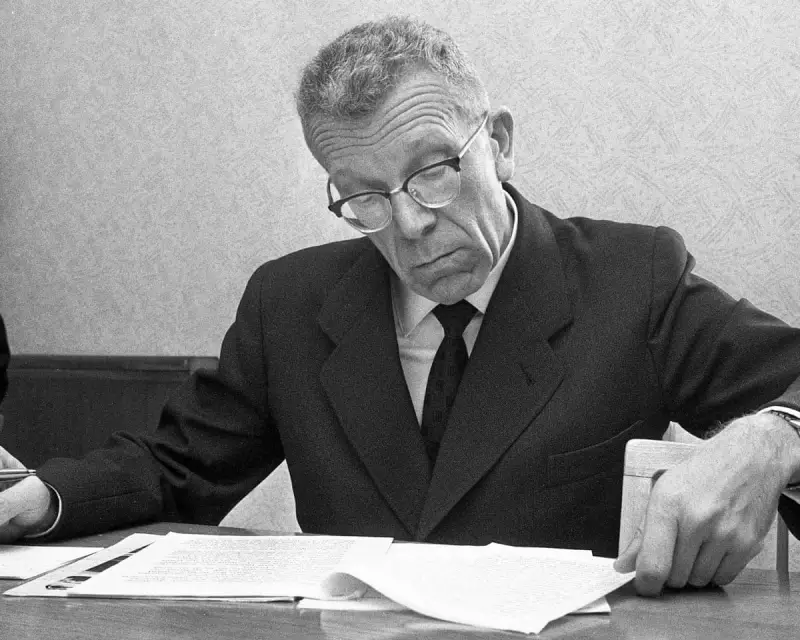
In 2015, author Alice Jolly embarked on an extraordinary literary journey to unravel the complex story of Dr Hans Asperger, the Vienna-based paediatrician whose work during the Second World War would later earn him posthumous recognition as the father of neurodiversity. Her investigation was sparked by contradictory accounts in two significant nonfiction works about autism's history.
Steve Silberman's NeuroTribes portrayed Asperger as a compassionate and innovative thinker, while John Donvan and Caren Zucker's In a Different Key presented him as an enthusiastic supporter of Hitler's regime. For a historical novelist, these opposing narratives provided fertile ground for exploration.
Groundbreaking Research and Dark Secrets
Asperger's fame rests on his wartime thesis describing what we now recognise as autism spectrum disorder (ASD). His work remained largely unknown for decades until British psychiatrist Dr Lorna Wing rediscovered it in 1980, leading to his belated recognition as a pioneering figure in understanding neurodiversity.
Jolly's research took her to Austria to meet Professor Herwig Czech from the University of Vienna, who has extensively studied Austria's involvement in the Third Reich's medical crimes. Czech's research revealed disturbing evidence that Asperger had signed paperwork transferring children to Am Spiegelgrund, the children's ward of Am Steinhof psychiatric hospital where many were murdered.
This documentation effectively served as death warrants for these vulnerable children. Czech's measured academic paper cleared Asperger of some accusations while confirming his complicity in the Nazi euthanasia programme.
Navigating Moral Complexity Through Fiction
Faced with this troubling history, Jolly recognised that fiction could explore human complexity in ways that straightforward historical accounts might miss. She created twelve-year-old Adelheid Brunner as her narrator, a fictional character obsessed with collecting matchboxes who provides an unreliable but compelling perspective on events at the children's hospital.
Jolly's novel also highlights the stories of Asperger's colleagues, particularly Dr Josef Feldner, who demonstrated remarkable courage by hiding a young Jewish man in plain sight, describing him merely as his nephew. Asperger knew the true identity of this individual but chose to remain silent.
The author argues that we must move beyond simplistic narratives of good and evil when examining this period. Millions across continental Europe were bystanders or active collaborators, while resisters remained the exception rather than the rule.
Jolly's work challenges readers to confront uncomfortable truths about human nature and the difficult choices people face during times of extreme political pressure. Her novel The Matchbox Girl, published by Bloomsbury, serves as a powerful reminder that historical figures often contain contradictions that resist easy categorisation.
Hans Asperger emerges from this investigation as both a meticulous chronicler of brilliant ideas about neurodiversity and a man who collaborated with a murderous regime. This dual legacy forces us to reconsider how we remember complex historical figures and acknowledge both darkness and light within our shared history.