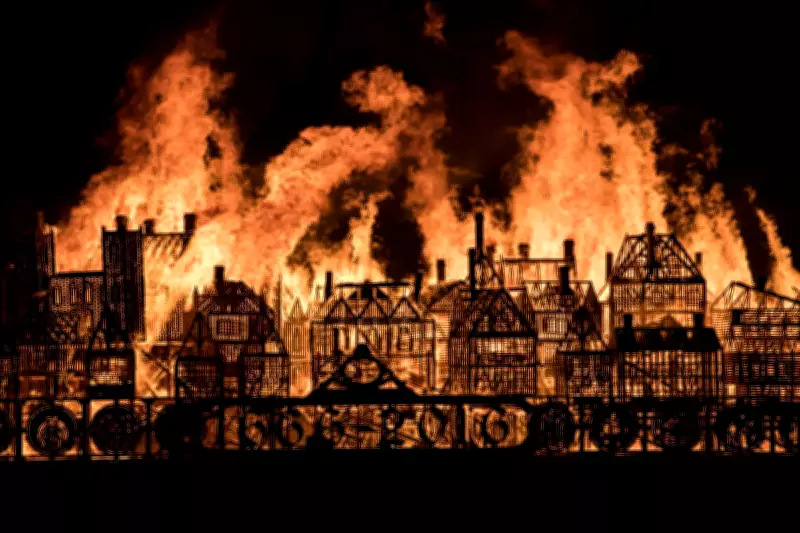
It has been 359 years since the Great Fire of London devastated the capital, reshaping its urban landscape and leaving an indelible mark on its history. This catastrophic event, which began on September 2, 1666, and raged for four days, destroyed over 13,000 houses, 87 churches, and countless other buildings in the medieval city. Remarkably, the official death toll remained surprisingly low, with only a few recorded fatalities.
What Caused the Great Fire of London?
The exact origin of the Great Fire remains uncertain, but historians widely agree it was an accidental blaze that started in the Pudding Lane bakery of Thomas Farriner. Several critical factors contributed to the fire's rapid and devastating spread across London.
Key Factors in the Fire's Spread
- Highly flammable materials: Seventeenth-century London was densely packed with wooden structures, many featuring thatched roofs coated with pitch, a highly combustible substance that provided ample fuel for the flames.
- Narrow streets and overhanging buildings: The medieval city layout, characterised by cramped lanes and buildings that jutted out over the streets, allowed the fire to leap easily from one property to another.
- Strong winds: A powerful easterly wind on the night the fire began fanned the flames, accelerating their spread throughout the city.
- Delayed response: The initial reaction to the fire was sluggish. Lord Mayor Sir Thomas Bloodworth hesitated to authorise the demolition of buildings to create firebreaks, a decision that allowed the blaze to grow uncontrollably before effective measures were implemented.
Six Intriguing Facts About the Great Fire
1. The Mayor Ignored the King's Orders
King Charles II explicitly commanded that firebreaks be established to halt the fire's advance. However, Lord Mayor Sir Thomas Bloodworth reportedly dismissed the danger, uttering the infamous words, "Pish! A woman could piss it out," thereby underestimating the severity of the situation and delaying crucial action.
2. St. Paul's Cathedral Was Destroyed
The medieval St. Paul's Cathedral, one of London's most significant religious edifices, was completely consumed by the flames. Its destruction paved the way for Sir Christopher Wren to rebuild the cathedral in its now-iconic form, which stands as a masterpiece of English architecture.
3. The Fire Inspired London's Redesign
The devastation offered a unique opportunity to reimagine London's urban plan. Sir Christopher Wren proposed ambitious designs featuring wide streets and grand buildings, but practical constraints, including the urgent need for reconstruction and complex property rights, meant most streets were rebuilt along their original medieval alignments.
4. The Birth of the Fire Office
In response to the catastrophe, the first fire insurance company in England, known as "The Fire Office," was established by Nicholas Barbon in 1681. This innovation marked a pivotal moment in the development of modern insurance and fire safety practices.
5. Monument to the Fire
A commemorative structure, simply called "The Monument," stands near the fire's origin on Pudding Lane. Designed by Sir Christopher Wren and Robert Hooke and completed in 1677, this 202-foot-tall stone column remains one of the tallest isolated stone columns globally, serving as a permanent reminder of the event.
6. The End of the Great Plague
The Great Fire is often credited with helping to end the Great Plague of 1665, as it may have eradicated rats and fleas that carried the disease. However, this is more legend than fact, since the plague was already in decline by the time the fire occurred, though the blaze likely contributed to sanitising affected areas.
The Great Fire of London stands as a defining moment in the city's history, not only for its immediate destruction but also for its lasting impact on architecture, urban planning, and public safety. Its legacy continues to resonate, reminding us of London's resilience and capacity for renewal in the face of adversity.