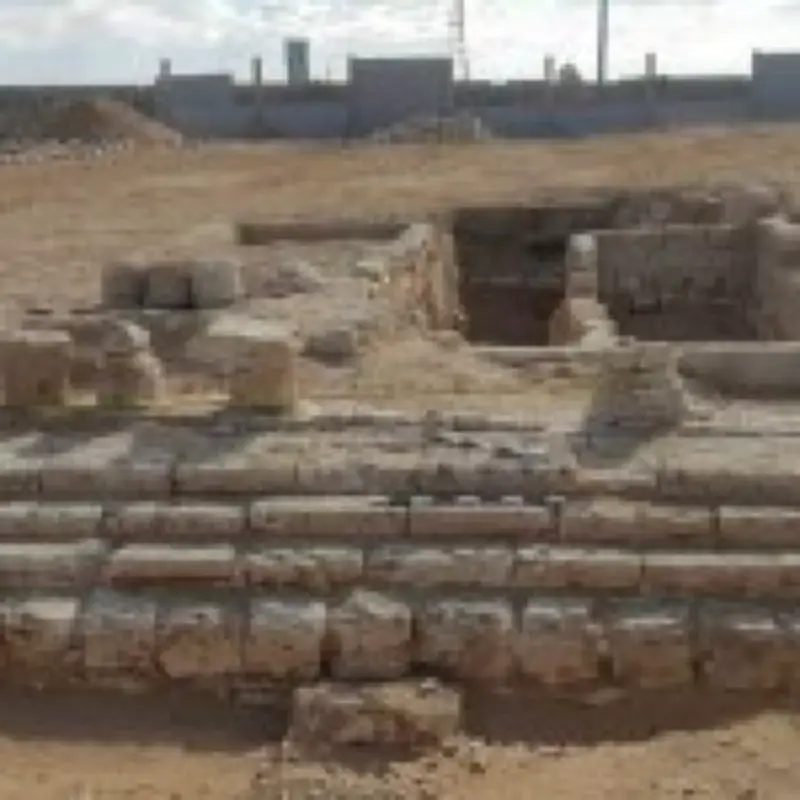
Archaeologists have unearthed a group of ancient Egyptian cemeteries along the Mediterranean coast, revealing golden tongues and coffins that provide new insights into ancient culture. The excavations at Marina el-Alamein, located 60 miles west of Alexandria, uncovered about two dozen golden tongues placed in the mouths of the deceased, a practice believed to help the dead communicate in the afterlife.
Discovery at Marina el-Alamein
The Egyptian Ministry of Tourism and Antiquities released a statement detailing the finds, including one object shaped like the Eye of Horus, a symbol associated with healing. Hesham Hussein, undersecretary for Lower Egypt and Sinai archaeology, told Live Science: 'Gold tongues are a well-documented feature of some burials dating to the Ptolemaic and Roman periods in Egypt. They are generally interpreted as symbolic funerary amulets intended to enable the deceased to communicate and recite sacred formulas in the next world.'
Similar golden tongues have been found in recent years at the Taposiris Magna temple near Alexandria and the ancient city of Oxyrhynchus, about 200 miles southeast of the current discovery. According to Smithsonian magazine, the practice originates from spell 158 in the Egyptian Book of the Dead, which requests a 'golden collar to be set on the throat of the deceased on the day of internment.'
Exceptional Preservation and Historical Context
Most of the tombs were in an 'exceptional' state of preservation, having been sealed by stone slabs since their construction. Experts believe they were part of the ancient city of Leukaspis, mentioned by Greek geographer Strabo. Leukaspis, founded by the Greeks in the second century, was a thriving commercial hub known for its wine, wheat, and olive trade. However, it was destroyed in July 365 AD by a massive underwater earthquake near Crete, estimated at magnitude 8.5, which triggered a tsunami that devastated the southern Mediterranean coast, severely damaging Alexandria and the Nile Delta.
Other notable finds include a water well and surface burials near the tombs, reflecting the social diversity of the city's occupants, as wealthy elites traditionally had deeper burials. The discoveries indicate that Egyptian funeral rituals and architectural influences persisted into the Ptolemaic and Roman eras.
Artifacts and Symbolism
A limestone altar featuring an incomplete marble statue thought to represent the goddess Aphrodite displayed 'distinctive architecture' pointing to an 'imaginary door'—a gateway between the living and the dead central to Egyptian funeral doctrine. Another cemetery contained a 2.5-meter granite coffin with the remains of a plaster sphinx. Pottery, dishes, camphor, and basins were also found at the site.
The finds underscore the enduring nature of Egyptian funerary practices and the cultural exchanges that shaped the region during the Ptolemaic and Roman periods.