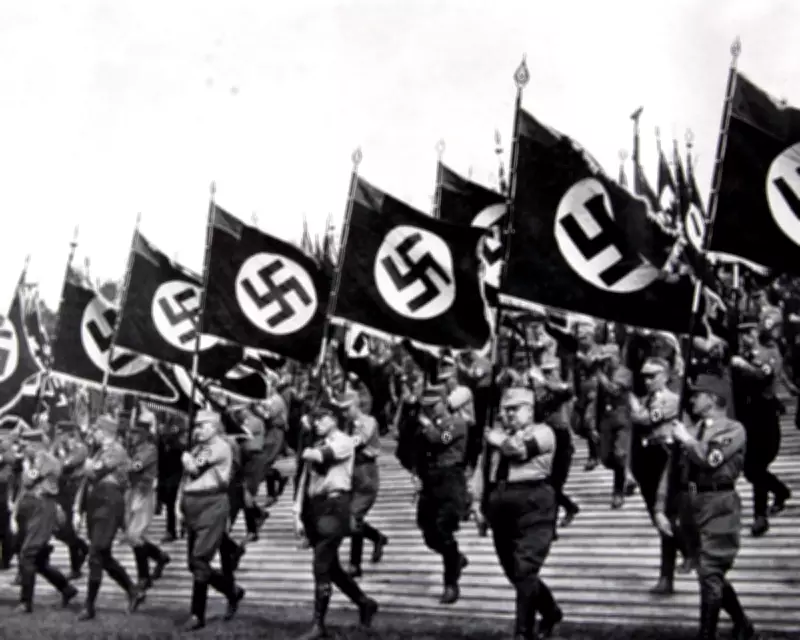
Olaf Köndgen, a 64-year-old German human rights expert living in France, recently discovered he is the son of a Nazi. This revelation came through a new online archive launched by the newspaper Die Zeit, which provides easy access to the membership records of the National Socialist German Workers' Party (NSDAP).
Uncovering Hidden Histories
The digital tool, which has been accessed millions of times since its release in early April, allows users to search the vast archives of the Nazi party. Many Germans, like Köndgen, have only vague knowledge of their family's involvement with Hitler's regime. The archive is prompting a widespread reckoning as people confront the truth about their relatives.
Christian Staas, history editor at Die Zeit, noted the combination of time passing and new technology has fueled this interest. After World War II, most Germans viewed themselves as victims, avoiding discussion of their complicity. Now, as the witness generation fades, families feel freer to ask critical questions and verify old stories.
Personal Stories of Discovery
Köndgen's father, Ernst, died when he was 16, leaving a legacy of myth. Through the archive, Köndgen learned his father joined the Nazi party on September 1, 1939—the day World War II began. This changed his understanding of his father's motivations, which he had previously attributed to a desire to escape an authoritarian home. Now, he sees ideological conviction as a possible motive.
Niko Karsten, a 56-year-old environmental engineer, discovered his grandmother Irmgard Roßberg joined the NSDAP on May 1, 1937. He remembers her as bossy and racist. His interest in family history is also driven by concerns about the far-right Alternative für Deutschland party, which he believes leads to ruin.
The Scale of Nazi Membership
Between 1925 and 1945, about 10.2 million Germans joined the NSDAP. While women were a minority, their numbers grew after 1939. Historians note that membership ranged from ideological conviction to opportunism, but there is no evidence of forced enrollment, contrary to postwar claims. The party's meticulous records survived due to the efforts of a paper mill manager, Hanns Huber, who prevented their destruction. The cards were later held by the German federal archives and the US National Archives, which made them available online in February.
Cultural Reassessment
Susanne Beyer, author of Kornblumenblau, argues that Germany's culture of reckoning with its Nazi past, or Erinnerungskultur, needs reassessment. She says most Germans harbor illusions about their families, focusing only on major war criminals. The Nazis deliberately sought to make the nation complicit, rounding up Jews in public places to ensure collective guilt. Psychologist Louis Lewitan warns that family secrets can cause invisible scars, but confronting them can be liberating.
Köndgen, who now knows of five Nazi relatives, reflects on his father's indoctrination and admits he might have made similar choices under pressure. As a human rights adviser at the Council of Europe, he remains committed to the postwar creed of "never again," emphasizing European cooperation to prevent such atrocities.