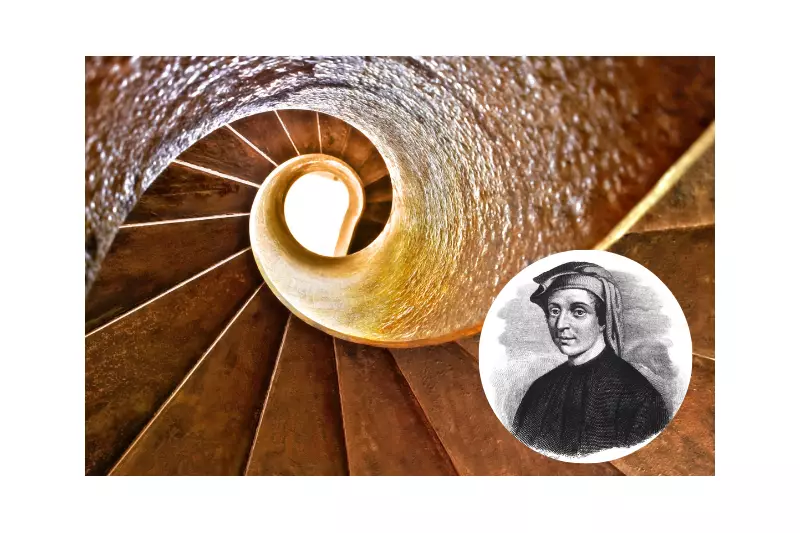
Today marks Fibonacci Day 2025, a celebration honouring one of mathematics' most fascinating discoveries that continues to reveal hidden patterns throughout our world. While November 23 might seem like an ordinary date, when written in the US format as 11/23, it forms the beginning of the famous Fibonacci sequence: 1, 1, 2, 3.
The Man Behind the Numbers
The day pays tribute to Leonardo Pisano Bigollo, better known as Fibonacci, an Italian mathematician who lived from approximately 1170 to 1250. Historians regard him as the most talented Western mathematician of the Middle Ages, though his greatest legacy extends beyond the number sequence itself.
Fibonacci's revolutionary contribution was introducing the Indo-Arabic numeral system to Western civilisation. Through extensive travels with his father around the Mediterranean, Fibonacci encountered this advanced numbering system used by traders in North Africa and the Middle East.
Before his work, Europe relied on cumbersome Roman numerals, making complex calculations nearly impossible for merchants and academics. By championing the decimal system and the crucial concept of zero, Fibonacci essentially streamlined the entire European economy and laid groundwork for modern commerce and science.
From Rabbits to Reality
Fibonacci first introduced his famous sequence in his 1202 book Liber Abaci (The Book of Calculations), using a practical problem about rabbit population growth. His hypothetical scenario asked how many pairs of rabbits would exist after one year, starting with a single newborn pair.
The solution created what we now know as the Fibonacci sequence: 1, 1, 2, 3, 5, 8, 13, 21, 34, 55 and so on. The mathematical rule is beautifully simple: each number equals the sum of the two preceding numbers.
While the rabbit problem itself was unrealistic, the numbers generated have proven astonishingly accurate in describing growth patterns throughout the natural world.
The Golden Ratio Connection
The sequence's enduring fame comes from its profound connection to the Golden Ratio, represented by the Greek letter Phi and valued at approximately 1.618. When you divide any Fibonacci number by its immediate predecessor, the result gradually approaches this magical number.
This proportion, often called the Divine Proportion, has been celebrated for centuries as representing the most visually pleasing relationship between two parts. It forms the foundation of Western art and design principles.
Nature's Secret Code
The Fibonacci sequence appears throughout the natural world, governing everything from flower petals to sea shells. It represents nature's most efficient way to pack seeds, leaves and petals for maximum sunlight exposure and minimal wasted space.
Key examples include:
- Petal counts: Lilies (3 petals), buttercups (5), delphiniums (8) and marigolds (13)
- Spiral patterns: Sunflower seed heads often show two sets of intertwining spirals numbering 34 and 55
- Plant structures: Pineapple scales, pine cones and nautilus shell chambers all follow Fibonacci progressions
Cultural Impact Through the Ages
The sequence's universal appeal has made it a persistent element in human culture across multiple disciplines:
Art and Architecture: Leonardo da Vinci used the Golden Ratio in his paintings, while classical structures like the Parthenon in Athens incorporate these proportions. Modern buildings including the Mole Antonelliana in Turin continue this tradition.
Literature and Music: Dan Brown's blockbuster novel The Da Vinci Code used the sequence as a cryptographic element, while progressive metal band Tool employed Fibonacci numbers in their 2002 single Lateralus, using the sequence for both syllable counts and time signature changes.
Finance: Stock traders now use ratios derived from the sequence (38.2% and 61.8%) for technical analysis to predict market movements.
Whether you're a mathematician, artist, or simply someone who appreciates nature's hidden patterns, Fibonacci Day offers a moment to marvel at how this simple sequence—born from counting rabbits—reveals fundamental harmonies throughout our universe.