On a windswept Norfolk shore, a rusting shipwreck serves as both a monument to a lost industry and a poignant family memory, slowly being reclaimed by the resilient coastal landscape.
A Pilgrimage Across the Shingle
The journey is a four-mile trek across crunching shingle from Cley to the near-end of Blakeney Point. The author makes this pilgrimage not just for the stark beauty, but to connect with the memory of Martin Fountain Page, their great-great-grandfather. He was the co-owner of Page and Turner, the last of the River Glaven shipping companies in an area with 700 years of documented navigation history. His legacy is etched in stone in Blakeney Church, but here, by the sea, it is written in iron and salt.
The Yankee's Final Resting Place
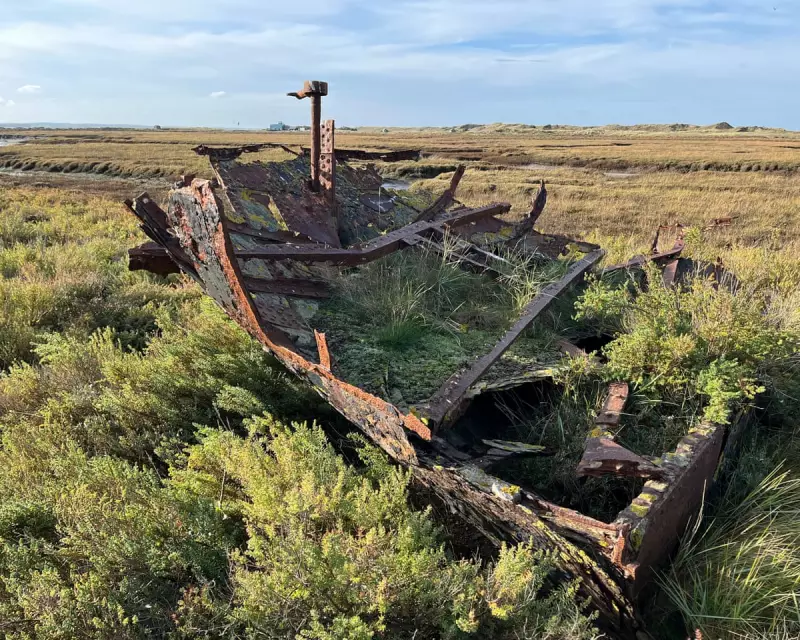
The destination is the wreck of the Yankee, a twin-screw steamer. After the family company was disbanded in the 1890s following Martin Fountain Page's devastating stroke, the Yankee was sold and later used as a houseboat. Now, long abandoned on a shingle spit known as Yankee Ridge, it rests and dwindles. Each visit reveals a little less of the vessel than the year before, its heavy steel plates crumbling under the relentless Norfolk elements.
Nature is swiftly moving in. Rainwater pools in the ship's belly, and where the steel has failed, hardy seablite plants have taken root. Their stubby, olive-green fingers seem to cradle the decaying hull. The scene is one of quiet, inevitable transformation, where human history succumbs to natural processes.
A Moment of Connection and Flight
The visit is framed by wildlife. An exhausted redwing, a migrant thrush from Scandinavia, finds temporary refuge in the seablite nearby, its mottled chest and creamy brow a spot of exquisite detail in the vastness. As the author places a hand on the lichen-spattered hull—touching 150 years of family history—a hare startles from the shingle, a sharp reminder of the living present.
The rested redwing eventually takes flight inland, flashing the ember-orange underwings that give it its name. This warm hue mirrors the colour of the Yankee's own flaking metal shell. Both bird and ship are part of a cycle, one bringing life to a winter landscape, the other slowly returning its elements to the undying winds and tides of the North Norfolk coast.