A Son's Unique Memorial: Transforming Ashes into DNA-Infused Stones
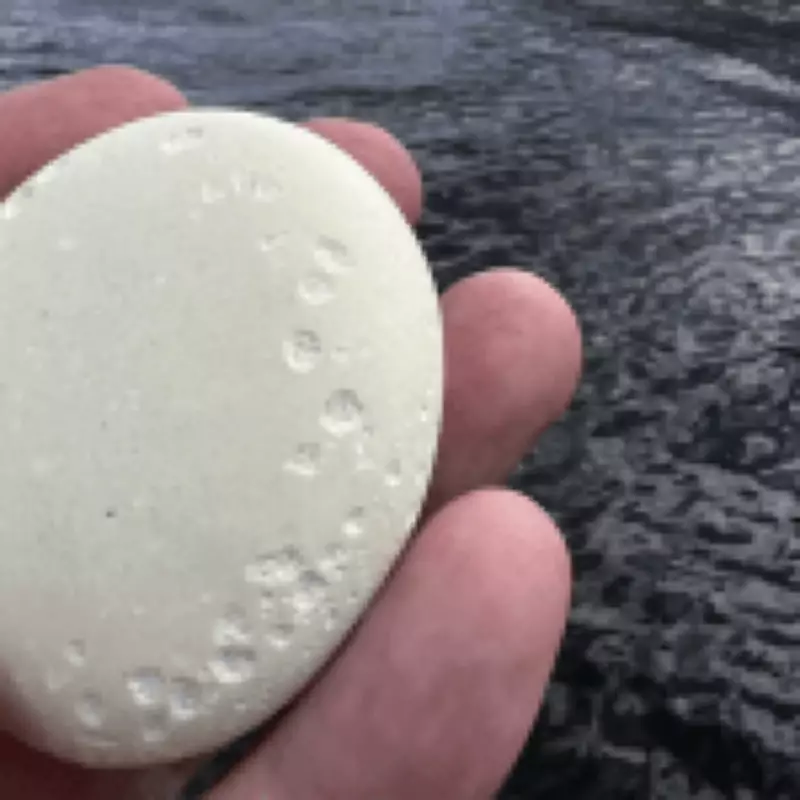
On a desk in David Bailey's home office rests a collection of smooth, white pebbles. These stones appear naturally formed by centuries of water erosion, yet they hold a deeply personal significance. Created from his parents' DNA, these pebbles represent David's unconventional approach to memorializing his loved ones.
From Traditional Ashes to Tactile Memorials
When David's father Clifford passed away in 2015 at age 89, followed by his mother Jessie five years later at 90, both were cremated through traditional means. However, inspired by ceramic "parting stones" he learned about from a funeral industry friend, David chose a different path for their remains.
In 2022, the 73-year-old combined his parents' ashes to create approximately 40 pebbles of varying sizes through a specialized process costing around £2,000 per loved one. "I miss my Dad like crazy," David explains. "To be able to pick up the parting stone and know that his DNA is still there is comforting, but it also grounds you in the reality that at the end of life, this is what we all become."
A Transcontinental Journey of Remembrance
David distributed these memorial stones across North America, beginning with his three siblings before embarking on an extraordinary three-month journey in 2023. Taking leave from his sales and marketing job, he packed remaining stones into a velvet pouch within his motorcycle tank bag.
His pilgrimage took him from Vancouver to Calgary, Edmonton to Montreal, visiting relatives he hadn't seen in decades. In Montreal's small fishing village where his father grew up, David climbed into the attic of his father's childhood church, placing a stone on the crucifix overlooking the street. At the base of his father's former apartment steps, he left another.
In downtown Montreal, where Clifford worked for 48 years on the Canadian Pacific Railroad, David found a bronze statue of a winged angel holding a soldier—a memorial to Second World War dead. "My dad was so proud to have served," he explains. "I found a little crevice behind the wings of that angel and dropped a parting stone in there."
Oceanic Tributes and Family Discoveries
At Halifax's naval docks, where his parents first met and married, David threw a stone into the ocean, repeating this tribute later in Newfoundland. These acts symbolized what David describes as the stones' unique quality: "You are holding them close and letting go at the same time."
The journey unexpectedly helped David answer long-standing family questions. His grandmother Mary had passed away when he was 14, but her burial details remained mysterious for decades. While visiting cousin Charlie in Miramichi—someone he hadn't seen in 60 years—David received directions to a local cemetery.
"I rode my motorcycle up, started walking around, and saw this headstone like an obelisk," David recalls. "I pulled away the brambles covering it and saw the name: John William Shaw, my grandfather's name. Then I pulled more away and saw: '...and his darling wife, Mary.' I had found my grandmother after all these years."
Continuing the Memorial Tradition
Emotionally, David discovered references to eight siblings in his mother's family at the site. "I just dug down at the base of that monument and pushed a parting stone in," he remembers. "I said to my mother: 'I brought you home. You're with your people now.'"
Since his North American journey, David has placed stones in Belgium among graves of men his grandfather fought alongside in the First World War. He plans to travel to Scotland's Isle of Skye to leave his mother's stones where her ancestors once lived.
Personal Memorials and Tragic Loss
Back home, David maintains multiple memorials to his parents. In his living room sits a glass ornament containing their ashes suspended in a cloudy spiral within a blown glass pendant. Beside it rests another glass touchstone holding the ashes of his daughter Lee-Ann, who died suddenly from an epilepsy-related pulmonary embolism the year after his journey.
"She was just the most joyous creature you could ever imagine—and then gone," David says of his daughter. He had some of her ashes mixed with ink for a memorial tattoo on his arm. "It is not just me carrying her name and her dates—she is embedded in my flesh in a real way," he explains, his voice breaking with emotion.
Finding Gratitude Amid Grief
Each night, David says goodnight to his lost family members, waking each morning with renewed gratitude. "Losing Lee-Ann made me realize none of us know what's in our life bank account," he reflects. "We don't know how many days have been deposited there. So every day has got to be taken seriously, and, amid my grief, I am grateful for every day that I have."
For David, these DNA-infused pebbles offer something traditional ashes cannot provide. "There is something about holding a stone," he explains. "It is grounding, tactile. You can't take a pile of ashes and put your hand in and go 'Hey Mom.' That would be so—weird. But you can take a stone like this and tuck it into your pocket and take it with you."
Through this innovative memorial approach, David has created lasting connections to his parents while discovering family history that might otherwise have remained lost. The stones serve as both physical reminders and catalysts for emotional journeys, transforming grief into meaningful action and discovery.