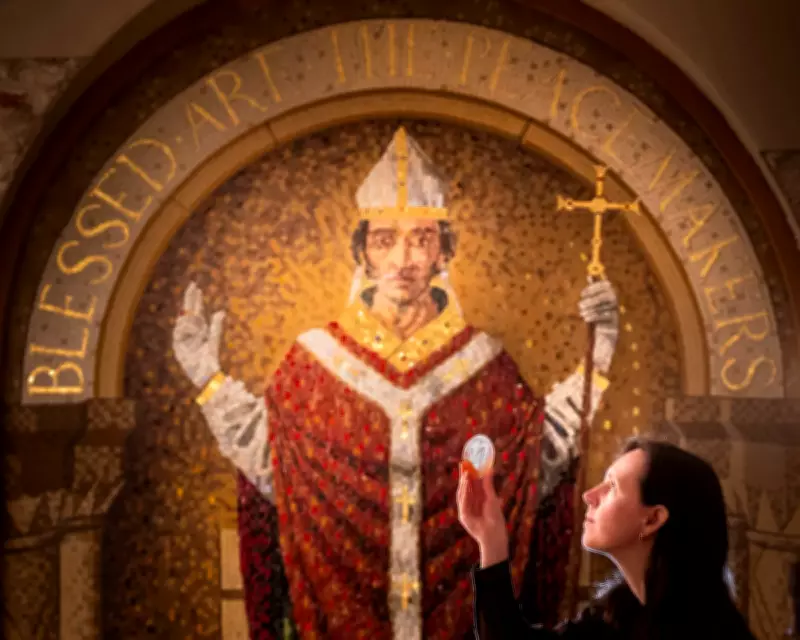
A remarkable digital exhibition has opened at York Minster to commemorate the 800th anniversary of Saint William of York, a once-revered but now largely forgotten medieval archbishop and miracle worker. The centrepiece is a stunning virtual recreation of his imposing 14th-century shrine, which was destroyed during the Reformation and buried to save it from destruction.
Bringing a Lost Monument Back to Life
At the heart of the exhibition lies a cutting-edge digital reconstruction of the original shrine to Saint William, which once stood proudly in the Minster's nave. This 3.8-metre tall monument was dismantled in the 16th century, with its fragments carefully buried across York to protect them from Henry VIII's dissolution of the monasteries. "The shrine is absolutely stunning," said Jennie England, research coordinator at York Minster. "It reflects the high regard William was once held in, even though he is now largely forgotten as the patron saint of York."
The digital recreation, created by visual effects company Viridian FX, allows visitors to experience the shrine's original grandeur through an immersive film. Alongside this virtual experience, actual surviving fragments of the shrine are displayed, including three of its four corners. These pieces are cared for by York Museums Trust, while others remain hidden beneath the city's streets and buildings.
The Miraculous Legacy of Saint William
William Fitzherbert served as Archbishop of York twice during the 12th century, facing opposition from Cistercian monks who initially deemed him unsuitable. His return to York from Rome in 1154 prompted such celebration that crowds gathered on the wooden Ouse Bridge, causing it to collapse. According to legend, William invoked divine intervention, and miraculously, no one drowned.
This event marked his first recorded miracle, but his life was cut short when he died suddenly after becoming violently ill while celebrating mass. His death remains shrouded in suspicion centuries later. Posthumous miracles attributed to William, including curing a woman who accidentally swallowed a frog, led to his canonisation by Pope Honorius III in 1226.
Artifacts and Artistic Heritage
The exhibition features several significant artifacts that illuminate William's life and legacy:
- A 13th-century stone slab inscribed with "Qui ceci dit svp er caput rogeri de Ripvn" (Which fell on the head of Roger of Ripon), discovered in a York drain in the 19th century and linked to another miraculous survival story from the 1280s.
- A 12th-century ivory casket, likely acquired by William during his visit to Sicily in 1147, showcasing exquisite craftsmanship from the period.
- A 12th-century bible that provides context to William's ecclesiastical role and the religious landscape of medieval England.
Dominic Barrington, the Dean of York, emphasised the enduring impact of William's legacy: "The artistry he inspired, seen in stained glass, the surviving shrine fragments, and artworks, has left a lasting impression on this very building. Yet this artistry is not a thing of the past. Our craftspeople are using incredible technology and traditional skills to reveal lost shrines."
A Saint Rediscovered
The exhibition not only celebrates William's 800th anniversary but also seeks to reintroduce him to modern audiences. England noted that the careful burial of the shrine fragments suggests hope for their eventual recovery: "It was clearly done with care, perhaps with the hope that they might return. That has happened in a way they could never have imagined."
Through this blend of historical artifacts and digital innovation, York Minster offers visitors a unique opportunity to connect with a nearly-forgotten chapter of English religious history, bridging medieval devotion with contemporary technology.