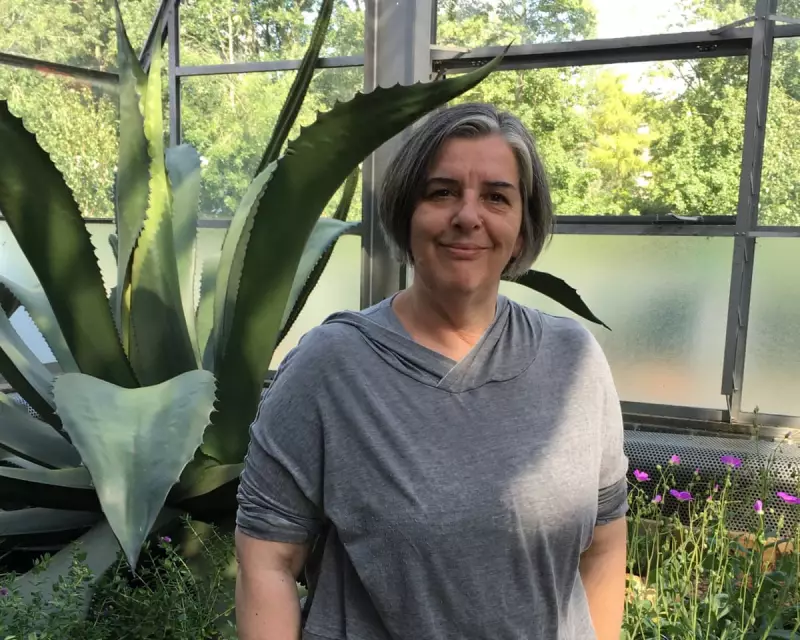
Deborah Cameron: The Feminist Linguist Who Transformed Language Studies
The academic world has lost one of its most influential voices with the passing of Deborah Cameron, the pioneering sociolinguist and feminist activist who died aged 67 from pancreatic cancer. Her groundbreaking work on how language shapes gendered experiences has left an indelible mark on linguistic studies and feminist discourse globally.
From Oxford Rejection to Academic Triumph
Cameron's academic journey was marked by remarkable resilience. In 2004, she achieved a delicious irony when appointed as the Rupert Murdoch professor of language and communication at Oxford University. This appointment came two decades after the same institution's English faculty research board had rejected her PhD thesis proposal in 1983. Undeterred by this setback, Cameron left Oxford without a doctorate but went on to publish Feminism and Linguistic Theory in 1985 - the very subject of her rejected proposal.
This work has since become recognised as a foundational text in its field, establishing crucial frameworks for understanding how language constructs and reinforces gendered experiences. Cameron's central argument - that speech differences are contextual and political rather than inherent - continues to influence linguistic studies at universities worldwide, with the book remaining in print since its 1992 republication.
Coining Terms and Challenging Conventions
Among Cameron's numerous academic contributions, her 1995 publication Verbal Hygiene introduced a term that has entered popular parlance. She used "verbal hygiene" to describe conscious efforts to manage language, from grammar correction to enforcing "politically correct" usage. This concept has proven remarkably prescient in contemporary debates about language regulation and political discourse.
Her most recent work, Language, Sexism and Misogyny (2023), continued her lifelong examination of how language perpetuates gender inequalities. Other significant publications included Language and Sexuality (2003, co-authored with Don Kulick) and her collaborative work The Lust to Kill: A Feminist Investigation of Sexual Murder (1987) with Elizabeth Frazer, which offered powerful analysis of why sexual killers are predominantly male.
Public Intellectual and Feminist Activist
Beyond academia, Cameron established herself as a significant public intellectual, engaging widely in public communication about linguistic research and feminism. Her 2007 book The Myth of Mars and Venus, with extracts published in the Guardian, challenged popularised attitudes about gender differences in communication that had gained traction in the early 1990s.
Born in Glasgow to Archibald, a salesman and jazz musician, and Alice (née Molyneux), Cameron was the eldest of three children. The family moved to Beverley, Yorkshire, where she attended Beverley High School before studying English and linguistics at Newcastle University (1977-1980) and Oxford (1980-1983).
Her first academic post at Roehampton Institute of Higher Education (now University of Roehampton) in southwest London saw her combine research with feminist activism, particularly in campaigns combating violence against women. Before returning to Oxford in 2004, based at Worcester College, she held positions at the College of William and Mary in Virginia (where she met her life partner Meryl Altman in 1988), Strathclyde University in Glasgow, and London's Institute of Education.
Sharp Observations and Lasting Influence
Cameron's sharp observations on social politics through discourse analysis made her both respected and occasionally controversial. In 1994, she told the Guardian that rightwing commentators had achieved "a triumph of the politics of definition" in establishing presuppositions about political correctness - a analysis that feels particularly relevant to contemporary debates about terms like "woke".
Her methodological works, including Analysing Conversation (1987, with Talbot Taylor) and Working With Written Discourse (2014, with Ivan Panovic), taught generations of linguists how to approach everyday language with thoughtfulness and accountability. Her practical applications of these methods examined workplace communication (Good to Talk, 2000), discourse about the built environment (The Words Between the Spaces, 2002, with Thomas Markus), and political speech (Gender, Power and Political Speech, 2016, with Sylvia Shaw).
Many former students have produced influential work directly inspired by Cameron's teaching. Caroline Criado Perez, who read Feminism and Linguistic Theory while studying at Oxford, credits it with introducing her to the concept of the "default male" that became pivotal to her bestselling book Invisible Women (2019).
Final Contributions and Personal Legacy
Known for her plain-speaking approach - sometimes criticised as rudeness but which she defended as honesty - Cameron maintained her academic productivity until the end. She held her Oxford professorship until 2023, becoming emerita fellow at Worcester College, and saw her final work The Rise of Dogwhistle Politics published in November 2025.
Beyond her academic output, Cameron contributed significantly to feminist journalism through her long association with the journal Trouble & Strife, which she joined in 1993. Her blog tackled "linguistic dilemmas confronting feminists in the 21st century", while one of her final social media posts revealed her scepticism about AI, declaring her "plan to defeat AI's takeover of the universe" involved making cheese scones from a recipe stored in her brain.
In 2015, alongside Beatrix Campbell, she organised a letter to the Observer criticising the trend of "no-platforming" feminists expressing contentious opinions, consistent with her disapproval of censorship that she had outlined in Verbal Hygiene.
Deborah Cameron is survived by her wife Meryl, whom she married in 2019, and her siblings Kate and Rory. Her legacy as a scholar who fundamentally changed how we understand the relationship between language, gender, and power will continue to influence academic discourse and public debate for generations to come.