A Life in Language and Landscape
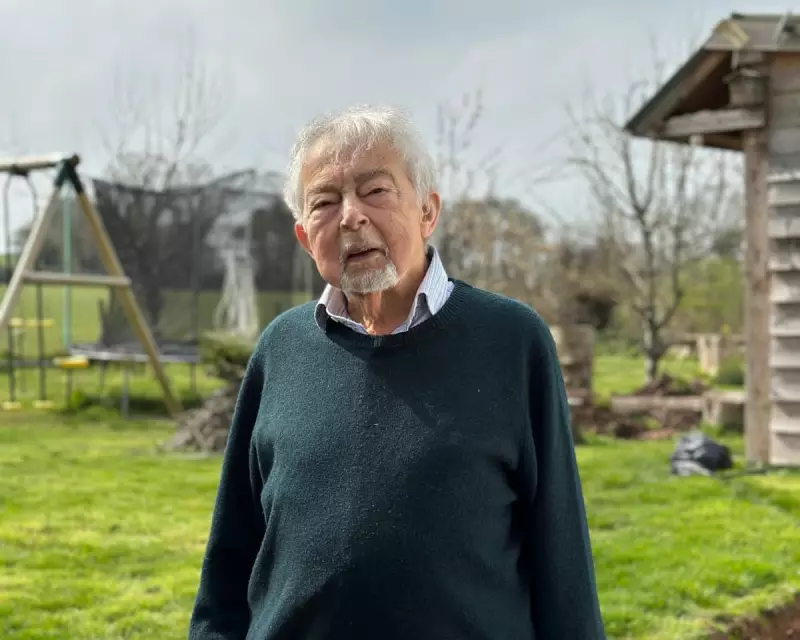
The academic and cultural communities are mourning the loss of David Young, a respected university lecturer and linguist who has died at the age of 94. A man of great intellect and deep passion, Young was best known for authoring two influential texts, Introducing English Grammar and The Structure of English Clauses.
First published in the 1980s, these seminal works remain in print with Routledge today and are held by over 1,000 universities and public libraries across the globe. Their enduring appeal lies in a revolutionary approach for its time: demonstrating that grammar is a tool for communication shaped by social context, not a set of rigid, unbreakable rules.
An Academic Home in Wales
This perspective was heavily influenced by the principles of systemic functional linguistics, a field in which his academic institution was a leading centre. In the mid-1960s, Young took up a lectureship at the University of Wales Institute of Science and Technology (UWIST) in Cardiff within the department of English and liberal studies. This became his long-term professional base.
The amalgamation of UWIST into Cardiff University in 1988 provided Young with the chance for an early retirement in his 50s. He subsequently enjoyed a very long retirement spanning several decades in the Monmouthshire town of Usk.
A Passion for Community and Culture
In Usk, David Young became a well-known and active figure. He was a stalwart member of the Labour party and immersed himself in the local community. His love for his adopted country was profound and was expressed through his membership of the Cambrian Society, dedicated to Welsh heritage and archaeology, his participation in a rambling club, and his enthusiasm for landscape painting, at which he was especially skilled with watercolours.
Born in Birmingham to Constance and Harold Young, both employees of the Tangye engineering firm, his early life was marked by hardship. After his father died of tuberculosis, he was raised by his mother and aunt. During the Second World War, he was evacuated to Sibford school in the Cotswolds, a Quaker institution. Though he was agnostic as an adult, the Quaker ethos of calm reflection remained with him throughout his life.
His academic journey included an English degree from Birmingham University followed by an MPhil in philology from Oxford. The 1960s also saw him develop a lifelong affinity for Sweden after studying and teaching at Uppsala University, fostering decades of cultural exchange and personal friendship.
A Rich Personal Life
David never married or had children but was an intensely sociable man, acting as a supportive mentor to younger generations. Friends and family have fond memories of summer days at his cottage on the Gower cliffs, his harpsichord recitals, and fiercely competitive games of Scrabble. His New Year's Day lunch parties were legendary, and he marked his 90th birthday with three separate celebrations.
He was predeceased by his brother, John, in 2016 and his niece, Jenifer, earlier this year. He is survived by his nephew, Christopher, his great-nephew, and his great-nieces, Emma and Rachel, as well as four great-great nieces and nephews.