History is often told through the grand narratives of wars and monarchs, but for renowned architecture writer and broadcaster Dan Cruickshank, it's etched into floorboards and whispered by fireplace grates. His latest work, The English House: A History in Eight Buildings, offers a profound and meticulously researched journey into the past by examining the creation of eight distinctive dwellings across England.
From Gothic Piles to Council Flats: A Century-Spanning Survey
In a significant departure from traditional historical accounts, Cruickshank conducts a keen-eyed tour of eight English houses spanning from the early 1700s to exactly a century ago. His selection is deliberately eclectic, ranging from an outlandish Gothic pile to one of the nation's very first council flats. Geographically, the journey stretches from Northumberland down to Sussex. Through these case studies, the book charts a tangible evolution in design, observing how classical influences from Rome and Greece gradually yielded to a revived medieval English Gothic style, eventually making way for the dawn of modernism.
This approach aligns with a growing trend among historians to shift focus from palaces to more ordinary homes, using them as portals to understand the lives of their inhabitants. This movement was arguably pioneered by the late Gillian Tindall and later popularised by television series like A House Through Time, presented by David Olusoga.
Building Accounts and Human Drama
At first glance, Cruickshank's task appears dauntingly forensic. As he notes, intimate contemporary documents like letters or diaries detailing the construction of these buildings are rare. However, he unearths a rich, alternative archive: the building accounts, tradesmen's bills, and payment records. While he admits this evidence can seem "somewhat arid," he masterfully weaves it into compelling narratives.
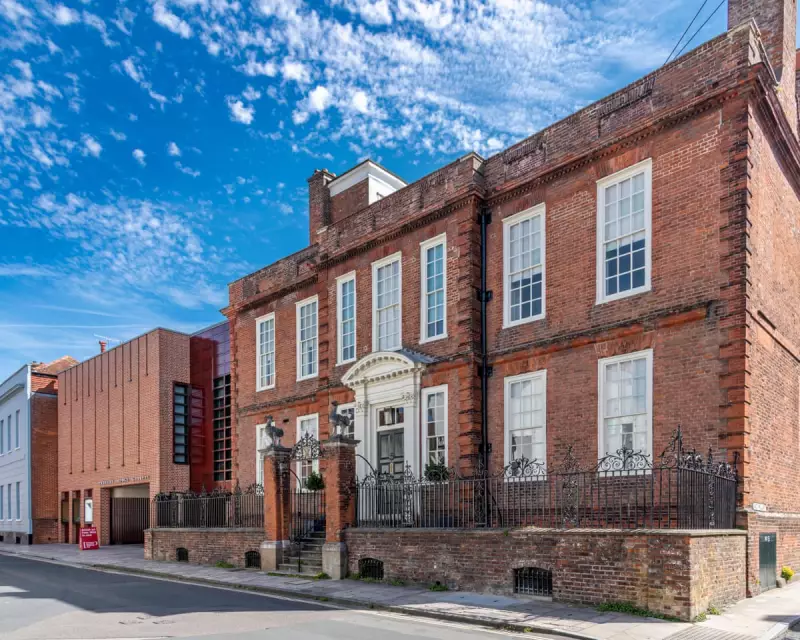
These dry ledgers often crackle with human drama. At Pallant House in Chichester—now a celebrated art gallery—the accounts reveal lively disputes between the young man who commissioned the building and his older wife, who financed it. Their tradesmen's records meticulously note the couple's frequent disagreements over design choices and costs. In another instance, a fine 18th-century house in Hull was built for Henry Maisen, who left the practicalities to his brother Nathaniel while he enjoyed London life. Nathaniel's exasperated letter, sent to a dubious "toy shop" in Covent Garden—a known red-light district at the time—hints at Henry's less-than-serious priorities.
Uncovering Darker Histories and Lasting Legacies
Cruickshank's exploration is not confined to domestic squabbles. He confronts the darker histories embedded in Britain's built environment. The Boundary Street estate in Shoreditch, London, begun in the 1890s, is highlighted as the first recognisable council flat. While it replaced a fetid slum, Cruickshank points out that most of the original slum-dwellers were simply displaced, not rehoused. A banker's residence in Liverpool becomes a lens to examine the city's central role in the transatlantic slave trade.
Perhaps most poignant is the story of a Huguenot house in Spitalfields, built by French Protestants fleeing persecution. The building, now in a neighbourhood home to millionaire artists, later served as a synagogue, now abandoned. Cruickshank reflects that it takes little imagination to feel the presence of its successive waves of embattled inhabitants, writing evocatively of the "spectres" in its shadowy corners and the voices of the long dead."
While the book's detailed architectural descriptions are demanding, they underscore Cruickshank's deep expertise. The reader might occasionally wish for the explanatory graphics of a television documentary, but the reward is a uniquely textured understanding of English social history, told not by kings and generals, but by joiners, merchants, and the very walls they built.
The English House: A History in Eight Buildings by Dan Cruickshank is published by Hutchinson Heinemann, priced at £26.