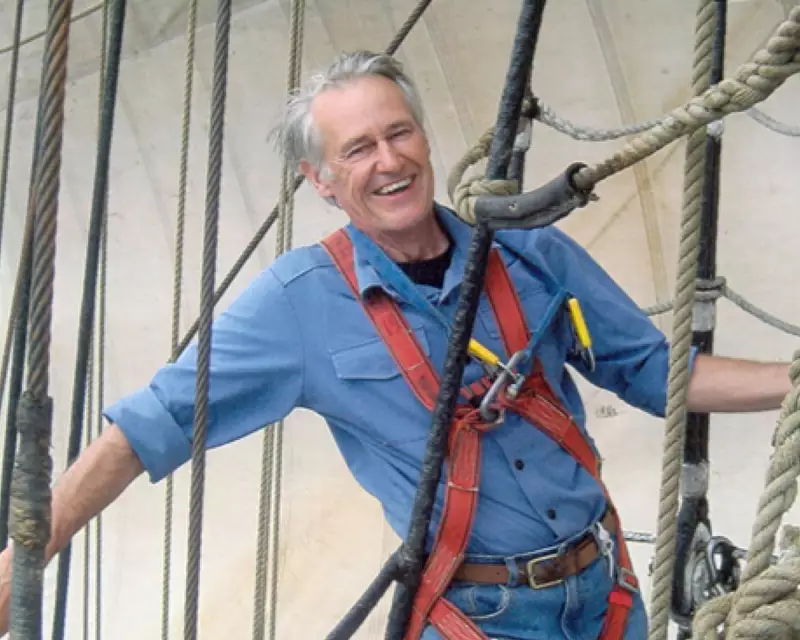
The world of computing history has lost one of its most dedicated champions with the passing of Professor Simon Lavington at the age of 85. The esteemed computer scientist spent decades meticulously documenting Britain's pioneering role in computer development, work recently honoured with a prestigious fellowship.
Preserving Britain's Computing Legacy
Lavington's academic career began at the University of Manchester in 1959, where he initially studied electrical engineering before pursuing MSc and PhD degrees. His early research involved groundbreaking work on automatic speech recognition using the Ferranti Atlas computer, supervised by Frank Sumner.
He joined Manchester's academic staff in 1965 as an assistant lecturer, progressing to senior lecturer while contributing to the significant MU5 computer project. In 1986, he moved to the University of Essex as Professor of Computer Science, a position he held until retiring in 2002.
His passion for computing history produced substantial literary contributions, beginning with A History of Manchester Computers in 1975. He authored six additional books and had recently commenced work on another exploring the pioneering work of female programmers.
Championing Education and Community
Beyond academia, Lavington demonstrated remarkable commitment to youth development and community life. From 1999 to 2012, he regularly sailed aboard the tall ship Stavros S Niarchos, leading educational voyages for young people.
His dedication to conflict resolution saw him secure United Nations and British High Commission funding for three bi-communal Mediterranean voyages that brought together Greek and Turkish Cypriot youngsters.
In Sproughton, Suffolk, where he lived with his wife Rosalind, he was known as an active contributor to village life. The couple met in 1963 when Rosalind was a history undergraduate at Manchester University, marrying three years later in 1966.
Lasting Recognition and Legacy
Lavington's historical preservation work gained international recognition through his involvement with the Computer Conservation Society, joining its committee in 1999 and becoming digital archivist in 2004. He played a crucial role in developing the Our Computer Heritage project.
In 2024, he received an honorary fellowship of the National Museum of Computing, acknowledging his outstanding contributions to computing history and development.
His collaborative efforts continued until recently, contributing to the installation of two IEEE milestone plaques in June 2022 commemorating the Manchester University Baby Computer and the Atlas computer's virtual memory invention.
Simon Lavington is survived by his wife Rosalind, their four children Damian, Dominic, Hannah and Tamsin, eight grandchildren, one great-grandchild, and his sisters Sarah-Jane and Diana.