A Mother's Twenty-Year Wait for Answers
When Operation Orión commenced in October 2002, Hermey Mejía, aged 22, believed the military intervention would finally bring peace to his neighbourhood in Medellín. He told his mother, Teresa Gómez, that he hoped Colombia's armed forces would remove the urban guerrillas controlling Comuna 13, then considered one of the world's most dangerous districts.
Instead, the streets transformed into a battlefield. "Bullets, bullets, bullets, from above, in front of our homes, everywhere," Gómez recalled. "They killed many people. Many more were taken. We all lived with fear."
The Brutal Legacy of Operation Orión
This largest urban military assault in Colombia's history proved devastating. Helicopters fired upon streets from above, residents were dragged from their homes, women suffered sexual abuse, and hundreds were arbitrarily detained, tortured, or killed.
While initially hailed as a victory against insurgents by figures including then-mayor Luis Pérez Gutiérrez and then-president Álvaro Uribe, Operation Orión later became synonymous with collusion between the army and rightwing paramilitaries. Testimonies revealed these illegal groups entered alongside troops, kidnapping and murdering suspected guerrilla collaborators. After military operations ceased, paramilitaries seized control of the neighbourhood through fear, extortion, and forced disappearances.
Hermey recognised the danger, warning his mother: "Mum, these people are bad, these people are bad, we need to leave." On 18 December 2002, the computer engineering student and expectant father was forcibly disappeared after leaving home with a friend.
The Search for Truth at La Escombrera
For over two decades, Teresa Gómez and her family have sought answers, filing complaints and petitioning the government. Years later, a former paramilitary confessed to participating in Hermey's disappearance, admitting he knew the young man was innocent. Yet his body remained missing.
Now, Gómez hopes new excavations at La Escombrera, a former construction landfill and one of urban Latin America's most notorious mass grave sites, will finally uncover his remains. Armed groups admitted using this site during the late 1990s and early 2000s to dispose of abducted, tortured, and murdered individuals, their bodies concealed beneath mounting industrial waste. Estimates suggest between 400 and 600 people may be buried there.
Carlos Manuel Bacigalupo Salinas, a forensic anthropologist working at the site, explained: "La Escombrera represents what violence and disappearance meant in Colombia during the conflict that took place over the last 60 years. In this constant search for control, by the various armed agents, many people ended up disappearing."
Victims' families and groups like the National Movement for Victims of State Crimes long demanded investigations into La Escombrera, yet for years their pleas went unheeded. Luz Elena Galeano, 62, whose husband Luis Javier Laverde Salazar disappeared in 2008, remembered: "People said we were crazy, that we were lying. It was known back in the 2000s that this was the spot where the bodies were taken, but nobody would look."
Forensic Breakthrough After Decades of Waiting
An earlier excavation in 2015 failed to locate remains, devastating families' hopes. Now, the Special Jurisdiction for Peace (JEP), a tribunal established after Colombia's 2016 peace deal to investigate conflict-era crimes, has taken up the search.
Armed with satellite imagery, paramilitary testimonies, and attorney general investigations, forensic teams have undertaken one of Colombia's most significant forensic operations. About 56,000 cubic metres of rubble have been carefully removed, with heavy machinery scraping shallow layers under close supervision. Every earth load undergoes sifting for human remains or evidence.
In December 2024, the forensic team achieved a crucial breakthrough: the first human skeletal remains were unearthed. To date, seven bodies have been discovered, with four identified and returned to families, while three await identification. Work has now commenced on an area where a former paramilitary leader indicated between 40 and 50 people were buried.
Galeano, part of Women Walking for Truth—a group of 40 women taking turns overseeing excavations—expressed the collective determination: "At times we have our setbacks and moments of fragility due to sadness, but we continued our search, and finally we have had discoveries. We know we will continue finding bodies here. We will keep going, we will keep looking."
With more than 120,000 people estimated missing in Colombia between 1985 and 2016, most whose fates remain unknown, Salinas emphasised their commitment: "We are doing everything possible and everything necessary."
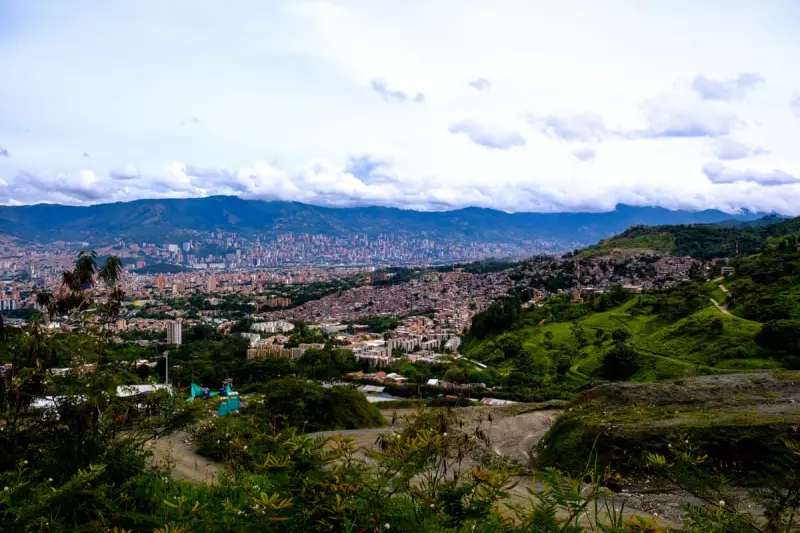
Looking across the hills where her son vanished, Teresa Gómez maintains her resolve against sceptics: "People say I will never find him. But a mother never forgets, she never forgets."