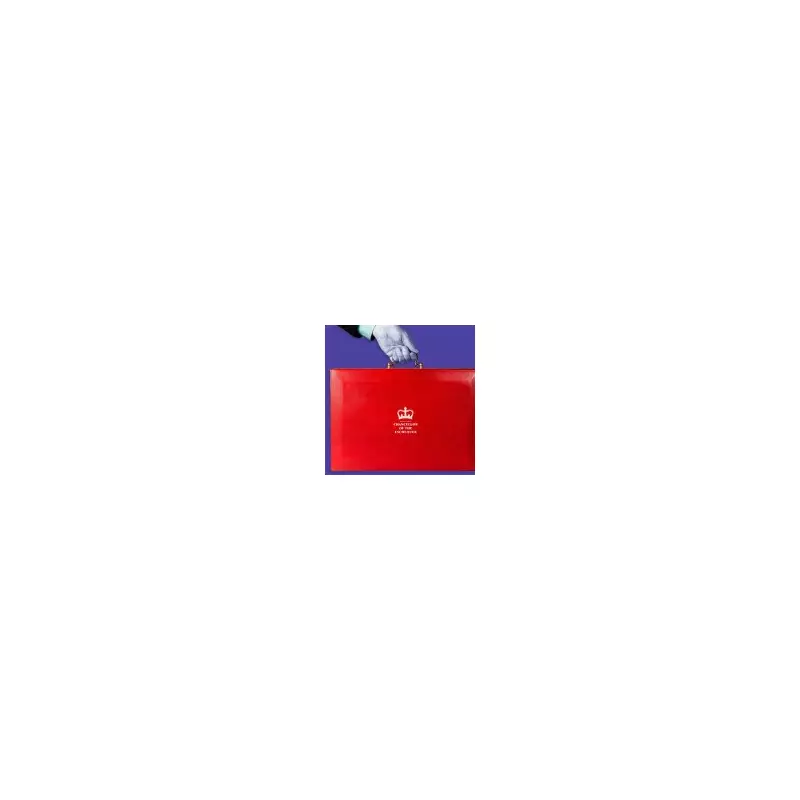
The Chancellor's Red Box: A British Political Icon
To pose outside Number 11 Downing Street, holding aloft a distinctive red box for the flashing cameras, is a quintessential ritual for every British Chancellor. It marks the moment they depart to deliver their annual Budget statement to the House of Commons. This week, Rachel Reeves will participate in this tradition, stepping up to the despatch box to outline the nation's financial future.
A Brief History of the Budget Box
The origins of this symbolic item date back to 1860, when the very first red box was crafted for William Gladstone during his tenure as Chancellor. These boxes are not exclusive to the Treasury; government ministers routinely use them to transport official documents, and even King Charles receives his daily papers in one.
The original Chancellor's box was constructed from wood, enveloped in red leather, and lined with luxurious black silk. Its specific purpose was to safely carry the Budget speech from Downing Street to Parliament.
Tradition, Troubles, and Liquid Refreshment
Despite its long history, the box has not always been the centrepiece. In 1965, James Callaghan broke with convention by carrying a simple, and what was described as a 'vulgar', brown valise. The original box, having seen better days, was officially retired after Gordon Brown commissioned a new one in 1997. The historic box now resides in the Cabinet War Rooms, though it had a brief final appearance in 2010 for George Osborne, by which time it was reportedly battered and repaired with balsa wood.
The tradition has witnessed its share of mishaps. In 1869, George Ward Hunt arrived at the Commons only to open the box and find he had left his speech behind. His time as Chancellor lasted a mere six months. More recently, Kwasi Kwarteng never got to use the red box for his 2022 fiscal statement, which was delivered from a blue folder.
Perhaps the most intriguing secret of the red box is what it sometimes conceals. A little-known rule of the House of Commons forbids alcohol in the chamber, with one notable exception: the Chancellor on Budget day. Norman Lamont is said to have stashed a bottle of whisky in his, while his aide carried the actual speech. This precedent for liquid fortification is well-established.
Ken Clarke famously sipped a glass of Glenfarclas scotch during his 1997 speech. His predecessors enjoyed a variety of tipples, including Nigel Lawson's white wine spritzer, Hugh Dalton's rum and milk, and Geoffrey Howe's gin and tonic. Even the great William Gladstone fortified himself with a concoction of sherry and beaten egg.
What to Expect from Rachel Reeves's Budget
All eyes are now on Rachel Reeves as she prepares to deliver her second Budget on Wednesday. The government is under significant pressure to raise funds to meet the Chancellor's own self-imposed, 'non-negotiable' fiscal rules. These mandate an end to borrowing for day-to-day public spending and a reduction in government debt as a share of national income by the end of this parliament.
According to the Institute for Fiscal Studies (IFS), achieving these goals will require a fiscal 'tightening' of around £22 billion. The IFS has stated that Reeves will 'almost certainly' have to raise taxes to secure the necessary funds and maintain her economic targets. Furthermore, the Chancellor has expressed a desire for 'sufficient headroom' to guard against future financial shocks, suggesting the £9.9 billion buffer from last year's Budget was inadequate.
Owning a Piece of History
For those captivated by this symbol of power, it is possible to acquire a ministerial-style red box of your own. London bootmaker Foster and Son, founded in 1840, sells an 'iconic' version crafted from goatskin with brass fittings, a lock, and a hand-stitched leather handle. This piece of political history can be yours for a grand total of £4,050.