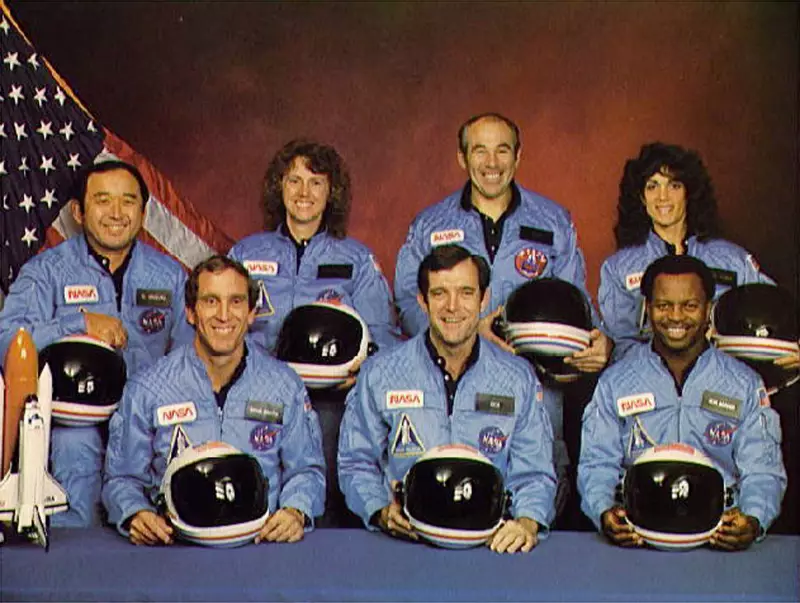
Challenger Disaster 40 Years On: The Fateful Launch That Shocked the World
On this day forty years ago, the world witnessed one of the most devastating moments in space exploration history. The Space Shuttle Challenger, embarking on its tenth mission designated STS-51-L, exploded just seventy-three seconds after launch from Kennedy Space Center in Florida. The catastrophic failure claimed the lives of all seven crew members aboard, leaving millions watching live television broadcasts in stunned disbelief.
The Mission and Its Historic Crew
NASA had planned a six-day mission that would deploy a crucial tracking and data relay satellite to enhance America's communications network. Additionally, the shuttle carried Spartan 203, a small satellite designed to observe Halley's Comet during its notable passage that year. However, this mission gained particular significance through NASA's Teacher in Space Project, an initiative announced by President Ronald Reagan in August 1984 to inspire schoolchildren and honour educators.
From an initial pool of 11,000 applicants, 36-year-old social studies teacher Christa McAuliffe from Concord High School in New Hampshire was selected as the first civilian educator to travel to space. She joined commander Dick Scobee, pilot Mike Smith, mission specialists Ronald McNair, Ellison Onizuka, and Judith Resnik, along with payload specialist Gregory Jarvis. McAuliffe, married to attorney Steven McAuliffe with two young children, represented the programme's ambition to bring space exploration directly into classrooms across America.
The Space Shuttle Programme Context
The Space Shuttle programme was approximately five years old at this stage, with Challenger serving as the second orbiter constructed. Originally intended as a test vehicle, it had been upgraded for spaceflight and completed its first mission in April 1983. Kennedy Space Center at Cape Canaveral, Florida's primary launch site since 1968 and home to historic Apollo missions, provided the launch pad for this fateful journey.
Warning Signs and Fatal Decisions
January 28, 1986, presented unusually cold conditions for Florida, with overnight temperatures dropping to -8℃ and expected to reach only -3℃ by the scheduled 9:38 am launch time. Engineers from Morton Thiokol, manufacturers of the shuttle's solid rocket boosters, expressed serious concerns about the effect of cold temperatures on the rubber O-rings that sealed booster sections. These critical components risked losing elasticity in freezing conditions, potentially failing to contain the hot gases from burning propellant.
Despite objections from Morton Thiokol's top employee at Kennedy Space Center, Allan McDonald, who refused to sign off the launch, senior company officials in Utah ultimately yielded to NASA pressure. Lawrence Mulloy, NASA's project manager for the boosters, famously questioned whether engineers expected them to wait until April for warmer weather, illustrating the mounting tension surrounding launch approval.
The Catastrophic Sequence of Events
After delays to allow ice on the launch structure to melt, Challenger finally lifted off at 11:38 am with air temperatures approaching 3℃. Approximately 58.7 seconds into the flight, a plume appeared near the aft section of the right-hand booster, indicating an O-ring failure that created a hole burning through the booster's skin. This caused a dangerous drop in internal pressure.
At 64.6 seconds, the liquid hydrogen section of the external tank developed a leak, with the booster's flame reaching the tank just two seconds later. Unaware of these critical failures, ground control communicated normally with the crew. Commander Dick Scobee acknowledged the "go at throttle up" command at 68 seconds, but just four seconds later, the right-hand booster broke away.
The final transmission from Challenger came from pilot Mike Smith, who uttered "Uh-oh" before the external tank exploded with catastrophic force at 73 seconds. The shuttle disintegrated at approximately 46,000 feet altitude, with the crew cabin remaining intact but ultimately hitting the ocean surface at over 200 mph about 165 seconds later. The impact force of 200g proved unsurvivable, and when US Navy divers located the cabin nearly six weeks afterwards, they reported finding "remains, not bodies."
National Mourning and Presidential Response
That evening, President Reagan postponed his scheduled State of the Union Address to Congress, instead delivering a televised address from the Oval Office that would become one of the most memorable speeches of his presidency. Honouring the seven astronauts as "the first Americans to die during a space mission," Reagan movingly declared: "The crew of the space shuttle Challenger honoured us by the manner in which they lived their lives. We will never forget them, nor the last time we saw them, this morning, as they prepared for their journey and waved goodbye and 'slipped the surly bonds of earth' to 'touch the face of God.'"
The Challenger disaster fundamentally reshaped NASA's approach to safety and risk management, leading to a 32-month suspension of the shuttle programme while investigations and redesigns took place. Forty years later, the tragedy continues to serve as a sobering reminder of the inherent dangers of space exploration and the profound human cost of pushing technological boundaries.