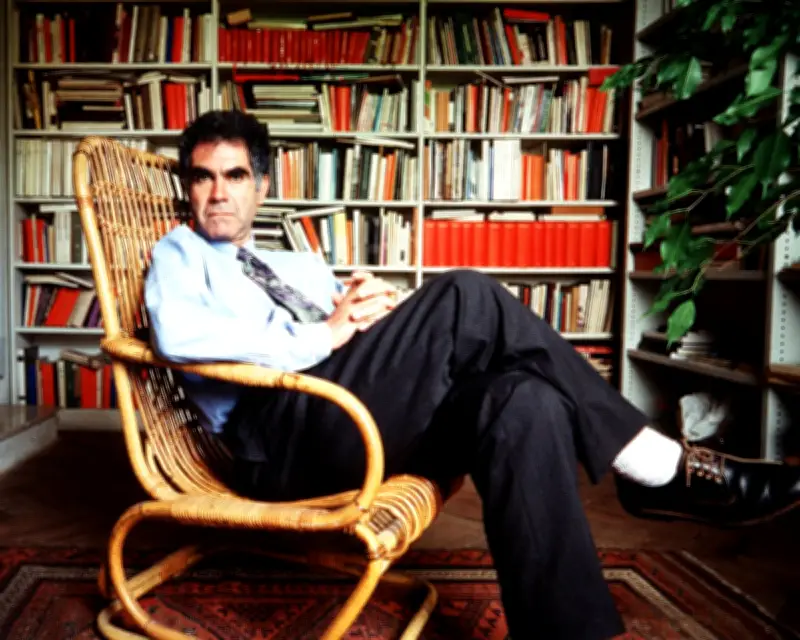
Carlo Ginzburg, the Italian historian whose groundbreaking work in microhistory transformed the study of the past, has died aged 87. His 1976 book The Cheese and the Worms: The Cosmos of a Sixteenth-Century Miller became a landmark, challenging traditional historical approaches by focusing on a single individual—Domenico Scandella, known as Menocchio, a miller from Friuli accused of heresy by the Inquisition. Ginzburg used Inquisition trial documents to reconstruct Menocchio's worldview, revealing a complex peasant cosmology that blended reading and oral tradition.
Microhistory and the Marginalized
Ginzburg's work emphasized the edges of society, the marginalised, and the detail rather than the big picture. He rejected overarching theories like Marxism or liberalism, instead advocating for microhistory—a close examination of small-scale events or individuals to illuminate broader cultural contexts. The chance discovery of Inquisition records in Udine allowed him to explore how Menocchio, a literate miller, developed unorthodox beliefs, including his famous idea that the universe formed like cheese from chaos, with angels as worms.
Menocchio's steadfastness under torture and his eventual execution in 1599 made him a symbol of resistance to power. Ginzburg structured his book like a film, influenced by Eisenstein's cinematic techniques, with 62 short sections, fast edits, and reflections on method. Translated into 25 languages, The Cheese and the Worms became an international bestseller and a manifesto for microhistory.
Early Life and Influences
Ginzburg was born in Turin in 1939 to Leone Ginzburg, a Jewish anti-fascist writer and co-founder of Einaudi publishing, and Natalia Levi, a prominent novelist. During World War II, the family hid from fascist persecution; Leone was captured and killed by the Gestapo in 1944. After the war, Ginzburg studied at the Scuola Normale Superiore in Pisa, where he befriended linguist Giulio Lepschy, and at the Warburg Institute in London, influenced by historian Arnaldo Momigliano.
His first book, The Night Battles: Witchcraft and Agrarian Cults in the Sixteenth and Seventeenth Centuries (1966), also drew on Inquisition trials. He later taught at the University of Bologna and, from 1988, at UCLA for 18 years, returning to Italy in 2006 to the Scuola Normale before retiring in 2010.
Broader Impact and Legacy
Ginzburg's work spanned art history (including writings on Piero della Francesca), philosophy, and historical methodology, emphasizing clues, signs, and silences. He intervened in Italian politics, notably campaigning for Adriano Sofri, a leftist activist accused of murder. In The Judge and the Historian (1991), Ginzburg compared Sofri's trial to witch hunts, reflecting on the role of evidence.
In the 50th anniversary edition of The Cheese and the Worms, Ginzburg drew parallels between his father's persecution and Menocchio's fate. As Anthony Pagden noted, Ginzburg was "a highly sensitive and imaginative historian whose prose style reproduces much of his mother Natalia’s clarity and precision." He is survived by his second wife, Luisa Ciammitti, and two daughters from his first marriage to Anna Rossi-Doria.