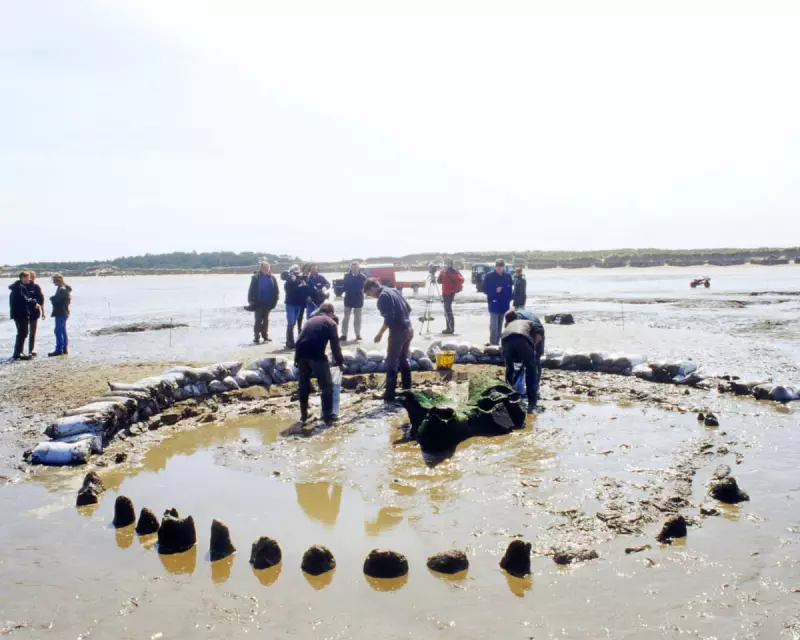
Archaeologists have unearthed a chilling and ingenious clue to how our ancestors confronted environmental catastrophe nearly 3,000 years ago. At the famed Must Farm quarry site near Whittlesey, Cambridgeshire, researchers discovered a carefully arranged circle of human skulls, which they believe was a desperate ritual attempt to hold back devastating floods.
A Village Swallowed by Water
The Must Farm settlement, often called "Britain's Pompeii," was a thriving stilt-house community built over a river channel around 850 BC. Its inhabitants were skilled woodworkers, textile makers, and metalworkers. However, their world was abruptly destroyed by a catastrophic fire, causing their homes and all their contents to collapse into the muddy water below. This mud preserved an unparalleled snapshot of Bronze Age life.
Recent excavations, however, have revealed a darker prelude to this disaster. Evidence shows the community was engaged in a constant, losing battle against rising water levels. They constructed sophisticated levees and complex drainage systems in a bid to protect their homes. Mark Knight, the excavation director, described the site as a "warren of water management," highlighting the immense effort poured into this fight.
The Chilling Final Defence: A Circle of Skulls
When the man-made defences began to fail, it appears the villagers turned to the supernatural. In a final, grim act, they placed at least nine human skulls in a circular formation within the waterlogged channel. These were not fresh remains, but curated relics—"archived ancestors"—taken from an earlier burial ground.
"They're putting them in the water, which is quite weird," Knight noted. The leading theory is that this was a profound ritual gesture, an offering or a protective charm intended to symbolically or magically reinforce the crumbling physical flood barriers. It represents a poignant moment where practical engineering met spiritual belief in the face of an unstoppable natural force.
Ancient Echoes in a Modern Climate Crisis
The discovery at Must Farm resonates powerfully today. It underscores a timeless human struggle against flooding, a challenge now amplified by the modern climate crisis. The skull circle is a stark reminder of the lengths communities will go to protect their homes, blending technology, community effort, and deep-seated belief.
This find transforms our understanding of the site. Must Farm is no longer just a perfectly preserved time capsule of daily life. It is also a monument to a prehistoric climate adaptation crisis and the profound human responses it triggered. The story of its levees, drains, and final skull circle offers a haunting lesson from the past as we confront our own rising tides.