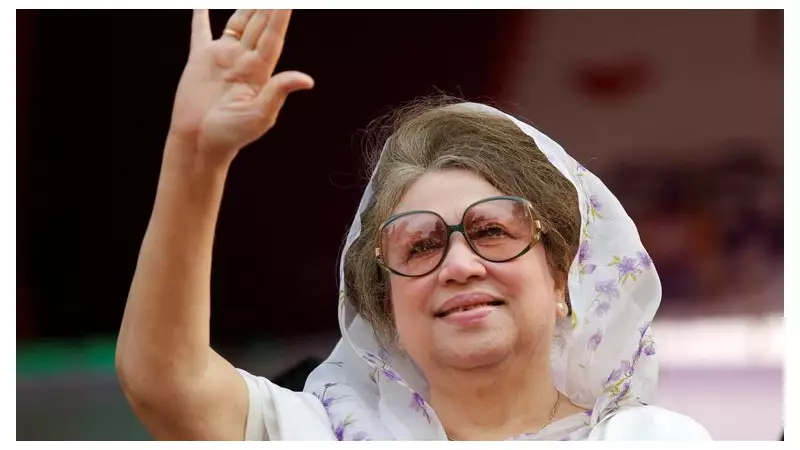
Bangladesh's first female prime minister, Khaleda Zia, has died at the age of 80 following a prolonged illness, her political party has announced. Her passing marks the end of an era in the nation's turbulent political history, which was dominated for decades by her intense rivalry with fellow female leader Sheikh Hasina.
A Political Feud That Shaped a Nation
Khaleda Zia led the Bangladesh Nationalist Party (BNP), which was founded by her late husband, serving as the country's head of government from 1991 to 1996 and again from 2001 to 2006. Her time in and out of power was characterised by a bitter and defining political feud with her arch-rival, Sheikh Hasina of the Awami League. The two women alternated control of the government, creating a powerful and often volatile dynamic in Bangladeshi politics.
The BNP confirmed her death in social media posts on Tuesday 30 December 2025. In recent years, she had suffered from serious health issues, including advanced liver cirrhosis, arthritis, diabetes, and significant heart and chest problems. At the start of 2025, she travelled to London for a four-month period of medical treatment before returning to Bangladesh.
From Tragedy to the Prime Minister's Office
Khaleda Zia's journey into politics was born from personal tragedy. She was initially a wife and mother focused on raising her two sons. Her life changed irrevocably in 1981 when her husband, military leader and then-president Ziaur Rahman, was assassinated during an attempted army coup. Three years later, she took the helm of the BNP, vowing to continue her husband's mission to liberate Bangladesh from poverty and economic hardship.
In 1990, she joined forces with Sheikh Hasina to lead a popular pro-democracy uprising that successfully toppled the military ruler Hussain Muhammad Ershad. The following year, Bangladesh held what was widely considered its first free national election. In a surprise result, Khaleda Zia defeated Sheikh Hasina, securing her place in history as the nation's inaugural female prime minister and igniting a rivalry that would last for generations.
Legal Battles, Imprisonment, and a Shifting Political Landscape
The political conflict between the two leaders had profound personal consequences. In 2018, while Sheikh Hasina was in power, Khaleda Zia and several aides were convicted of embezzling approximately $250,000 in foreign donations meant for an orphanage trust established during her second term. She was imprisoned but was later moved to house arrest in March 2020 on humanitarian grounds as her health declined.
The political tides shifted dramatically in August 2024 when Sheikh Hasina, who had led the country from 1996 to 2001 and again from 2009 to 2024, was ousted by a mass uprising and fled the country. This upheaval led to Khaleda Zia's release from house arrest. Earlier in 2025, she was acquitted of the corruption charges by Bangladesh's Supreme Court.
Despite being out of power for nearly two decades, Khaleda Zia and the BNP retained substantial popular support. The party is now viewed as the frontrunner for the next parliamentary election, scheduled for February. Her eldest son, Tarique Rahman, 60, who is the BNP's acting chairman, is widely considered a strong candidate to become the country's next prime minister, potentially continuing his family's political dynasty.