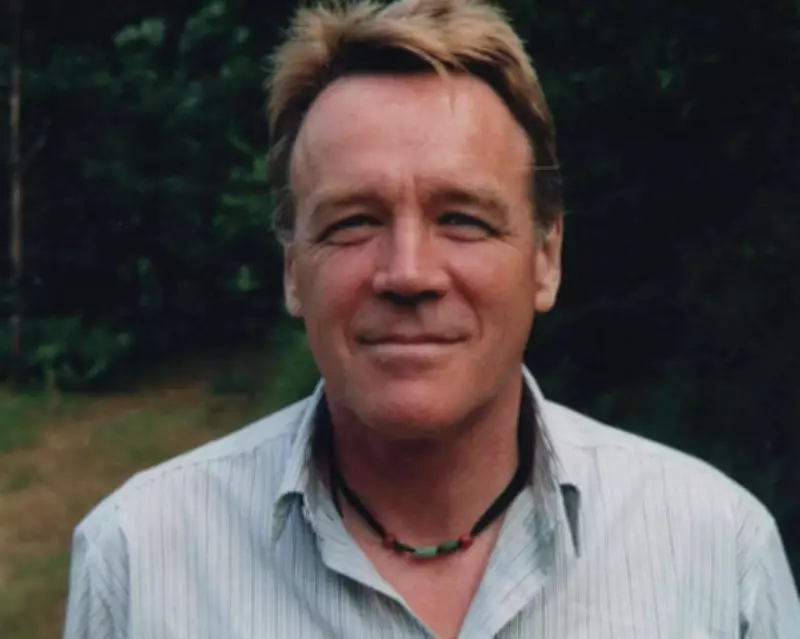
Michael Thompson, the anthropologist whose book Rubbish Theory: The Creation and Destruction of Value (1979) became a seminal work in art theory and waste studies, has died aged 89. Thompson spent his career examining how societies assign value to objects and ideas, arguing that these categories are not fixed but socially constructed and subject to change.
Rubbish Theory and the Creation of Value
In his most famous work, Thompson used the example of beaded curtains—once considered tacky and disposable—to illustrate how objects can move from transient to durable value. He proposed three categories: durable objects (value increases over time), transient objects (value decreases), and rubbish (no value). However, these categories are not inherent but assigned by societies, and they can shift. The mathematical framework, based on René Thom's catastrophe theory, explained how these transitions occur.
Cultural Theory: Plural Rationality
Thompson later developed cultural theory, or the theory of plural rationality, with political scientist Aaron Wildavsky. It posits that there are a limited number of ways people organize social life: hierarchy, individualism, egalitarianism, and fatalism. These combine in endless variations to produce social diversity. This framework has practical implications for public policy, as different groups perceive risks and solutions differently. For example, responses to climate change vary: hierarchical approaches favor regulation, individualists prefer markets, egalitarians advocate voluntary restraint, and fatalists emphasize adaptation.
Thompson argued that sustainable solutions require clumsy combinations of competing rationalities, not the dominance of one. He criticized standard policy instincts for ignoring dissenting voices and emphasized the importance of listening to communities and practitioners.
Early Life and Climbing Career
Born in Brackenthwaite, Cumbria, on January 28, 1937, Thompson was the son of a civil engineer and a botany teacher. After attending St Bees school and training at Sandhurst, he served as a second lieutenant in the 1st Queen's Dragoon Guards in Malaya. To pursue university and climbing, he stood for parliament in the 1962 Middlesbrough West byelection, forcing the army to release him due to political neutrality rules.
He studied anthropology at University College London (UCL), graduating in 1965, then earned a BLitt at Oxford and a PhD at UCL. As a climber, he joined Chris Bonington on the first ascent of the south face of Annapurna (1970) and the first ascent of the south-west face of Everest (1975). His experiences shaped his understanding of risk as a perception shaped by perspective, a key idea in his scholarly work.
Academic Career and Legacy
Thompson held positions at Portsmouth Polytechnic, the Slade School of Fine Art, MIT, the Russell Sage Foundation, and the International Institute for Applied Systems Analysis in Laxenburg, Austria. He was professor of comparative politics at the University of Bergen (1995-2003) and worked at the Institute for Science, Innovation and Society at Oxford until 2018. His collaborations included work with ecologist Crawford Holling on ecosystem change, hydro engineer Dipak Gyawali on Himalayan water politics, and Nobel laureate Paul Crutzen on cities as environmental forces.
He married Anne Musgrave in 1966. She survives him, along with their three children, Will, Ursula, and Martha, and five grandchildren. Thompson died on March 17, 2026.