Fifty years after publishing a book that would fundamentally reshape Australia's understanding of its own history and culture, author and journalist Anne Summers shows no signs of slowing down. Her groundbreaking work Damned Whores and God's Police, first released in 1975, has remained in near-continuous print ever since, selling over 100,000 copies and establishing women's history as a legitimate field of academic study.
From Activism to Academia
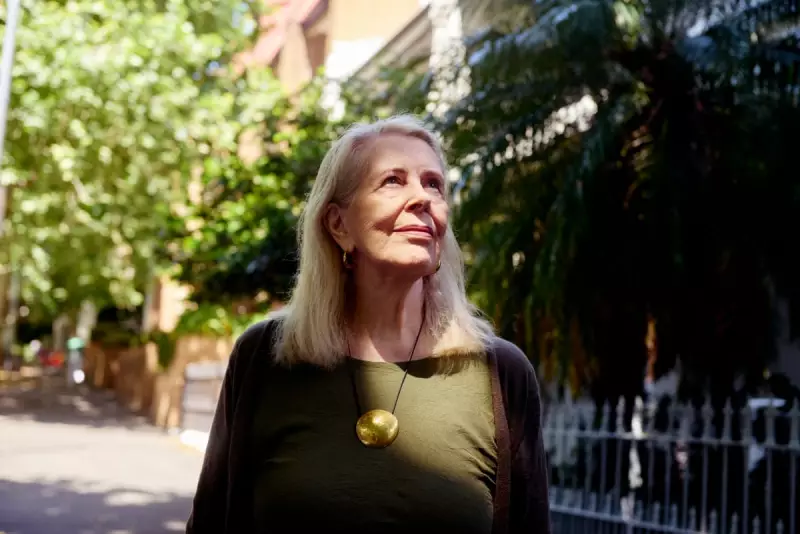
Now 80 years old and bearing an Order of Australia for her services to women and journalism, Summers recently revisited the Sydney neighbourhood where her activist journey began. Walking through what estate agents now call Potts Point but was known simply as 'the Cross' in the 1970s, she paused before a 19th-century mansion with an immaculate sandstone facade.
"This is where I was arrested," she revealed, recalling her time with the Victoria Street Residents Action group. In 1974, during a confrontation with police and hired thugs, Summers was dragged from the building "one on each limb" and thrown into a police van. Though the historic buildings were ultimately preserved for their heritage value, the low-cost housing they provided was lost forever.
Summers recalled feeling torn between research and direct action while writing her seminal work. "They thought that was just a bit of a wank," she said of her peers' reaction to her decision to sequester herself in libraries rather than continue full-time activism.
Quantifying the Impact of Domestic Violence
In her current role as a professor at the University of Technology Sydney, Summers has bridged the gap between research and real-world impact. Her latest report, The Cost, quantifies the economic effects of domestic violence with startling clarity.
The research found a 5.3% employment gap between victim-survivors and women who hadn't experienced partner abuse in the past five years, alongside significant disparities in income and educational attainment.
Summers also contemplates the Nordic paradox, where countries closest to achieving gender equity report higher-than-average rates of domestic violence. "Part of it is payback," she theorises. "A lot of men resent the fact that women have rights and have entitlements and have freedoms, and especially have economic freedoms that make them less dependent."
International Perspectives on Women's Rights
Having lived in the United States during two pivotal periods - as editor of Ms magazine in the late 1980s and early 1990s, and more recently during Trump's first term - Summers offers unique insights into comparative feminist movements.
"The worst nightmare that Margaret Atwood could have come up with, it's 10 times worse," she says of the current situation regarding abortion rights in America.
She contrasts the American experience with Australia's achievements, noting that while early feminists looked to the US for ideas and concepts, "they didn't deliver certain things. They've never been able to deliver the Equal Rights Amendment. Whereas we got the Sex Discrimination Act, that changed everything."
Summers credits Australia's compulsory voting system as a crucial factor in preventing the kind of extreme political shifts seen in the US. "It forces people to make choices and I think it's also a force for moderation," she observes.
Enduring Cultural Expectations
Despite massive changes in women's public lives since Damned Whores and God's Police was published, Summers believes certain cultural expectations remain stubbornly persistent.
"The cultural imperatives on women to be God's police are so strong, and they still are," she says. Even women who don't identify as "yummy mummies" or "trad wives" "still think it's their job to police the family, to control the family's moral behaviour. It's so embedded in our culture."
Yet she remains enthusiastic about the progress made. "When I was growing up, the only women you saw were your teachers, in my case nuns ... or if you went into hospital, you'd see the nurses with their big white caps. You just didn't see women. And now, women are everywhere."
Reflecting on her 20-year-old self's doubts about whether she could finish the book, let alone challenge Australia's "grand old men of Australian history and literature," Summers finds it "doubly gratifying" to still be discussing her work five decades later.
"I just hope that it might have had some influence in creating this generation of girls who ... know they've got a real choice," she says, her legacy secure as both an activist and academic who helped redefine a nation's understanding of itself.