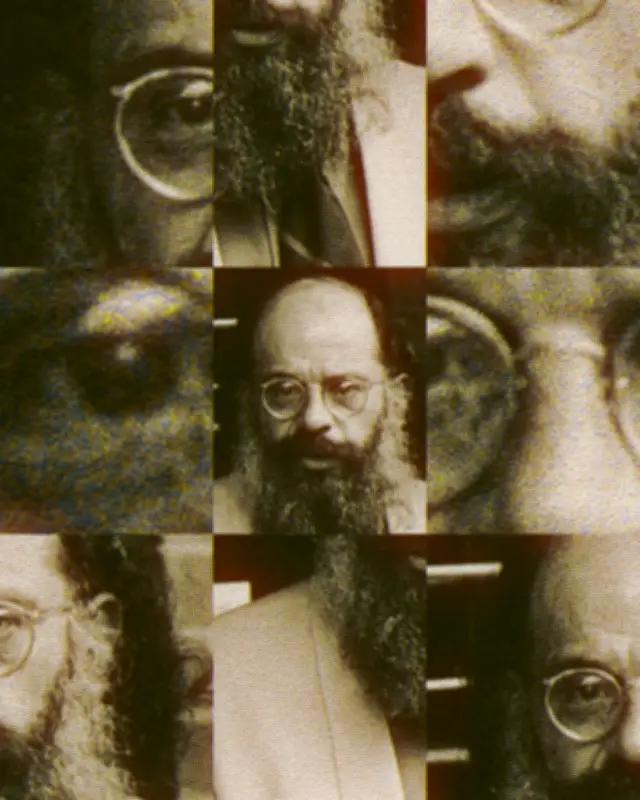
In 1985, Allen Ginsberg advised his 17-year-old friend Peter Hale to "get a wife, settle down, and have kids." Hale, then a student at Naropa University where Ginsberg ran the writing program, recalls the poet as "very much a traditionalist." Yet Ginsberg lived as an out gay itinerant poet, touring with Bob Dylan, being expelled from Czechoslovakia in 1965 as an "immoral menace," and immortalized in Jack Kerouac's novels.
Centennial Celebrations and Enduring Influence
Ginsberg's centennial on June 3 is marked by a September vinyl reissue of his 1959 spoken-word album, including poems like Howl, America, and Kaddish. Events include a London Southbank Centre evening, a Stanford University exhibition, and New York performances featuring Laurie Anderson and Patti Smith. Hale, who now runs the Ginsberg estate, notes that "people keep discovering his work" and that the poetry still holds power.
The Nambla Controversy
Hale calls Ginsberg's association with the North American Man/Boy Love Association (Nambla) a "headache." Ginsberg joined in the late 1970s, seeing it as a free-speech issue. In his essay Thoughts on Nambla, he wrote that he joined "as a matter of civil liberties" against FBI entrapment. However, Hale says, "Allen was incredibly naive to think it was a real free speech thing." Ginsberg later admitted it was "probably a mistake."
In a 1994 Advocate article, Ginsberg defended Nambla as "an innocent little organization." He appeared in the documentary Chicken Hawk: Men Who Love Boys, reading the poem Sweet Boy, Gimme Yr Ass. To the Rocky Mountain News, he stated that "anyone above puberty is okay as long as it's consensual." Beat scholar David S. Wills notes that Kerouac wrote about young girls without similar condemnation.
Conflicting Views and Personal Impact
Feminist critic Andrea Dworkin called Ginsberg an abuser and pedophile. Yet Hale argues Ginsberg was more opposed to censorship than a believer in Nambla's cause. The poet's friend Bob Rosenthal recalled Ginsberg saying, "At last, I've found an organisation which is totally indefensible!" Ginsberg spent decades aligning with outcasts, from communists to sex workers.
For many gay men, Ginsberg's legacy is complicated. Some, like the author, found mentorship from older men, including consensual relationships. But the dynamic can tilt toward abuse, which gay and bisexual men experience at higher rates. Ginsberg is not alone among queer luminaries in these debates; Michel Foucault, Roland Barthes, and Simone de Beauvoir signed petitions in 1977 for decriminalizing adult-minor sex.
Final Years and Lasting Work
Ginsberg's last major work, Ballad of the Skeletons (1995), featured Paul McCartney on guitar and Philip Glass on piano, with a music video by Gus Van Sant. On April 5, 1997, as Ginsberg died of liver cancer, his Buddhist teacher gave Hale a brown pill to administer after the last breath. Hale recalls, "No idea! Chances are it was a mix of herbs and yak dung."
Despite controversies, Hale believes the centennial focuses on the poetry. "People are still reading Ginsberg in school," he says. The writing, he asserts, still holds its power.