African leaders and diplomats are mounting a significant push to have historical colonial crimes formally recognised, criminalised, and addressed through comprehensive reparations.
A Continental Call for Justice
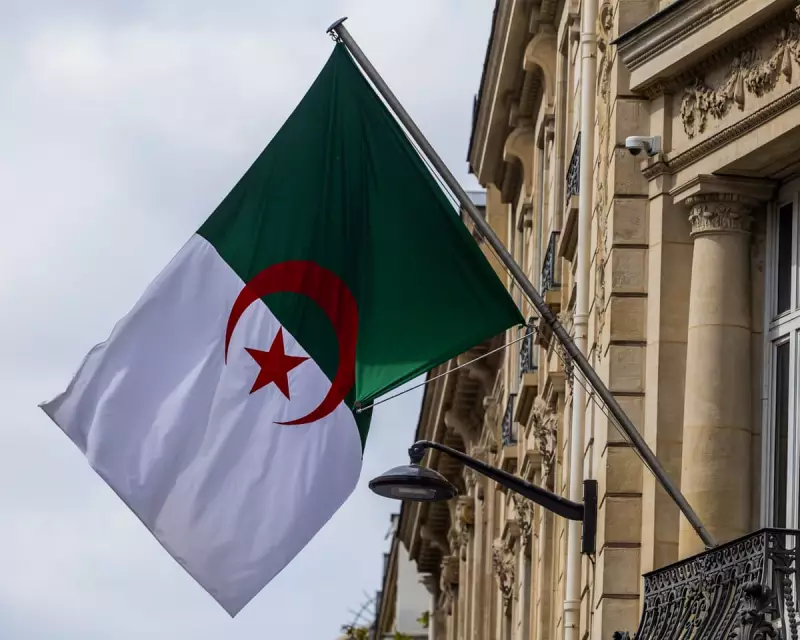
At a major conference held in the Algerian capital, Algiers, officials gathered to advance a resolution passed by the African Union earlier this year. This resolution explicitly calls for justice and reparations for the countless victims of colonialism across the continent.
Algerian Foreign Minister, Ahmed Attaf, stated that the location of the conference was deeply symbolic. He emphasised that Algeria endured some of the most brutal forms of French colonial rule, making it a poignant backdrop for these discussions. Attaf argued that Africa has a right to demand the official and explicit recognition of the crimes perpetrated against its peoples.
He described this recognition as an indispensable first step toward addressing the era's consequences, for which African nations and peoples continue to pay a heavy price through ongoing exclusion, marginalisation, and economic backwardness.
The Legal and Economic Case for Reparations
The campaign seeks to establish a legal framework that would frame restitution not as a gift or a favour, but as a rightful process. While international conventions outlaw practices like slavery and torture, the United Nations Charter does not explicitly reference colonialism.
This legal gap was a central topic at the African Union's February summit, where leaders debated a proposal to develop a unified stance on reparations and to formally define colonisation as a crime against humanity.
The economic cost of colonialism in Africa is believed to be staggering, with some estimates reaching into the trillions of pounds. European powers systematically extracted vast quantities of natural resources—including gold, rubber, and diamonds—often through brutal methods. This exploitation amassed enormous profits for colonisers while systematically impoverishing local populations.
In recent years, these demands have intensified, extending to the return of looted cultural artefacts still held in European museums.
Algeria's Legacy and Unfinished Decolonisation
Minister Attaf elaborated on Algeria's own bitter ordeal, where nearly a million European settlers held superior political, economic, and social privileges. The fight for independence was a bloody conflict resulting in hundreds of thousands of deaths, during which French forces employed torture, forced disappearances, and village devastation as part of a counterinsurgency strategy.
This historical experience continues to inform Algeria's foreign policy, particularly regarding the disputed territory of Western Sahara. Attaf framed the situation as a case of unfinished decolonisation, calling it Africa's last colony and praising the indigenous Sahrawi people's fight for self-determination.
Despite decades of advocating for colonial crimes to be addressed under international law, Algerian leaders navigate a delicate relationship with France, where the war's legacy remains a politically sensitive issue. While French President Emmanuel Macron has described elements of the history as a crime against humanity, he has stopped short of an official apology.
Algerian parliament member Mohamed Arezki Ferrad told the Associated Press that compensation must be more than symbolic, pointing to specific looted artefacts like the 16th-century cannon Baba Merzoug that France has yet to return.
This African movement mirrors similar calls in the Caribbean, where governments are also demanding formal apologies and financial reparations for the lasting legacy of colonialism and enslavement.